

Two category 5 typhoons that battered the Commonwealth of the Northern Mariana Islands (CNMI) in less than three months have devastated homes, infrastructure, and businesses, but they have also created an unexpected opportunity to restore some of Saipan’s most heavily eroded beaches.
The Commonwealth’s Department of Public Works (DPW) says it will resume a beach nourishment programme using sand dredged from the Smiling Cove Marina navigation channel after engineers found recent storm activity had once again reshaped the sand spit at the marina entrance.
DPW secretary Ray Yumul said engineers have reassessed the area following Super Typhoon Bavi.
“I had engineers go out and assess the Smiling Cove Marina and it looks like the sand spit came back.”
He said DPW and the Department of Lands and Natural Resources are reviewing how to restart the work.
“Between DPW and DLNR, we’re actively seeing how we can restart the sand spit program and go back and remove any new deposits.”
The beach restoration effort began after Super Typhoon Sinlaku deposited thousands of cubic yards of sand into the Smiling Cove Marina channel, restricting vessel access.
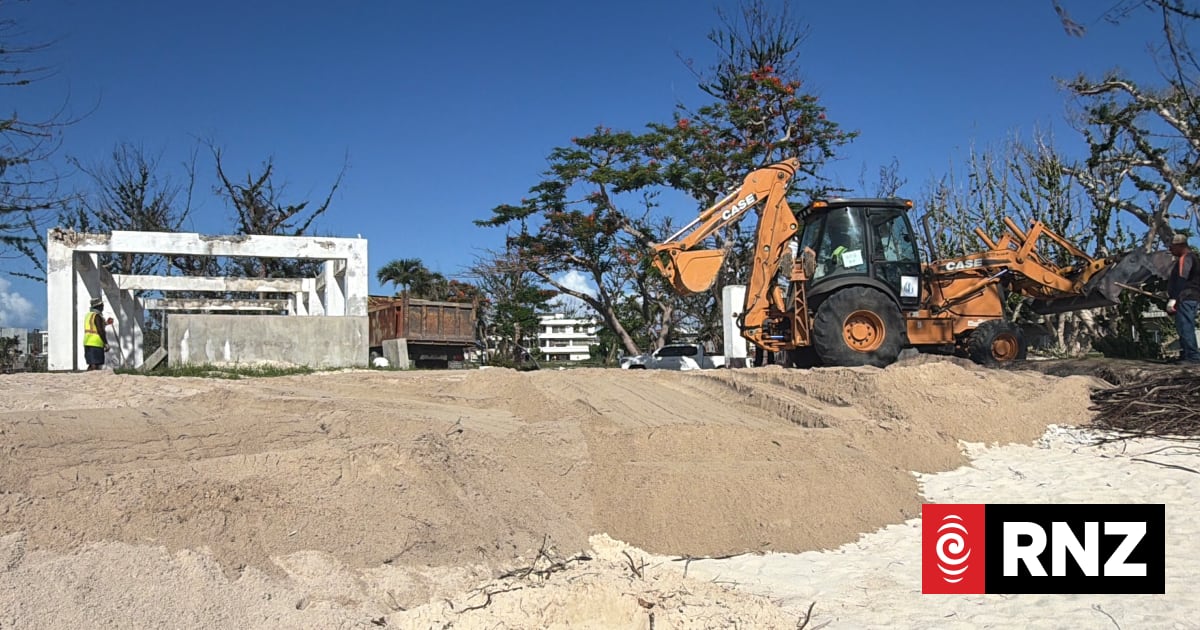
Rather than dispose of the dredged material, the government launched Project BEACH (Beach Emergency Access and Coastal Hazard Repair) to recycle the sand and replenish public beaches damaged by the storm.
Yumul said the objective is to make beaches safer while allowing nature to gradually redistribute the sand.
“The goal is we stage the sand up by the beachhead and we want natural erosion. We want the sand to slowly go back into the ocean so that the beach itself will be rebuilt or replenished.”
Some of the sand placed earlier this year along Beach Road near Saipan Community School was washed away by Bavi, but Yumul said that was expected because the project is designed to let the ocean naturally rebuild the shoreline.
He said crews will return to locations where storm surge carved deep channels and replace the lost sand.
Project BEACH began in early June, with crews restoring beaches along Beach Road before moving to Pacho Beach Park and Pakpak Beach.
By early July, about 4500 cubic yards of dredged sand had been redistributed, with the total expected to reach approximately 5500 cubic yards once work at Pakpak Beach is completed.
The programme has also supplied sand for restoration work at American Memorial Park.
