


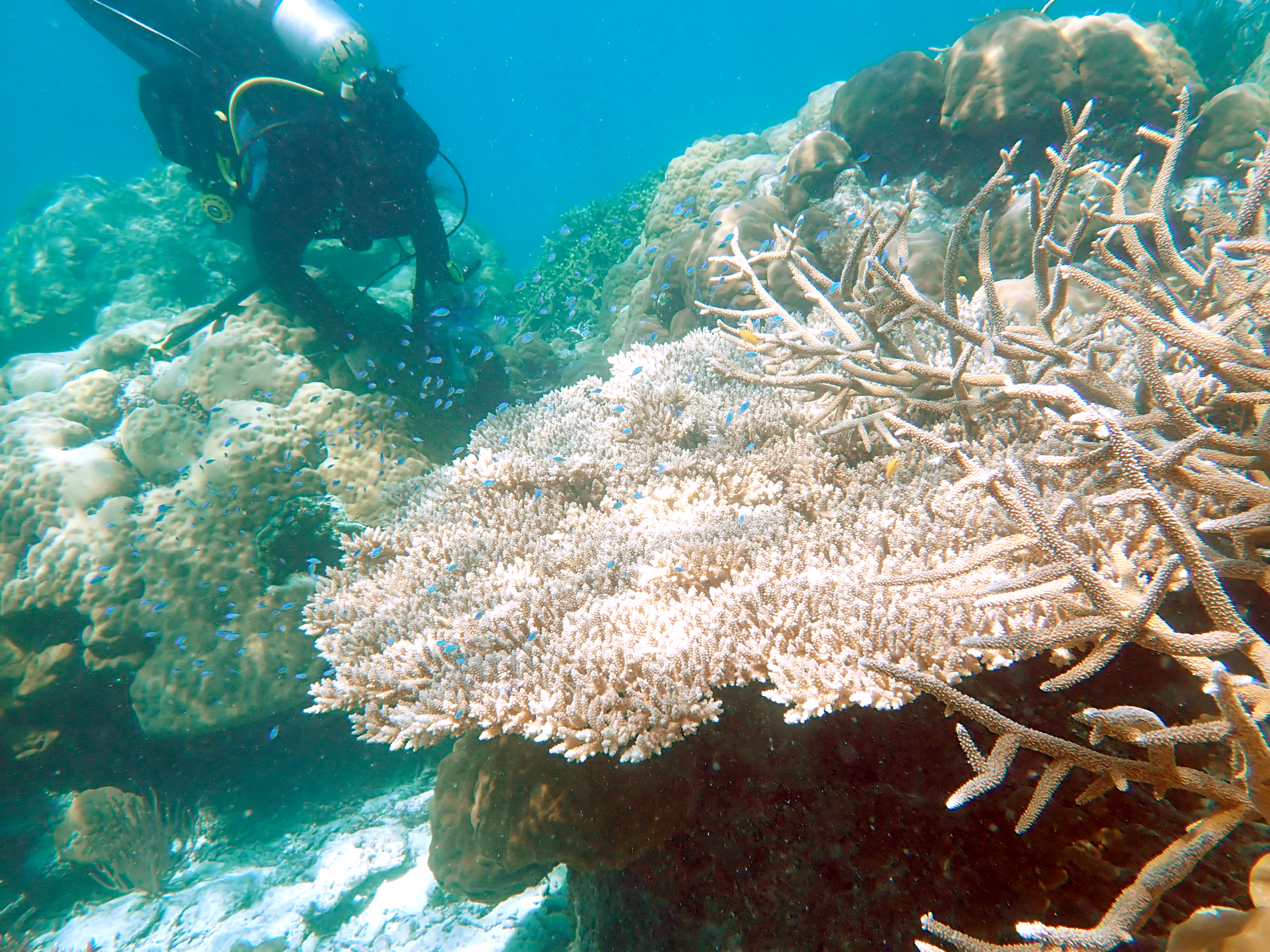
Nathaniel Hanna Holloway, marine ecologist at Scripps Institution of Oceanography at UC San Diego, which co-led the monitoring effort alongside Island Conservation, placed the Ulong results in their wider scientific context.
“These early signals from Ulong show how quickly ecosystems can rebound when stressors are removed. For the first time in Palau, we’re seeing measurable evidence of seabird-driven nutrient flow returning to the land and sea. It’s powerful proof that terrestrial action spills over into benefits for surrounding reef communities, which people rely on for their livelihoods.”
The study used a Before-After-Control-Impact monitoring model, tracking seabirds, nutrients, reef fish and benthic communities on Ulong before and after the rat eradication, and comparing results against Ngeruktabel – a nearby island of similar character where invasive rats remain and no conservation action was taken. The project engaged more than 100 local team members, students and community participants, and generated one of the largest ecological datasets of its kind in Palau: over 30,000 hours of acoustic recordings and more than 11 terabytes of seafloor imagery, now publicly available to support long-term research.
For the community, the significance of the work extends beyond the scientific findings.
“Managing invasive species is everyone’s business,” said Princess Blailes, Coordinator of the Protected Areas Network at Palau’s Department of Conservation and Law Enforcement. “Through collaborative efforts with the community, conservation partners, and stakeholders we can better protect our Koror Rock Islands Southern Lagoon unique biodiversity and ensure healthy ecosystems for future generations.”
The Island-Ocean Conservation Challenge – a volunteer collective founded by Island Conservation, Scripps Institution of Oceanography and Re:wild – aims to restore and rewild 40 globally significant island-ocean ecosystems by 2030. Ulong is one of those sites, and its early results are now feeding into a broader body of evidence that restoring islands can strengthen coral reefs, enhance fisheries and build climate resilience across the Pacific.
As ocean warming and acidification place reefs under increasing pressure, the prospect of nutrient-rich, seabird-populated islands helping reefs recover more quickly and maintain ecological function carries significant implications for conservation strategy across the region.
Continued monitoring is planned, with expanded analysis of seabird and reef-fish trends and integration of terrestrial and marine datasets across additional IOCC sites.
Click here for more from the Oceanographic Newsroom.
