

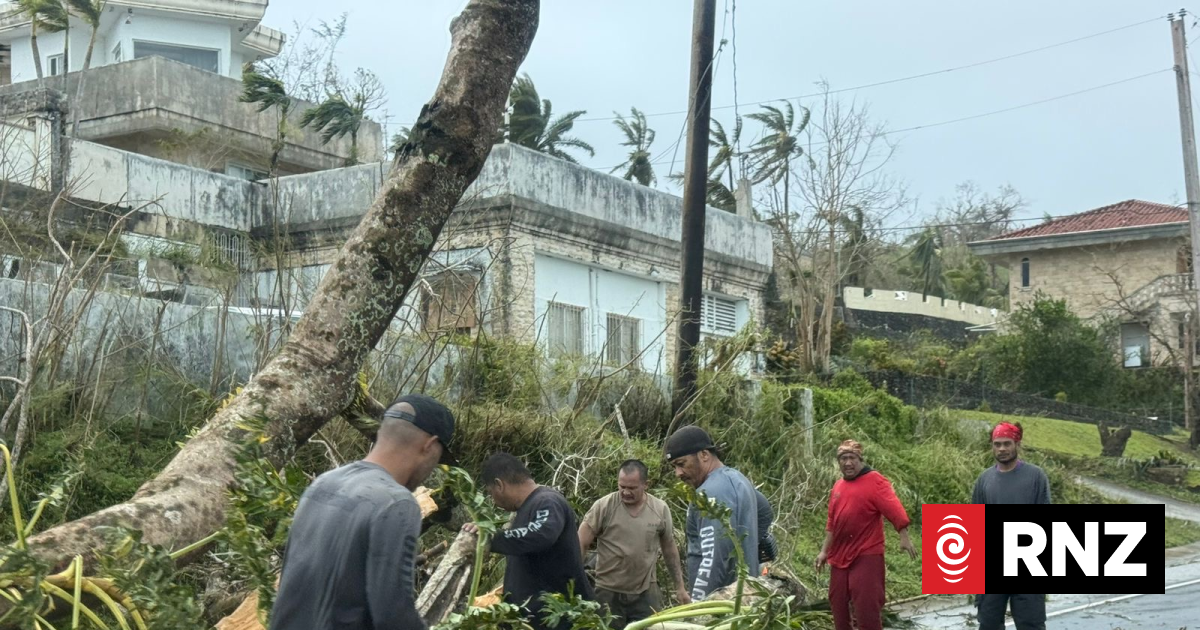
Super Typhoon Sinlaku left a trail od destruction in the CNMI.
Photo: Thomas Manglona/Marianas Press
As the Commonwealth of the Northern Mariana Islands (CNMI) continues to recover physically from the devastation of Super Typhoon Sinlaku, mental health experts say psychological wellbeing also needs to be prioritised.
The severe storm ran right over the CNMI causing widespread damages. A huge humanitarian response effort is underway.
A psychiatrist in New Zealand said mental health services are as important as physical support in the aftermath of traumatic natural disasters.
Etu Pasifika national director of mental health Dr Staverton Kautoke said the days immediately after a disaster are often the most critical for peoples well-being.
The first 72 hours are what he called “the heroic phase” when adrenaline is high and people are focused on immediate safety and survival.
But he said the real mental health challenges emerge afterwards.
“That’s when the adrenaline starts to wear off … then the reality of the losses start to set in. And usually we find this the most important time to kind of have some sort of intervention to help support.
Many people experience different symptoms; they’ll feel kind of disillusioned, some people feel very sad, some people feel traumatised.”
After two weeks comes what he described as “the disillusionment phase”, where people may begin to show signs of anxiety, depression, loss of appetite and a lack of motivation.
He said this is often when trauma resurfaces, especially in Pacific communities that have already lived through numerous natural disasters.

World Central Kitchen conducts a meal distribution distribution at Tinian Elementary School. 22 April 2026
Photo: RNZ Pacific / Mark Rabago
Northern Marianas College acting president Frankie Eliptico told Marianas Press that Sinlaku reopened painful memories.
“This is not our first super typhoon. It’s actually the third one in 11 years that has deeply and tremendously impacted Northern Marianas College,” Eliptico said.
“Any storm will continue to trigger and ignite some of those memories and some of the trauma … so that experience, of course, is not great because you’re reliving some of the nightmarish experience.”
He said the college quickly told students to focus on their safety and survival over school.
“They should prioritise their health, wellbeing and their safety because this was a horrible storm for everybody in the Commonwealth, and we didn’t want them to have to worry and be anxious or stressed about schoolwork or assignments or tests or exams that are coming up.”
According to Dr Kautoke, children are particularly vulnerable after disasters and often mirror the stress shown by adults around them.
Parents should look out for sudden behavioural changes such as clinginess, bedwetting, irritability, nightmares or withdrawing from their normal activities.
He said reminding children they are safe can make a big difference.
“It’s so important that we try and remain calm in front of our kids … even just the parents being a bit more responsive and just trying to remind them that we are here now, we’re safe, we’re all here together, and just trying to provide that support.
“Never force any child to talk about the trauma. You just listen most of the time and just being together with them and just reminding them that they’re safe.”

Typhoon Sinlaku left a trail of destruction and the scale of damage across the Northern Mariana Islands is becoming clearer.
Photo: RNZ Pacific / Mark Rabago
He said first responders and healthcare workers are also at high risk of mental health struggles or burnout; as they are often helping others while managing their own trauma.
“A lot of people focus on the physical first aid, but the psychological first aid is equally important. They always say that you can’t pour from an empty cup.
“It’s the same thing like, if you’re tired, you’re not sleeping well, you’re not eating and drinking. How can you help others if you don’t have your own cup filled?”
Seeking support
Commonwealth Healthcare Corporation’s Lee Tenorio urged people struggling with their mental health to seek support.
He told Marianas Press they have a helpline and outreach teams dedicated to assist.
“I can’t stress it enough that if you are going through some mental health crisis, that the 988 line is still available for anybody that needs it.
“But we are deploying our outreach teams, Saipan, Tinian and Rota, and if you need assistance, please share with them what you need.”
Kautoke said while Pacific communities are naturally resilient in the face of disasters, this doesn’t mean they should suffer in silence.
He advised people speak up if they need help – while also being open to offer a listening ear to others in need.
“We are still human at the end of the day, and everyone gets really affected. If you say that you’re not getting affected, then you must be some sort of superhero or super human.”
Helplines
In CNMI, residents can reach out to the 24/7 suicide and crisis lifeline by calling or texting 988.
In Aotearoa New Zealand, you can call text the national helpline on 1737.
