


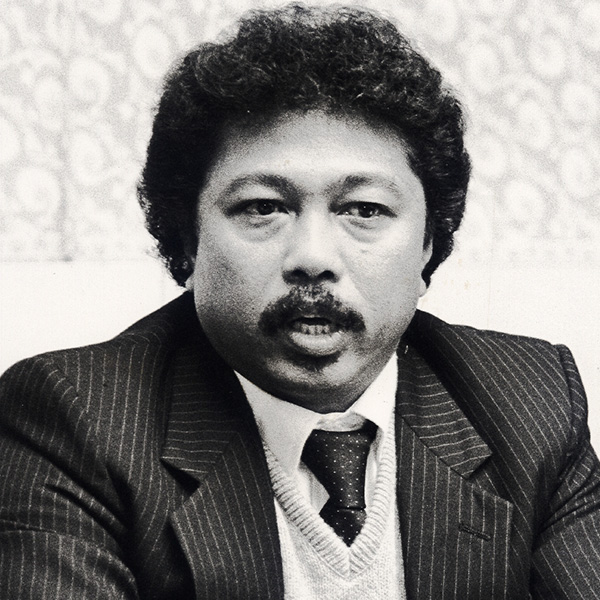
High Chief Ibedul Gibbons / The People of Belau
Palau
Contact us for interview requests and further information.
“For upholding the democratic, constitutional right of their island to remain nuclear-free.”
High Chief Ibedul Gibbons and the People of Belau fought against the presence of US nuclear weapons on the territory of Belau (also called Palau), a Micronesian archipelago in the Western Pacific. High Chief Ibedul Gibbons played a major role in supporting his people’s struggle to preserve the values enshrined in Palau’s constitution, resisting both internal and external pressures and facing difficult personal conflict. Intimidation, corruption and violence characterised the years of this struggle, during which the local population saw its own freedom and constitution jeopardised by the Compact of Free Association between the United States and Palau.
In 1979, the Belau People overwhelmingly approved a constitution that prohibited the use, testing, storage or disposal of nuclear, chemical and biological weapons on their territory, and the entry of both nuclear-power and nuclear-armed ships and aircraft. However, a crisis ensued in the following years.
At the centre of it was the Compact of Free Association between the US and Palau. This would have given Palau internal self-government, a 50-year aid package and certain defence guarantees. In return, Palau should have had to forego some foreign policy autonomy and allow the US certain military rights. These rights were, however, incompatible with the anti-nuclear clause in the constitution. The Belau People fought to uphold the constitution.
