


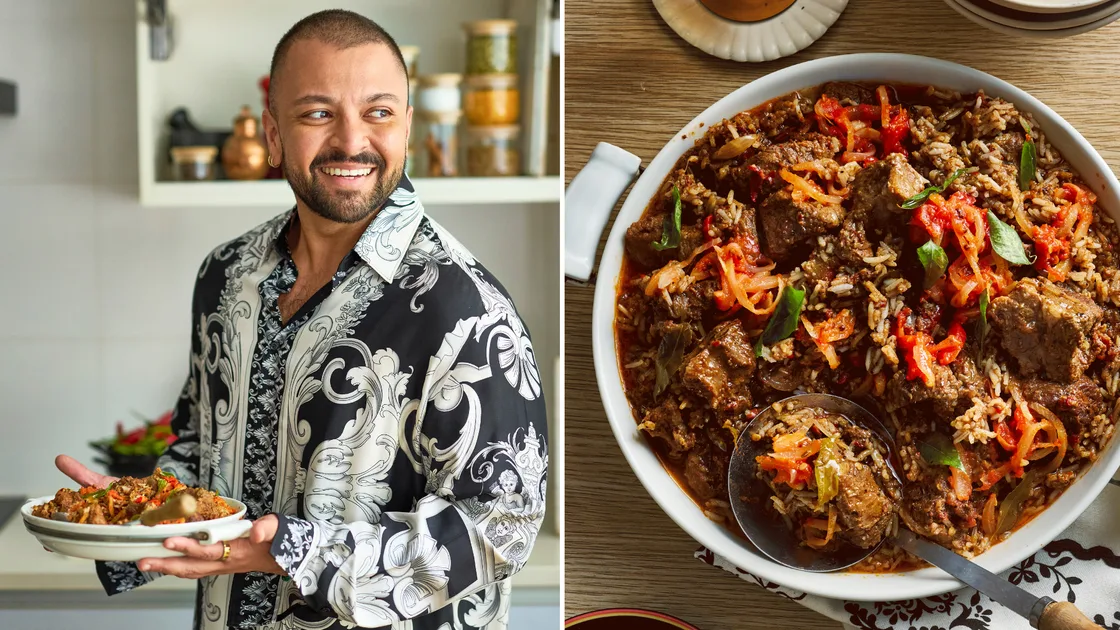
Food is both sustenance and celebration. It isn’t just lunch at our desk or weekday meal prep – it is memory encased in flavour. It’s something that expresses human milestones, holidays, and all those special happenings that leave marks in our hearts. In a world that is increasingly focused on food’s functionality, I like to remember that food itself is a language.
A lot of communal recipes designed to be made for large groups of people involve two primary ingredients: rice and meat. This central dish is then surrounded by varying accompaniments, from sauces and chutneys to chopped salads, but the hero is always the same. Another thing these dishes have in common is that they are a whole family (and kitchen) commitment and elicit elation at the very mention of them.
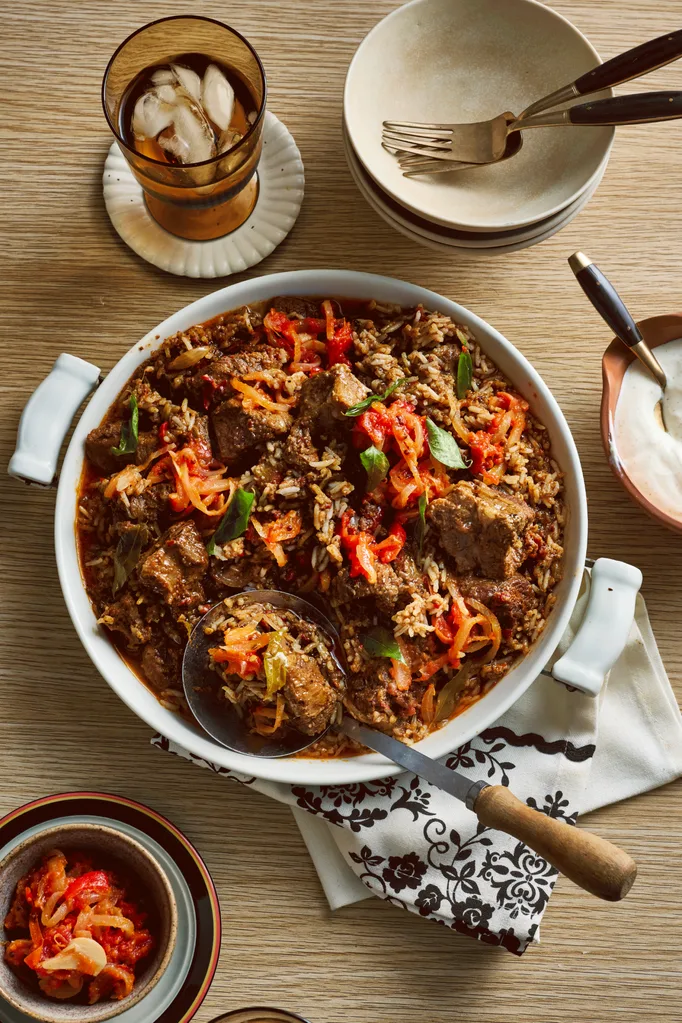
The rice and meat dish of my family, and a dish central to the food consciousness of Fiji, is palau. The word is familiar to anyone schooled in South Asian cuisine; all recipes associated with the word involve rice. However, the palau of my ancestors makes space for itself as a unique piece of the rice and meat story.
Indo-Fijians have been sharing palau for weddings, funerals, birthdays and fetes since first landing in the Pacific in the 1870s. And while its core ingredient sounds daunting in theory, it’s simple to create in practice. This is palau masala, a unique spice blend that involves the toasting and grinding of dry spices.
This distinctive Fijian blend was born out of necessity on sugar cane plantations, where access to ingredients was limited. It’s one of the most wonderful, though unsung, contributions of Indo-Fijian people to the global food conversation.
My earliest recollection of this masala being made is vivid with fire-toasted spices, smoking slightly, ground between flat and rounded river stones. This evolved to hand-turned spice grinders, where the same whole toasted spices were placed in metallic grinding instruments, to be collected in a little wooden drawer. This then turned into an electronic spice grinder, which is now (at least in my kitchen!) a Nutribullet. And before you ask, yes, I do have a special cup that I have set aside to blend my spices in.
The method of creating the masala has changed. We no longer toast our spices on a flat piece of cast iron over an open fire and grind them by hand; we now swirl them around in a saucepan over a stove until fragrant and toss them into any form of spice blender. And we don’t make it only for a crowd of dozens if not hundreds of people, but for just four or five of those we love.
But the reason we make this food has not changed.
Palau continues to be a food of celebration. It can still take many hands to put the whole dish together – the preparation of the rice, the lamb, the dry spices, the fresh spices, the stirring, the watching, the waiting, the laughing.
And all those hands are moving in a way that hands have moved before to make this exact same dish, in a different time, place and kitchen.
Ingredients
Palau Masala
Rice
Method
For the palau masala, place cinnamon sticks, cumin seeds, fennel seeds, star anise, cardamom, coriander seeds and cloves in a dry frying pan. Toast on medium heat, shaking the pan, for 2–3 minutes or until fragrant and just starting to smoke. Set aside to cool for 10–15 minutes, then grind to a fine powder in a spice grinder or blender.
Using a mortar and pestle, pound the chillies, garlic and ginger with a good pinch of salt until it forms a smooth paste.
Heat the ghee in a large, heavy‑based pot on medium heat. Add the curry leaves, cinnamon stick and star anise. Cook for 1–2 minutes, until fragrant.
Add the onion and cook, stirring, for 8–10 minutes or until golden and caramelised. Add tomatoes, breaking them up with the back of a spoon. Simmer for 3–4 minutes.
Stir in your pounded chilli paste and cook for 1 minute. Add the palau masala, garam masala, sugar and 1–2 teaspoons salt, then stir to coat.
Add the diced lamb, turning to coat well in the mixture. Bring to a simmer, then reduce heat to low. Cover and cook gently for 1 1/2 –2 hours, stirring occasionally, until the lamb is very tender and the sauce is rich.
For the rice, when the lamb is almost ready, heat the ghee in a large, wide, heavy‑based saucepan on medium heat. Add curry leaves, cumin seeds and fennel seeds and cook for 1 minute or until fragrant. Add rice and a pinch of salt, stirring to coat each grain in ghee.
Spoon the lamb and all its cooking liquid over the rice, gently stirring to distribute the meat and sauce evenly. If needed, add a little hot water so rice is just covered.
Cover with a lid and cook over low–medium heat for 30 minutes, turning the rice over gently every 15 minutes, until the liquid is absorbed and the rice is tender. Remove from heat and let stand, covered, for at least 15 minutes to steam and settle before serving. Fluff gently with a fork and bring to the table family‑style. Serve with tomato chutney and spiced yoghurt.
Fuzz’s tip:
To make spiced yoghurt, mix together 1 cup Greek-style yoghurt, 1 grated clove of garlic, 1/2 teaspoon cumin seed powder, 1/2 teaspoon salt and 1/4 teaspoon sugar in a small bowl. Stir to combine.
Related

