


AS they gather in Palau this week for the 55th Pacific Islands Forum, regional leaders want development partners to focus on their Blue Pacific agenda on climate, oceans and human security. However, they can’t escape entanglement in the strategic competition between the United States and People’s Republic of China (PRC), symbolised by an unresolved debate over missile testing in the region.
On July 6, the People’s Liberation Army Navy (PLAN) launched a JL-2 ballistic missile from a submarine in the South China Sea, to fly thousands of kilometres across the Pacific. It was the first time that China had launched a submarine-launched ballistic missile (SLBM) into international open waters.
Forum member governments immediately issued strong condemnations of the test, including statements from the three countries aligned with Taiwan (Palau, Marshall Islands and Tuvalu) but also those with diplomatic ties to Beijing (Papua New Guinea, Solomon Islands, Vanuatu, Tonga and more).
Australia and New Zealand have led the charge to condemn the Chinese test, sparking international headlines. However, much media coverage has downplayed the way that civil society networks and some Pacific governments have criticised regional military activities by all major powers, rather than China alone.
PNG Prime Minister James Marape appealed to “our Chinese friends” that the PRC missile test should be the last conducted in Pacific waters, but also explicitly pointed to other partners, stating “this message is not directed only at China. It applies equally to the United States, France, Japan, the United Kingdom and every nation with military capability. We ask all major powers to refrain from using Pacific waters for missile testing, military weapons trials or any activity that contributes to conflict or militarisation.”
As outgoing Chair of the Pacific Islands Forum, Solomon Islands Prime Minister Matthew Wale lodged a formal diplomatic protest with Beijing. But like his PNG counterpart, Wale stressed that “we don’t want to see any country – China, America or anyone else – testing intercontinental ballistic missiles in the Pacific. Be our friend, but don’t threaten us.”
Pacific civil society groups condemned the Chinese missile test but also highlighted the way that the United States conducts an average of three tests every year – as many as China has held in the last 46 years (the PLA has conducted just three missile tests into the Pacific Ocean: one in May 1980, a second in September 2024, and the SLBM test in July this year). In contrast, the United States has conducted nearly 300 ICBM and SLBM tests into Pacific waters.
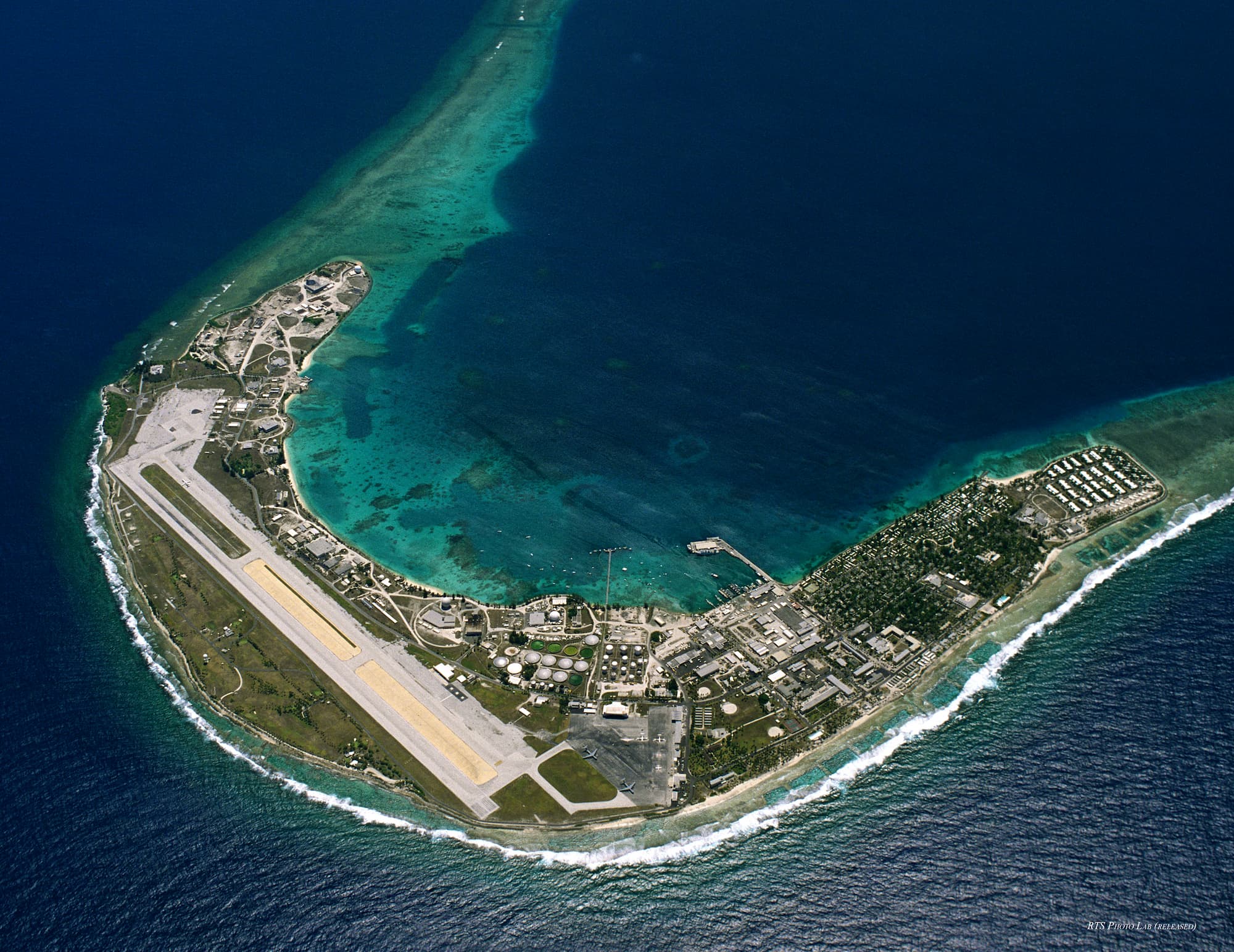
Soon after July’s test, Australian Prime Minister Anthony Albanese said that the Pacific Islands Forum Secretariat was drafting a “very strong” joint statement to criticise China’s actions and the lack of timely notification. However, the Forum didn’t immediately release a statement, highlighting an internal stalemate: countries like Nauru and Kiribati were reluctant to criticise China alone, but Australia and New Zealand are also unlikely to publicly condemn the more extensive missile testing by the United States. Under Compacts of Free Association with the United States, the Republic of Marshall Islands (RMI), Federated States of Micronesia (FSM) and Republic of Palau face difficulty in directly confronting Washington on these geopolitical concerns – especially RMI, which hosts a US missile testing base on Kwajalein Atoll.
As Forum Foreign Ministers met in Fiji on August 7, they debated the latest Chinese SLBM test in light of the 2025 Blue Pacific Ocean of Peace Declaration. Acknowledging the need for a “consensus-based” statement, Forum Foreign Ministers “emphasised the importance of all States conducting ICBM tests consistently with the Blue Pacific Ocean of Peace Declaration, the Treaty of Rarotonga, and respecting the sovereignty of Forum Members.”
Speaking to media in Koror before next week’s summit, Forum Secretary General Baron Waqa said that Forum members would discuss the issue this week, while respecting the position of each member.
“Anything to do with missiles is of concern to our leaders,” he told Islands Business. “We all want to make a strong statement to everyone, not just China.”
Rarotonga Treaty
In the lead up to this week’s summit in Palau, Australia and New Zealand have continued to criticise China, highlighting the 1985 Treaty of Rarotonga, which created the South Pacific Nuclear Free Zone (SPNFZ). However, when the treaty was negotiated in the mid-1980s, many Pacific island states called for a ban on missile testing to be included. In contrast, Australia actively opposed such a ban, concerned it would adversely affect US nuclear missile testing in the Pacific.
In April 2023, Australian Foreign Minister Penny Wong said: “I want to make this crystal clear – we will ensure we comply with our obligations under the Treaty of Rarotonga.”
The confidence in her statement is based on Australia’s actions more than forty years ago, when the Hawke Labor government worked successfully to water down the text of the treaty! At the time, Canberra opposed key demands from island states on the transit and stationing of nuclear weapons, the facilitation of nuclear warfighting, and missile testing in the zone.
Meeting in Tuvalu in 1984, the South Pacific Forum endorsed a set of principles proposed by Australia as the basis for establishing SPNFZ. Forum leaders appointed a working group to draft the treaty text, which met five times in Suva, Canberra and Wellington between November 1984 and June 1985.
Declassified documents from the National Archives of Australia, including a 1985 Cabinet minute about the SPNFZ Treaty, show clearly that Australia designed the treaty to protect US interests in the Pacific, including the deployment of nuclear-armed warships and the testing of nuclear missiles.
At the time, the Labor government under Prime Minister Bob Hawke was embroiled in debate over a US proposal to test-fire two MX ICBMs into Pacific waters east of Tasmania (tests that Hawke initially supported but were eventually abandoned by the US administration under then President Ronald Reagan, who was engaged in an arms race with the Soviet Union).
An April 1985 submission to Cabinet by then Foreign Minister Bill Hayden endorsed a more limited SPNFZ, noting: “The proposal is designed to maintain the security advantages afforded to the South West Pacific through the ANZUS Treaty and the United States security presence in the region.”
“In general,” said Hayden’s cabinet submission, “the Melanesians (Papua New Guinea, Vanuatu and Solomon Islands) have supported a treaty which is broad in scope. They have expressed interest, for instance, in the possibility of including in the treaty bans on missile testing and ‘nuclear related’ facilities such as the Joint Facilities. Nauru has supported them.”
However, the Hawke government pushed back against these proposals. Hayden’s cabinet submission detailed Australian negotiating positions for the final drafting, which explicitly stated: “Australia oppose the inclusion in the draft SPNFZ Treaty of a ban on missile tests.”
The final working group report, chaired by Australia, questioned whether Forum members had the legal power to ban missile tests in the region “since these were usually conducted over and into international waters.” Despite this, “Vanuatu, Solomon Islands, Nauru and PNG asked that their concern about missile testing in the South Pacific be recorded. Vanuatu also asked that it be recorded that its agreement to Article l (c) did not imply agreement to missile tests in the region.”
Today, as it seeks to promote SPNFZ, Canberra faces another challenge. It’s key AUKUS partner the United States is the only major nuclear power that has refused to ratify the three protocols of the Treaty of Rarotonga, even as it maintains an extensive missile testing program in the northern Pacific and is modernising its nuclear arsenal.
Russia and China were first to sign the SPNFZ protocols, in 1986 and 1987 respectively, pledging not to store or test nuclear weapons in the region or use them against Australia, New Zealand or island nations. France, Britain and the United States refused to sign the treaty protocols for a decade, only signing on 25 March 1996 after the end of French nuclear testing at Moruroa and Fangataufa atolls.
US Secretary of State Hillary Clinton attended the 2014 Forum in Cook Islands pledging action on US ratification of the SPNFZ protocols. Until now, however, successive US administrations have refused to ratify them by passing legislation through the US Senate.
When the Treaty was negotiated, the three Freely Associated States in Micronesia were still under US administration in the strategic Trust Territory of the Pacific Islands, so the SPNFZ area still does not include their land and waters. However, in March 2025, the Marshall Islands signed the Treaty of Rarotonga, the first Compact state to do so and a symbol of growing concern over today’s nuclear build up, in a country that suffered 67 US nuclear tests on Bikini and Enewetak Atolls.
Target Kwajalein
For decades, the US military has maintained an extensive missile testing program in the Pacific, firing hundreds of Intercontinental Ballistic Missiles (ICBMs) westward from California and test launching SLBMs from US submarines.
Every year, ICBMs are fired from Vandenberg Space Force Base in California to traverse the Pacific towards Kwajalein Atoll in the Republic of Marshall Islands. The United States operates the Ronald Reagan Space and Missile Test Range at the US Army Garrison-Kwajalein Atoll, under an agreement with Marshall Islands that lasts until 2066, with an option to renew for another 20 years.
US operational launches, known as Glory tests, are conducted two to three times every year, as the US Air Force Global Strike Command launches Minuteman III ICBMs across the Pacific. The re-entry vehicles from the missile travel more than 6750 kilometres to hit targets in Kwajalein Atoll, which has one of the largest lagoons in the world.
In May 2025, the US conducted two missile tests in a week, firing unarmed Minuteman III ICBMs from Vandenberg Space Force Base in California to the test range at Kwajalein Atoll. The next Glory test was in November 2025, followed by another on March 3 this year, when two re-entry vehicles from Minuteman missile travelled thousands of miles to a pre-determined target at Kwajalein Atoll. The latest test, on May 20, was Glory Test number 256. None of these US tests generated international headlines.
The United States also deploys nuclear-capable B-52 H bombers, which rotate through US air bases in Guam, Japan and northern Australia. Fearing an overwhelming US nuclear first strike using these platforms, China is rapidly expanding the number of silos capable of firing its new long-range nuclear armed missiles, with construction of an estimated 300 extra ICBM silos at three missile fields (Ordos, Hami and Yumen).
The PLA’s test firing of a Submarine-Launched Ballistic Missile in July 2026 was the first time that China has launched a SLBM into international waters. It served as a signal to the United States that the PLA is developing a nuclear triad, with new submarines and missile capabilities to respond to any US first strike on the PRC’s land-based missile silos. In turn, Chinese missiles are targeted on US military bases and installations across Oceania, threatening local communities that want nothing to do with the escalating arms race.
This strengthened capacity to retaliate also makes PLAN ballistic missile submarines a target of Australia’s proposed AUKUS submarines and US submarines which will operate from Submarine Rotational Force – West (SRF-West) a joint military facility being constructed south of Perth, Western Australia. The United States and United Kingdom plan to station nuclear-powered submarines at HMAS Stirling, starting in 2027, which will continue to operate from the facility even if Australia obtains its owned nuclear-powered submarines.
Under the 1987 Intermediate Nuclear Forces (INF) treaty with Russia, the United States withdrew nuclear-armed missiles from its ships and attack submarines in the 1990s. But the INF treaty is now defunct, and the Trump administration has ordered the US Navy to develop a new nuclear sea-launched cruise missile (SLCM-N), which would be carried by the very Virginia-class submarines that will operate from Western Australia.
President Trump’s “One Big Beautiful Bill Act”, signed into law on July 4, 2025,
included $USD2 billion for development of the new missile and $USD400 million for an upgraded W80-4 nuclear warhead. If the US military deploys these nuclear missiles on its submarines by 2034, as scheduled, this will breach the Treaty of Rarotonga and pose new problems for Canberra (which also faces increasing questions whether three second-hand AUKUS Virginia-class submarines will arrive on time, on budget – or at all).
Regional militarisation
This buildup of nuclear arsenals and missile networks by both Beijing and Washington is creating a vicious cycle of escalation, which contributes to militarisation of Forum member countries, especially in Micronesia and Australia.
The US territory of Guam – known as Guåhan to the indigenous CHamoru people – has been administered by the United States since the late nineteenth century. Today, more than a quarter of the land area is taken up by US military bases, including Andersen Airforce Base, Naval Station Guam at Apra Harbour, and Camp Blaz, a new base for US Marines relocated from Okinawa. As strategic competition with China intensifies across the region, the Pentagon has created a Guam-based military taskforce to coordinate defence operations in the northern Pacific.
However fearing a Chinese or North Korean missile attack on US bases in Guam, the US Pacific Command is also upgrading airstrips and setting up supply dumps and radar systems across the northern Pacific, in the Republic of Palau, the Federated States of Micronesia (FSM) and Commonwealth of the Northern Mariana Islands (CNMI).
The creation of new nuclear targets across Oceania has angered civil society groups. In the lead up to the Forum, the Pacific Regional Non-Governmental Organisations (PRNGO) Alliance issued a statement condemning the recent Chinese missile test but also noting that “we oppose all forms of militarisation and nuclear threats in the Pacific, irrespective of which state is responsible. We cannot condemn missile tests, military build-ups and strategic military expansion undertaken by one power, while remaining silent when comparable actions are undertaken by another.”
For regional church and civil society networks, the focus on China alone missies the broader militarisation underway by the United States and its allies: “We equally oppose the recent Chinese ICBM test, and the continued testing of Minuteman III ICBMs by the United States over the Pacific, alongside the expansion of military alliances and strategic military partnerships, including AUKUS, large-scale military exercises such as the Rim of the Pacific Exercise (RIMPAC), Valiant Shield, Talisman Sabre, and the continued expansion of foreign military presence and infrastructure across our Blue Pacific.” As Forum leaders debate their missile dilemma this week in Palau, it’s yet another sign that strategic competition between the United States and China is engulfing the region, overshadowing the Blue Pacific agenda on climate action, ocean protection and human development.
