


Utah’s first state senator of Tongan descent says there is clearly a desire for younger, fresher leadership in United States politics.
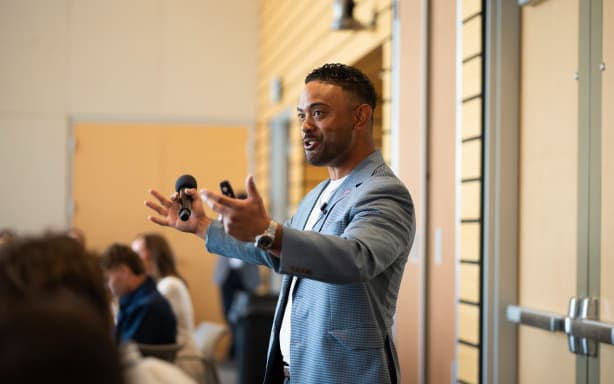
Doug Fiefia is the first Tongan-American to be elected to a state senate anywhere in the US. and will assume office in January.
A Republican, he served in the state House for just over two years before winning the June Primary for Utah’s 18th District, which includes a piece of Salt Lake City.
Despite being considered a shoe-in for the seat, Fiefia, speaking to RNZ Pacific two days after his win, considered himself something of an underdog, at least at the beginning.
“I took on an an incumbent that had been in office for 14 years, and so it was nerve wracking,” he said.
“The institutional money didn’t come. People didn’t donate because a lot of organisations don’t donate against an incumbent, and so it was very grassroots.”
The 37-year-old former Google employee went on to beat his Democratic opponent, A Dane Anderson, by a 10-point margin, 55 to 45.
Lacking traditional donors, Fiefia said he depended on community fundraising, especially from his local Polynesian community.
“It was great, and it gave us the ability to run a very strong and sound campaign.
“A lot of the effort and kind of the work was done in June… [but] we wanted to make sure that we ran to the finish line and finished the race strong.”
Republican presidential candidate, former US President Donald Trump.
CHIP SOMODEVILLA / GETTY IMAGES NORTH AMERICA / Getty Images via AFP
‘Bloodbath’ result nationwide
Fiefia didn’t shy away from the naked truth of his party’s midterm election performance nationally.
“I mean, it was a bloodbath,” he said.
“We saw in America throughout the country and even here in Utah, is the blue wave, and I think we as Republicans need to go back to the drawing table and review where we fell short.”
He considered his Polynesian community a “mixed bag” politically, though with strong conservative leanings. Regardless, he admitted that, overwhelmingly, they are not better off in the last two years.
“People voted with their pocketbooks and what their account said at the end of the day. And ultimately, we’ve failed to make things more affordable for Americans and Utahns.”
But he was careful not to pin it all on the leader of his party, President Donald Trump, or the war that he started in Iran. Rather, he echoed a classic JD Vance line, used to describe a myriad of White House blunders, from Epstein to the mid-term losses as a “miscommunication” issue.
“Bringing the public along, being transparent, and this is an issue of all politics as a whole,” Fiefia said.
“We have to do a better job communicating with the public, bringing them along… I think when we lose sight of that, that’s when we can be replaced,”
He dwelled on the idea that any elected official, from a state senator to a President, is replaceable.
“We’ve had longtime politicians who’ve been in office for a long, long time be replaced. I think some of it is healthy turnover, and we need to see more of it throughout the country.”
Trump has two years left to serve as a lame-duck President. Fiefia wouldn’t speculate on a post-Trump future in the Republican party – or his own place in it.
“But I think there is, I think, a real desire for new leadership.
“I’m excited to see what the future holds, but for now, I’m happy where I’m at.”
Supplied
How do Tongans fare in the US?
Fiefia’s parents immigrated to Utah in the 1970s. But if that were in 2026, a couple of Tongan nationals may have been stopped before they could even start.
Tonga is under a near-total travel ban, and has been since January. Eligibility for tourist, businesses, student and exchange visitor visas are nigh impossible to get, and if they do, it could mean paying a bond of up to USD$20,000.
The Kingdom was wrapped in with numerous African and Middle Eastern countries in a broad travel crackdown late last year, due to high visa overstay rates. Tonga was estimated to have a rate of around 6.45 percent for B-1/B-2 visas, and over 14 percent for students and other overstayers.
Fiefia said it was the right thing for the US to have done, because the data doesn’t lie.
“I think it was probably something that we needed to take a little bit more seriously before they were actually put on that list,
“It started important conversations, that if a country gives you a visa and they say it’s for a certain time, we need to respect that. And how do we hold our citizens responsible for that time in that agreement with that country?”
Reflecting on Trump’s wider crackdown on immigrants in the US, Fiefio didn’t feel as though the Tongan-American community were particularly affected.
“The videos that we see online of ICE that go viral, I don’t see much of that happening within the state of Utah, because of coordination with law enforcement.
“As I speak to the Tongan community here in Utah, I don’t see, you know, much fear.”
