


Signs of the deep emotional scars from Bougainville’s history have surfaced in Papua New Guinea’s parliament as it debates whether to approve independence for the autonomous region.
The national parliament has the final say on whether to ratify the result of Bougainville’s 2019 non-binding referendum in which 97.7 percent of people voted for independence.
Every member of parliament is being given a chance to speak in the debate on whether to give Bougainville independence. After debate this week, it will resume in November, before an eventual vote on ratification.
Since the referendum result was finally tabled in parliament in August, MPs have been tasked with reading key documents related to the long running negotiations which followed the referendum
One of them is the Melanesian framework where both PNG and Bougainville agreed on a basis for preparing and managing the transition ahead – either way the vote goes.
Francesca Semoso
Pacific Women in Business
The MP for Bougainville North, Francesca Semoso, urged parliament to vote in the affirmative.
She said MPs should not lose sight of the legacy of the civil war and ensuing crisis in Bougainville in the 1990s, when it’s estimated that between 15,000 and 20,000 people died.
‘Hard time’
Semoso told MPs that the war was among the most devastating experiences in the Pacific since the Second World War.
“Its consequences reached far beyond the fighting itself: families were separated; communities were divided; schools and health facilities ceased to function effectively; livelihoods were disrupted … some wounds remain difficult to discuss even today.
“We must never allow the passing of years to diminish our appreciation of that suffering,” Semoso said.
Bougainville Central MP Timothy Masiu said a commitment to forgiveness, reconciliation, and healing became foundations on which a lasting peace was built in his region.
But like Semoso, he said there had been too much sacrifice by Bougainvilleans to ignore.
“The young men and women who bore the greatest sacrifices during the crisis, many gave their lives.
“Many others continued to carry physical, emotional, and of course, personal burdens of that period. It was a hard time.”
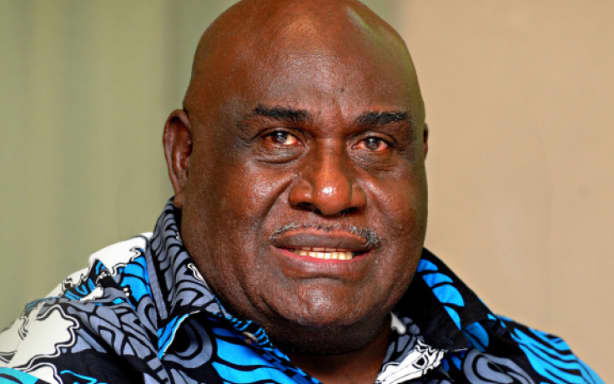
PNG Communications Minister and Bougainville South MP, Timothy Masiu
Tim Masiu
Vanimo MP Belden Namah has been a prominent figure in the public debate about Bougainville’s future, speaking firmly against independence.
Namah told parliament that he stood by the actions he and others took as military officers in the 1990s to stop PNG’s government hiring mercenaries against Bougainvilleans – in what was called the Sandline Crisis.
The MP said that despite being on opposing sides in the war, Bougainvilleans should acknowledge that he and other PNG soldiers took action in a bid to keep the country united.
“When we stood together as one nation, one country and one people, to stop the decision of the government of that day in sending the Sandline mercenaries to Bougainville, with a mission to wipe out the entire island, not only focused on the BRAs (Bougainville Revolutionary Army), but any Bougainvilleans who opposed the government of that day, none of them have acknowledged the sacrifices that we took.”
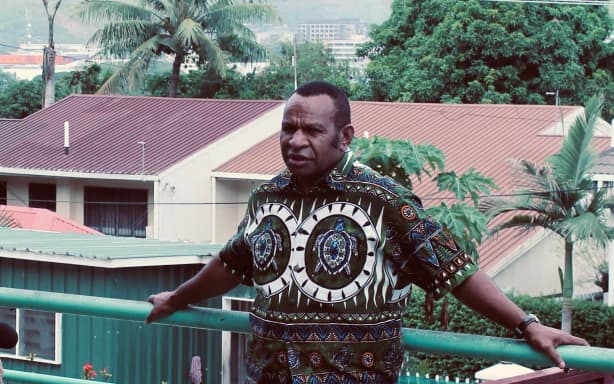
Belden Namah
Al Smith
It is unlikely that the required threshold for ratification of a three-quarters majority of MPs will be met – that is clear from the speeches on this issue from many MPs who argue PNG unity is at stake.
‘Time in history’
Masiu appealed to Bougainvilleans by saying the parliament process currently on foot was not the end of their quest for independence.
“Let us not see this as an end to our journey. We will keep on going. We will keep on moving. We will keep on moving till we come to our God-destined future, and that is the independence of Bougainville.”
The prime minister James Marape called for a win-win outcome, whether parliament votes yes or no.
He earlier gave signals that if parliament votes yes, then a transition period follows in which Bougainville gradually prepares for independence – and if it votes no, then a different transition period follows after which the issue can be revisited by parliament.
“I have two papers to speak. As the final vote is taken, if it is majority in the yes, it’s a constitutional vote, and if majority is in the yes, I have a yes paper to present.
“If majority says no, I have no paper to present. At the end of the day, this must converge at a time in history again,” Marape said.
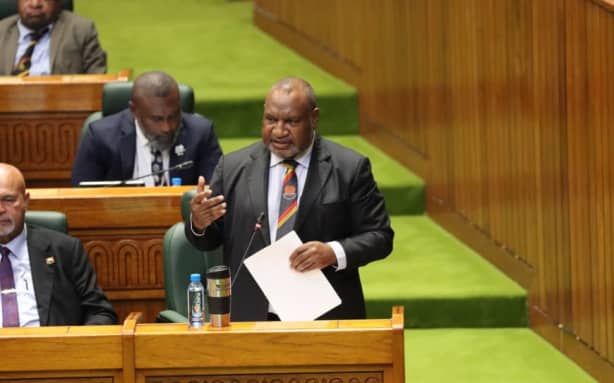
PNG Prime Minister James Marape speaks in parliament during debate following the tabling of the Bougainville referendum result.
PNG PM Media
