


Overview:
As Palau prepares to host the upcoming Pacific Islands Forum, regional leaders are carrying forward a powerful message from PRETMM6 in Papua New Guinea: the Pacific must take stronger ownership of its future. From rising fuel costs and climate disasters to economic instability and regional security, Pacific nations are being urged to move beyond discussion and deliver practical solutions for communities across Oceania.
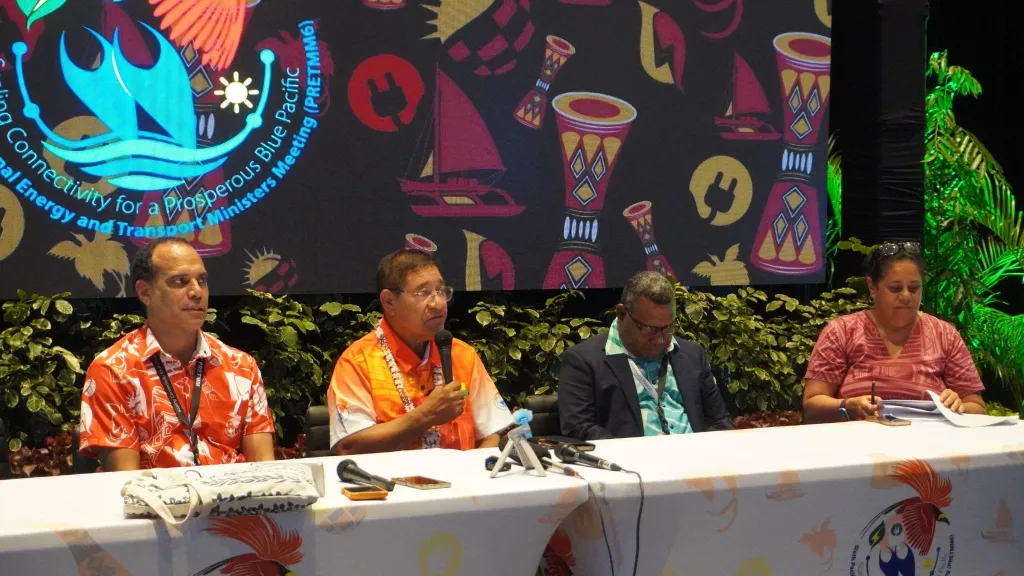
As Pacific leaders prepare to gather in Palau for the upcoming Pacific Islands Forum, one message from the Sixth Pacific Regional Energy and Transport Ministers Meeting (PRETMM6) in Port Moresby continues to resonate across the region: the Pacific can no longer afford to remain reactive in the face of growing economic and security pressures.
The call to action delivered during PRETMM6 by Papua New Guinea Defence Minister Dr. Billy Joseph Manubad reflected a growing concern shared by many Pacific nations — that regional discussions on security must move beyond military and geopolitical conversations and focus more directly on the daily realities affecting Pacific people.
Throughout the conference, leaders and delegates emphasized that security in the Pacific is no longer limited to defense and territorial protection. Rising fuel prices, climate-related disasters, supply chain disruptions and economic instability are increasingly being viewed as major threats to national and regional stability.
For many small island developing states, the cost of living crisis has become deeply connected to national resilience. Transportation challenges continue to affect remote island communities, imported food prices remain high and climate change continues to place enormous pressure on government resources. These are issues being felt not only in Melanesia, but across Micronesia and Polynesia as well.
Manubad’s remarks stood out because they challenged Pacific nations to take stronger ownership of regional priorities rather than waiting for outside powers to dictate the direction of Pacific security and development. His message reflected a broader regional shift toward Pacific-led solutions and collective action.
That conversation now carries into Palau as the country prepares to host the Pacific Islands Forum. The annual gathering is expected to focus heavily on climate change, maritime security, regional cooperation and economic resilience, but the larger issue facing Pacific leaders will be whether the region can move from discussion to implementation.
Across Oceania, there is growing recognition that Pacific nations are facing overlapping crises at the same time. Climate change threatens coastal communities and infrastructure, economic instability continues to affect livelihoods and increasing geopolitical competition is placing additional pressure on regional governments to navigate complex international relationships.
The PRETMM6 discussions also highlighted concerns that Pacific countries often continue to approach shared challenges individually despite facing many of the same struggles. Delegates stressed that stronger regional coordination will be necessary if Pacific nations hope to strengthen resilience in the years ahead.
For Palau, hosting the Forum places the country at the center of an important regional moment. As a small island nation balancing environmental protection, tourism recovery, economic vulnerability and strategic partnerships, Palau reflects many of the broader realities facing the Pacific today.
The upcoming Forum will likely serve as more than just a diplomatic meeting. For many Pacific Islanders, it represents a test of whether regional unity can still produce meaningful outcomes for communities across the Blue Pacific Continent.
Manubad’s call to action at PRETMM6 ultimately carried a simple but urgent message: Pacific nations cannot afford fragmented leadership during a time of growing regional uncertainty.
As leaders arrive in Palau for the Pacific Islands Forum, the challenge will not simply be producing another regional declaration. The challenge will be demonstrating that Pacific cooperation can translate into practical solutions that improve the lives of people across the region.
