


NAHA — During the Pacific War, students from Palau Girls’ High School cared for wounded soldiers at the Japanese military’s 123rd logistics hospital in a dense jungle on Babeldaob Island in Palau, an island country once under Japanese mandate, while receiving instructions.
Eiko Tamaki, 96, who was in her second year at the school, was assigned to a ward for seriously ill patients. The patients could not walk on their own, and her main task was cleaning up their excrement. When a patient died, she and another student placed the body on a stretcher and carried it through the rocky jungle in pairs.
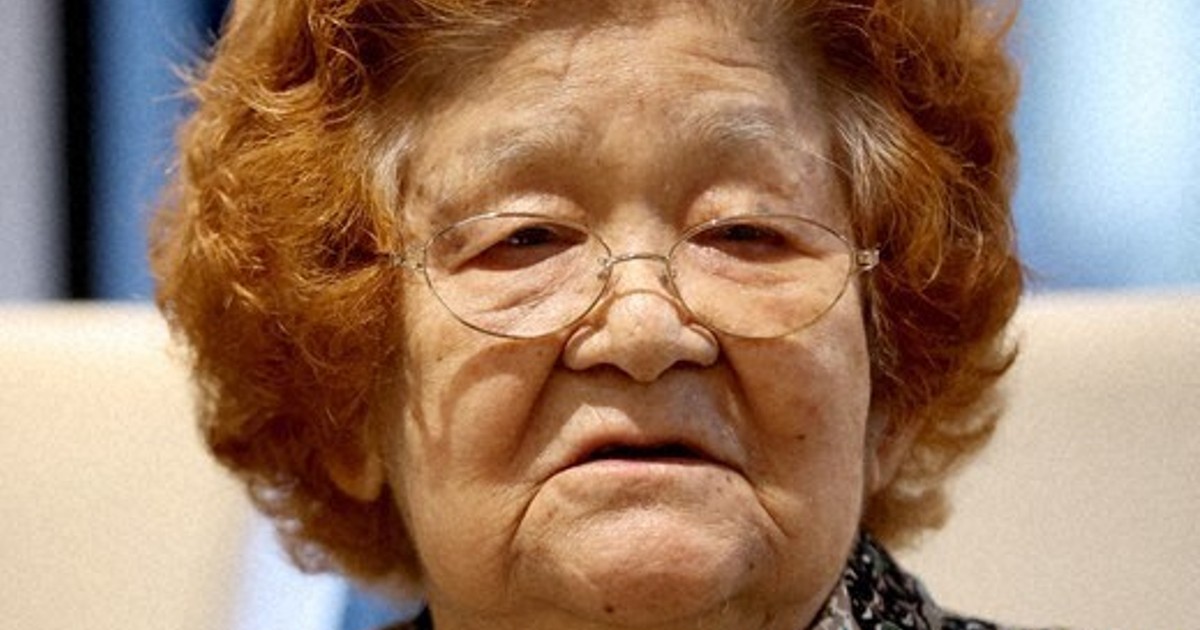
Hiroko Maeda, 97, who was in her third year, was assigned to the No. 2 internal medicine ward. “Everyone was skinny and emaciated. When giving an injection, we had to pull up the skin before inserting the needle,” she recounted. When she encountered stretchers carrying deceased patients, she saluted and saw them off.
The National Archives of Japan in Tokyo’s Chiyoda Ward stores a “list of repatriated patients” from the 123rd logistics hospital. It is a record of patients who, despite suffering from illness, survived until the end of the war and were sent to mainland Japan.

For most of the patients, the listed illness was beriberi. The disease is caused by a deficiency of vitamin B1, and the patients are believed to have been suffering from extreme malnutrition due to food shortages.
Food supplies deteriorated rapidly after a major air raid on Koror in March 1944. In July that year, Saipan in the Mariana Islands fell. In September, U.S. forces also landed on Peleliu Island, only about 50 kilometers south of Babeldaob Island, as well as on Angaur Island.
As air raids intensified, many Japanese soldiers and civilians on Palau’s islands were left behind, while the war front shifted to areas including Leyte Island in the Philippines.
On Aug. 15, 1945, the students at the logistics hospital were gathered in an open area in the jungle. Soldiers said they were being disarmed and put down their swords and guns, then knelt on the ground and cried.
Maeda also burst into tears. As she cried, she vaguely thought, “We have finally been liberated.” About a year had passed since she came to the logistics hospital. She had barely been able to study as a schoolgirl. The schoolgirls had been caught up in the upheaval of the war.

After Japan accepted the Potsdam Declaration, the commander of the Palau district group signed a surrender document in Palau in September 1945. The demobilization of Japanese soldiers then began before the repatriation of civilians.
Looking back on that time, Maeda said quietly, “I still want to go to Palau.” She still has letters she exchanged with classmates at the time and has not been able to throw them away.
In 2015, invited by her daughter, she took part in a trip to Palau to pay respects at graves. As the plane approached its destination, tears streamed down her face as she was overcome by nostalgia. During her free time, she tried to revisit the site of the former 123rd logistics hospital, but the trees had grown so thick that she could not proceed. She remains concerned about the patients who died at the hospital and were buried there.
According to the Japanese Ministry of Health, Labor and Welfare, about 2.4 million people died overseas in the Pacific War, including in Okinawa and Iwo Jima, or Ioto, and the remains of about 1.12 million individuals have yet to be recovered.
The ministry is conducting local surveys and retrieval work, focusing on about 590,000 sets of remains, excluding “submerged remains” lost at sea with sunken ships and other remains that are difficult to recover.

On Babeldaob and Koror islands, the Japanese government has recovered 493 sets of remains out of about 4,800 war dead. As for the 123rd logistics hospital, records show that several sets of remains were collected soon after the war, but over time, even details on its location became unknown.
In recent years, however, a site believed highly likely to be the former hospital grounds was discovered. Shinichi Yokohama, 64, of Towada, Aomori Prefecture, and others have traveled regularly at their own expense to Palau, where people from the northern Japan prefecture are buried, have continued investigations for the past 18 years. In October 2024, they found a site where bottles believed to have been used for medicines were scattered. They also confirmed multiple artificial mounds believed to be burial sites. The welfare ministry has received reports and materials from Yokohama and the others, and plans to carry out surveys on Babeldaob Island, including the former hospital site, after completing retrieval activities at mass burial sites on Peleliu and the Angaur islands.
Yokohama also attended a gathering of the Okinawa-Palau friendship association held in the city of Naha in May this year and conducted detailed interviews with Maeda and others. With a desire to “somehow return the remains of Japanese people to their hometowns,” he plans to head to Palau as early as this autumn for another survey.
“Precisely because the generation that knows the war firsthand is shrinking, we must dig up history once more and pass it on across generations,” he said. With the feelings of the former schoolgirls also in mind, the work of mourning the souls resting in the distant South Seas will continue.
(Japanese original by Kanami Ikawa, Tokyo City News Department)
(This is Part 2 of a two-part series)
