


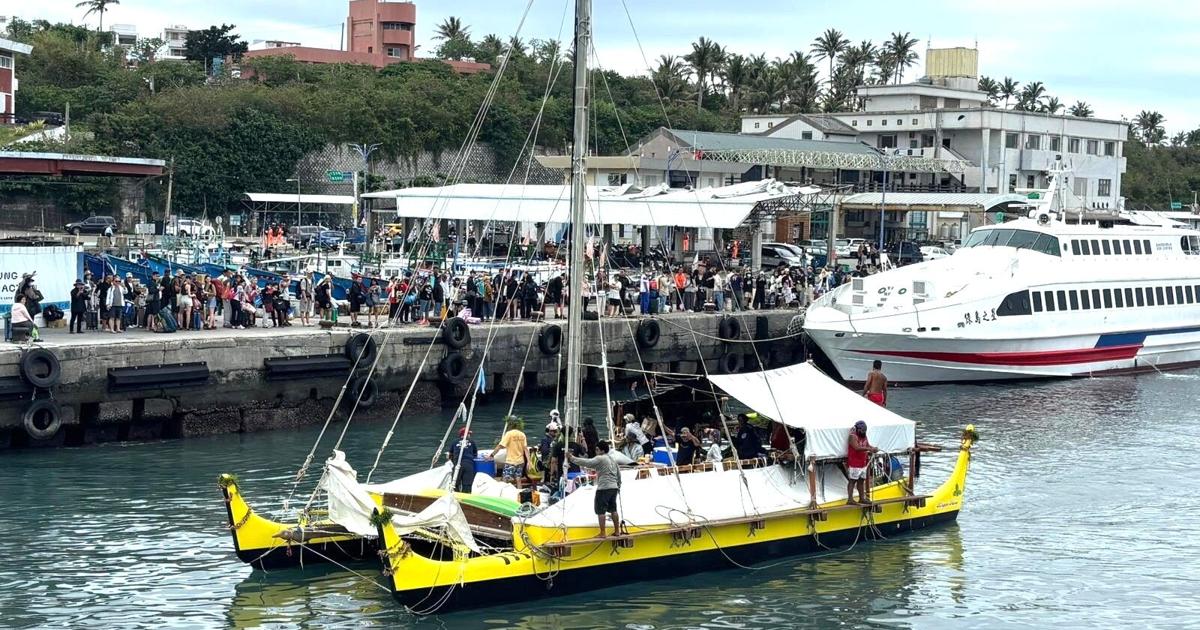
The traditional voyaging canoe Alingano Maisu has once again altered course – this time steering away from Yap and toward Palau – as Tropical Storm Hagupit, Invest 93W, and a developing disturbance near Kosrae churn across Micronesia.
Local voyage organizers said Thursday that the storm systems passing through Yap forced the canoe’s direction to shift yet again, prompting Rhapin Woek, or Grand Master Navigator Sesario Sewralur, to make the call to head for Palau instead of Guam or Yap.
“The wind has changed direction again,” organizers said. “To avoid the severe weather, Captain Sesario has altered the course to Palau.”
The crew remains in good condition with ample supplies, and if current wind patterns hold, the Maisu could reach Palau by Sunday.
Supporters asked the community to “keep our Maisu family in your thoughts and prayers as they navigate away from these storms toward landfall.”
Course change follows Monday’s warning
The diversion marks the second major change in travel plans this week.
On Monday, organizers announced that shifting winds and a weather disturbance near Kosrae – then carrying a 20% chance of development between May 13–19 – made it unsafe for the canoe to continue toward Guam. Sailing to Guam would have added two more weeks to the voyage, a risk the crew could not take with their remaining supplies.
At the time, the crew expected to decide by Wednesday whether to head for Yap or return directly to Palau. If they had chosen Yap, their estimated arrival would have been between May 10–12.
But with Hagupit and Invest 93W now sweeping through Yap, that option closed.
Original plan: Guam 1st Micronesian landfall
The Maisu’s change of course is a sharp turn from the expectations shared just over a week ago.
On April 28, organizers projected the canoe would make landfall on Guam between May 1 and May 6, giving island residents a chance to welcome one of Micronesia’s most respected traditional vessels as it continued its homeward journey.
Guam was supposed to be the first stop on the return route, followed by Saipan, Satawal, Yap and finally Palau – where the voyage began on Feb. 16.
At that time, the Maisu had just covered more than 100 miles in 24 hours after departing Okinawa, sailing with a new sail gifted in Taiwan and hull reinforcements provided in Okinawa. Supporters said the canoe was “flying” home.
Voyage rooted in tradition, history
The Alingano Maisu is a Polynesian‑style double‑hulled voyaging canoe and one of the most recognized symbols of the Pacific’s navigation revival. The current 6,200‑mile journey is designed to train new navigators and strengthen cultural ties across the region.
The canoe sails traditionally – guided by stars, waves, wind and ancestral knowledge – though it carries modern safety gear such as a satellite phone and emergency supplies.
The crew reached Okinawa on April 12 after departing Taiwan, where they were welcomed in ceremonies honoring shared ocean heritage. The Okinawa stop was especially meaningful, marking a full‑circle tribute to the historic 1975 Chechemeni voyage from Satawal to Okinawa. Former Palau President Tommy Remengesau Jr. and Okinawa Gov. Denny Tamaki were among those who greeted the crew.
The voyage is guided by Rhapin Woek Sesario Sewralur, a Satawalese grand master navigator, and follows ancient sea lanes first charted more than 3,500 years ago – carrying the message of “One Ocean, One People, One Family.”
Families watching closely
The journey also carries personal meaning for families across Micronesia. One parent, Rita Pangelinan Nauta, whose daughter Zea Nauta is among the crew, traveled to both Taiwan and Okinawa to greet the Maisu during earlier stops.
She and other families continue to track the canoe’s progress as it now heads toward Palau.
