


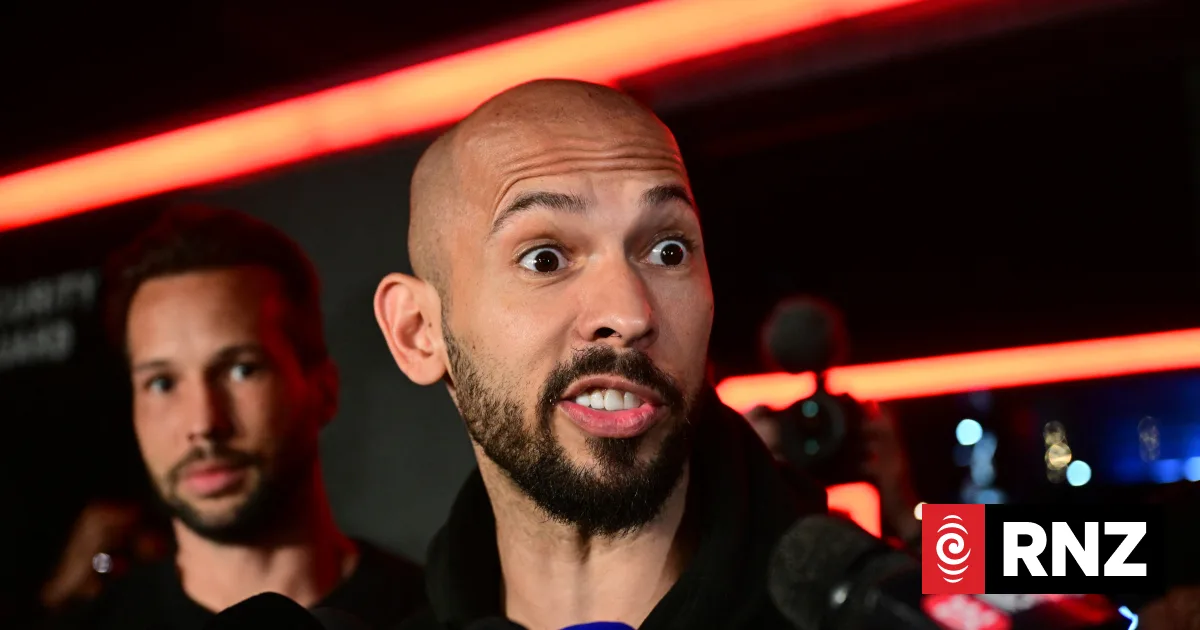
Controversial manosphere influencer Andrew Tate has lost his Vanuatu citizenship.
He faces extradition the United Kingdom to face charges of rape, assault and sex trafficking, which Vanuatu government consultant Glen Craig told RNZ Pacific was likely the reason why he lost his citizenship.
“In my view, the citizenship should never have been granted in the first place,” Craig, who helped to design the current CBI scheme, said.
“But to be fair to the government of the day, no charges had been laid at the time. The weakness was in the system, not in any one decision.
“The screening process did not properly test an applicant’s character, conduct or public statements, and it was not as strong as it should have been.”
Craig said the system Vanuatu had instituted of background checks and character assessments has improved significantly since Tate was granted citizenship.
“There is now a triple-check system in place, with independent screening at each stage,” he explained.
“It is excellent to see the revocation power exists, and even better to see it exercised … this response is a sign of Vanuatu’s maturity.”
Craig said to be a citizenship of another country, regardless of whether it was purchased or not, is a privilege.
“Vanuatu is no different from Australia (or) New Zealand … every one of those countries has granted citizenship to people who have gone on to commit crimes or to behave in ways that are not in keeping with the values of that country.
“The test of a programme is not whether that ever happens, but how the country responds when it does.”
A Vanuatu passport carries a minimum price tag of US$130,000 for a single applicant.
Tate may soon be extradited to the UK to face charges of rape, assault and sex trafficking, which he denies.
