


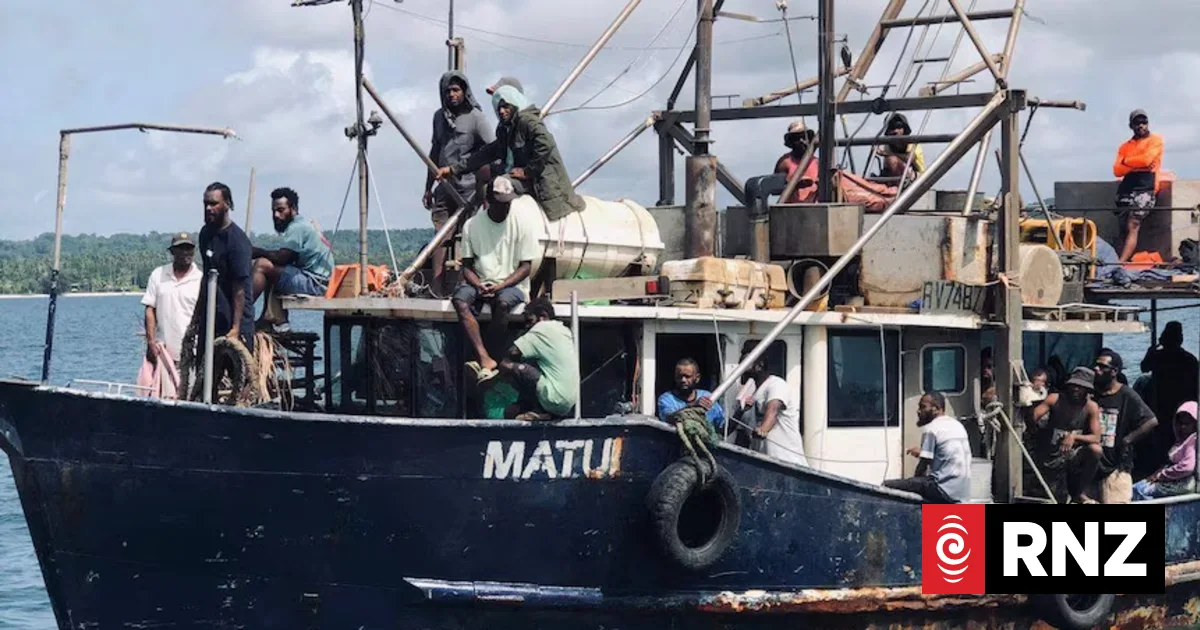
The Vanuatu ferry disaster has exposed a critical gap in how weather warnings are turned into action across the Pacific, according to the country’s top meteorologist.
MV Matui, Vanuatu’s inter-island ferry sank in rough seas off the coast of Vanuatu over the weekend, leaving one person confirmed dead and more than 30 people missing.
Vanuatu Meteorology and Geo-Hazards Department (VMGD) director Levu Antfalo said his office could forecast dangerous conditions and warn the public, but it had no authority to stop vessels from putting to sea.
His comments come as meteorological leaders from across the Pacific meet in Tonga for the 8th Pacific Meteorological Council Meeting to discuss how to strengthen weather and climate services and make warnings more effective in protecting lives.
Antfalo said Vanuatu’s warnings about the conditions were issued days before the MV Matui sank last Friday.
“The warnings came out earlier, so we pushed out the warnings on Tuesday. So there was good lead time for them to see the message and act upon it. But this is how much we can do,” he said.
“We can only put out the information. To stop the vessels going out, that’s not our mandate.”
The Vanuatu Meteorology and Geo-Hazards Department also issued a marine strong wind warning at 5am on Friday, warning of dangerous conditions across all coastal waters.
It forecast southeast winds of 26 to 30 knots and very rough seas of up to three metres in northern waters.
Elsewhere, southeast winds of 21 to 25 knots and rough seas of up to 2.5 metres were forecast.
The warning urged sea travellers and mariners to take safety action, specifically noting that the conditions could be hazardous to small boats and vessels.
Antfalo said the warnings provided information that vessel operators can use to assess whether their particular boat is capable of handling the conditions.
A larger vessel may be able to withstand conditions that could be dangerous for a much smaller boat, he said.
The problem, he said, was that the final decision currently rests with the vessel operators and relevant authorities.
He believed the disaster should prompt a rethink of that system.
Rather than leaving captains to interpret general weather warnings themselves, Antfalo says warnings could be tied directly to different categories of vessels, with regulations determining which boats can safely operate under particular conditions.
“And if that can be done and can stop vessels that go out that would put danger to the ship and lives, then that’s what I see now is putting harsher regulations to stop people going out when we put out warnings,” he said.
He said that would require stronger cooperation between the meteorological service, the Vanuatu Maritime Safety Office, the National Disaster Management Office and search-and-rescue agencies.
The issue is particularly painful for Antfalo as a Ni-Vanuatu.
He said hearing that dozens of people were missing was devastating, particularly reports involving twin four-year-olds and concerns about the availability of life jackets.
He also said one of the people involved in the response was connected to one of the VMGD’s projects.
From accounts shared from Vanuatu, he said, the vessel appeared to have capsized suddenly.
That, he said, reinforced why marine warnings need to be taken seriously even when conditions at sea can change.
“When there’s a warning, there’s uncertainty in terms of wave height changes, as you call it. So, if there’s a warning, I would prefer for those marine vessels to take heed of those warnings,” he said.
Meteorological services can only provide the scientific assessment of conditions, including wind strength and wave heights.
“But that could change when you’re out in the sea,” Antfalo said.
The disaster has therefore become an important issue for the Pacific meteorological community meeting in Tonga.
The regional meeting is considering how Pacific meteorological services can strengthen forecasting, warnings and communication with communities and the agencies responsible for acting on that information.
For Antfalo, the Vanuatu tragedy demonstrates why that work cannot stop with the meteorological service issuing a warning.
He said there needed to be greater responsibility across the chain, from the people producing the forecast to those regulating vessels and the people deciding whether to travel.
“At times, probably, yes, it may be on our side. But for this case, it’s on the other side, where our people do not take heed,” he said.
Antfalo said a national investigation would be needed to determine what happened and identify any lessons for Vanuatu.
But he believes the wider regional discussions should also consider how meteorological warnings can be connected more effectively to decisions made by other agencies and stakeholders.
He expected the issue could be raised at the Pacific Ministerial Meeting on Meteorology, which follows the current technical meeting in Tonga.
He said improving safety is a shared responsibility.
“I would agree that this meeting, and even the PMM ministerial meeting, probably it would be raised so that how we can do better, not just on our side, but on our stakeholders as well, and how we can work together to continue to promote safety, I’d say.”
