


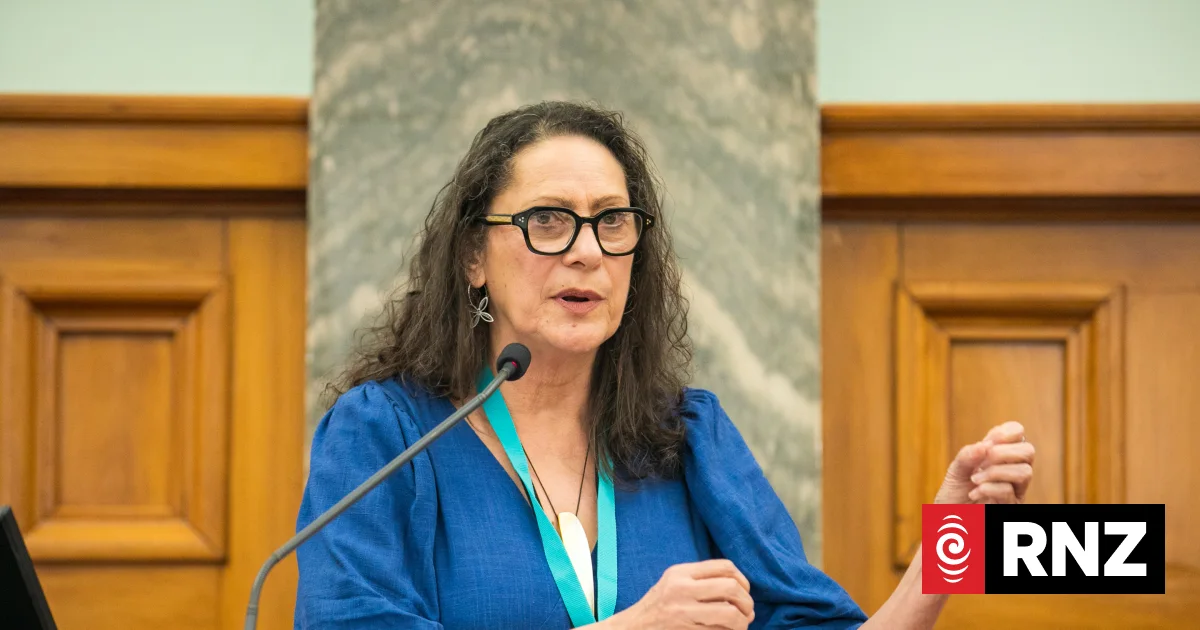
For decades, parliamentary politics across the Pacific region has largely been shaped by men. This week, women parliamentarians from across the region gathered in Wellington with a focus on changing that.
The women changing Pacific politics
The House
Thirty-one women MPs from 14 Pacific jurisdictions are taking part in a wānanga hosted by the New Zealand Parliament, with a focus on “decision-making and influencing change across the Pacific.”
The gathering comes as Pacific nations continue to grapple with the barriers preventing more women from entering politics. Ignoring New Zealand and Australia, women make up just 7.7 percent of MPs across Oceania, compared with a global average of 27.6 percent.
Those barriers are varied, and can be cultural, with men traditionally dominating governance roles in many Pacific societies. The barriers can be economic, with women often balancing family responsibilities alongside the demands of public office. For some, the way women are treated in political spaces can itself be a deterrent.
For the visiting MPs, the journey to Wellington was also a reminder of the connections that bind the region. Some travelled thousands of kilometres to attend, including delegates from Tokelau, whose trip involved a 24-hour boat journey followed by around four hours by plane.
Returning to her old haunt to make the opening address at the wānanga was former Cabinet Minister Poto Williams, the first Pasifika MP elected in New Zealand’s South Island. She reflected on her own journey into politics and the importance of staying connected to the values and convictions that brought her there.
Williams said New Zealand had a responsibility to support Pacific parliaments and parliamentarians. “We’ve got a role and a responsibility to really support building capacity, building capability,” she said.
VNP/Louis Collins
For Williams, increasing the number of women in Pacific parliaments is not just about having more women MPs. She says it is also about strengthening the wider institutions that support democracy, including parliamentary staff; clerks and Hansard.
More than representation, Williams believes it is about creating a broader institutional shift and changing how politics is done across the region.
The goal, she says, is to create a future where Pacific parliaments can develop policies and legislation that better reflect the communities they serve.
“The more women we have, the stronger they will feel within their voice,” she said.
After the wānanga is over Williams hopes that those leaving Wellington will take home more than new skills, highlighting the importance of relationships, confidence, and important new connections that can inspire this next generation of Pacific women to take their place in the legislative chambers of the Pacific.
*RNZ’s The House, with insights into Parliament, legislation and issues, is made with funding from Parliament’s Office of the Clerk. Enjoy our articles or podcast at RNZ.
