


Overview:
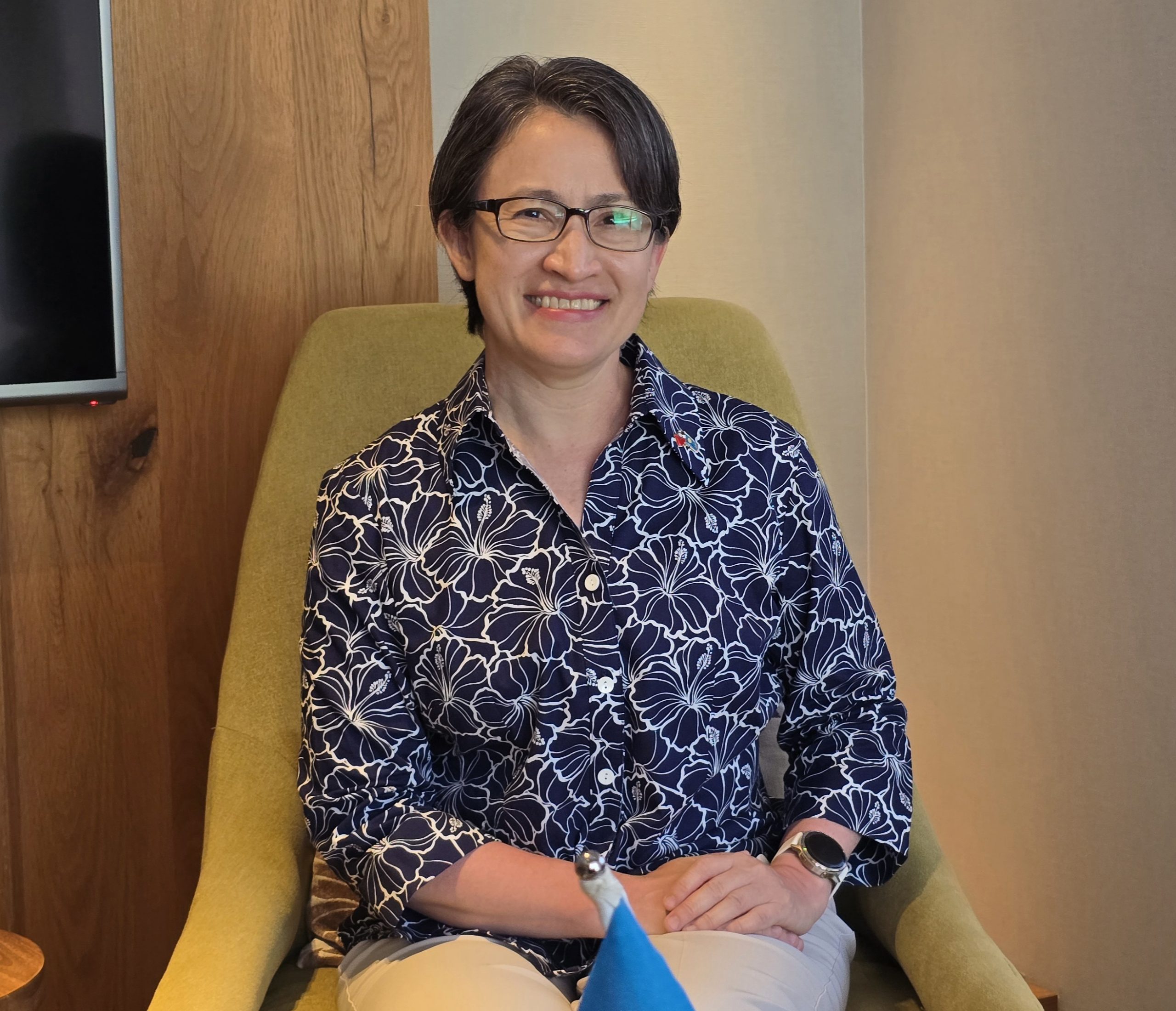
As Washington seeks to manage tensions with Beijing, Taiwan Vice President Bi-khim Hsiao says U.S. engagement with China should not be mistaken for a weakening of support for Taiwan, Palau and other Indo-Pacific partners. During an interview with Island Times, Hsiao discussed regional security, strategic competition and a new Taiwan-Palau law enforcement initiative.
By: L.N. Reklai
KOROR, Palau — “We have the same belief as the United States — that peace is maintained through strength,” Taiwan Vice President Bi-khim Hsiao said, emphasizing that continued U.S. engagement with China does not signal a weakening of support for Taiwan, Palau or other partners in the Indo-Pacific.
Speaking to Island Times during her visit to Palau, Hsiao addressed questions about what some observers perceive as a softer or more cooperative approach by Washington toward Beijing, while maintaining longstanding security and diplomatic commitments in the region.
Hsiao said recent statements and actions from U.S. officials indicate continuity rather than change in America’s Taiwan policy.
“What I can say is recently the American senior officials have reiterated publicly, and to the Taiwanese people, that their policy on Taiwan has not changed,” Hsiao said. “This is a continuity of the very strong partnership that we have had.”
She pointed to bipartisan support for Taiwan in the U.S. Congress, including initiatives aimed at strengthening ties with Taiwan and supporting countries that maintain diplomatic relations with Taipei.
Hsiao noted that members of Congress have proposed a special fund for Taiwan’s allies under a broader framework to counter what she described as coercive and malign influence from the People’s Republic of China.
While acknowledging that Washington and Beijing are seeking to improve communication, Hsiao said such engagement should be viewed as an effort to prevent conflict rather than a shift away from regional partners.
“I think both the U.S. and China want to set guardrails so that this competition does not evolve into conflict,” she said. “You see efforts to have open lines of communication, but at the same time they have reiterated the strong partnership with Taiwan.”
The vice president said countries across the Indo-Pacific are responding to growing geopolitical uncertainty by strengthening their own security capabilities while seeking to preserve peace and stability.
She cited Japan’s increased defense spending and security initiatives by the Philippines and other regional partners as examples of a broader effort to deter conflict through preparedness.
For Palau, Hsiao said the United States continues to demonstrate its commitment through the Compact of Free Association and expanding cooperation with the island nation.
“We see the United States also looking into broadening their partnership here with Palau,” she said.
Beyond security cooperation, Hsiao announced a new area of Taiwan-Palau collaboration focused on law enforcement and transnational crime.
Taiwan plans to post personnel from its Ministry of Justice Investigation Bureau at its embassy in Palau to support local authorities through information-sharing, training and other cooperative efforts.
The initiative comes as Palau faces growing challenges from drug trafficking, human trafficking, fraud, scams and other forms of transnational crime.
Hsiao said Taiwan and Palau share many of the same challenges as small island nations, including climate threats, security concerns and external pressure from larger countries.
“Taiwanese people are just like Palauans,” she said. “We are warm, we demonstrate hospitality, and we are Pacific people.”
She added that Taiwan looks forward to working with Palau and other like-minded partners to maintain a secure, stable and peaceful region.
The vice president’s remarks come amid continued strategic competition between the United States and China in the Indo-Pacific, where Pacific island nations such as Palau have become increasingly important partners in regional security, development and diplomatic engagement.
