


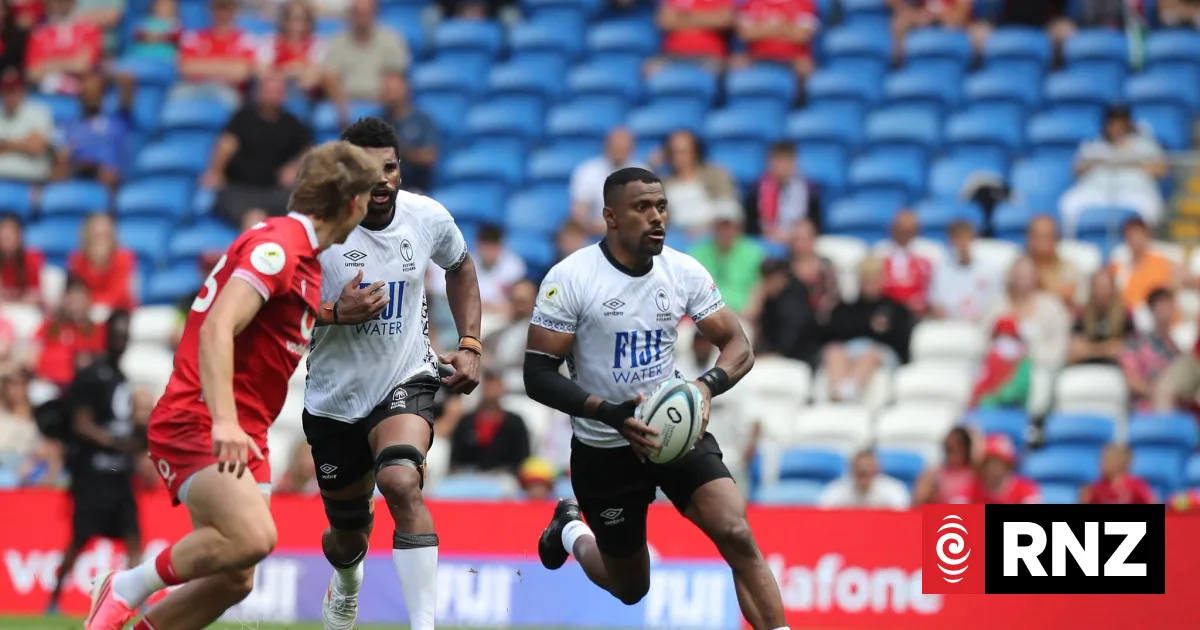
Opinion: The first leg of the 2026 Nations Championship and World Rugby Nations Cup competitions was completed over the weekend.
Pacific teams featured in both events. Fiji joined New Zealand in the Nations Championship, the first such Tier 1 competition the Flying Fijians have been included in apart from the Rugby World Cup.
This came after both Fiji and Japan were granted Tier 1 status by World Rugby last year, elevating them to the top tier of world rugby status and joining world champs South Africa, Australia, Argentina and the Six Nations teams England, France, Italy, Scotland and Wales.
Samoa and Tonga competed in the Nations Cup, which also featured Tier 2 teams from Asia, Africa, the Americas and Europe.
Other teams competing at the event included Chile and Uruguay from South America, Canada and the United States, Portugal, Spain, Georgia and Romania from Europe, Hong Kong China from Asia, and Zimbabwe from Africa.
So, how did our Pacific sides fare on the global stage? And more importantly, what key lessons can they carry forward into the rest of 2026 and towards the 2027 Rugby World Cup?
Fiji’s flanker Lekima Tagitagivalu (C) and teammates huddle after conceding a sixth try during the Rugby Union Nations Championship match between Fiji and England at Hill Dickinson Stadium in Liverpool on 11 July 2026.
AFP / Oli Scarff
Flying Fijians
The Fiji Rugby Union (FRU) moved the Flying Fijians’ three home matches against Wales, England and Scotland to Europe for the July series.
They used the tour as an income-generating opportunity, especially with hopes that they would be able to attract significantly more fans to each match than what they could do at local venues in Suva, Lautoka or Ba.
FRU Board chairman John Sanday said in earlier conversations that money generated from the gatetakings would be used to help the union with its rugby stadium plan, assist in development programmes, and other needs.
At the same time, the FRU used the tour to promote Fiji as a sports tourism destination, with hopes that the home unions would consider joining Scotland, which has been the only team from up North to make tours to Fiji.
By all indications, the FRU was able to achieve its target, especially with the massive numbers that turned up at the England and Scotland games.
Sanday and the FRU expect to record a few million in profit after all the expenses are accounted for and paid out.
One thing to remember here too is the FRU had to find its own finances to pay the bills, although World Rugby made allocations for part of the costs via it tour grant to all participating teams in the competition.
But on the field, the Flying Fijians failed to spark and get the results needed. That is the worry now and one that the FRU must deal with as soon as possible.
The team lost to Wales in a game they could have won, were thrashed by England in their biggest loss to the side, and beaten by Scotland in the second half, returning home without a win.
The target was to win two.
Interim head coach Senirusi Seruvakula was given the job in April after the FRU parted ways with then head coach Mick Byrne.
Byrne has recently come out in the media to say circumstances that led to him stepping away were controversial.
Seruvakula called for time following the loss to England. His argument was the players only got together a week before meeting Wales and fans should not judge him and the team by the results of these three games.
It was a genuine excuse. For any team gathering players from around the globe, the challenge will always remain whether the players can gel for game day.
Pasifika issue
Time together is something Fiji, Samoa and Tonga will continue to battle over the coming years, unless and until all their players are able to play together regularly in a competition somewhere.
Fiji had more than 20 players based in Europe, playing in different competitions, for different teams.
Their Drua players would have been the only group playing together regularly for a long period, in this case in the Super Rugby Pacific competition.
Samoa and Tonga basically had the same setup, with their players in the now defunct Moana Pasifika being the only ones that played together regularly.
The All Blacks got together a week before they took on France too, but the difference for them was the fact that just two of the players in the current squad were playing in Japan, while the others were in the Super Rugby Pacific competition here in New Zealand.
In addition, the players were together in their different clubs throughout the competition, which made it easier for them to gel in time.
They started a bit rusty in their performance against France but then picked up against Italy and were 70 percent better against Ireland in their third and final game of the July series.
Going for them as well was the fact that all their players are professionals who have been tested through and through, and they brought that into the national team setup.
But Fiji was not able to do that, while Samoa and Tonga showed promise early but fizzled out in the end.
While there have been many negative comments against the coaches, the focus should also be on the players and what they brought into the team.
There will always be differences between coaches and how they work their way around things, but the onus is on the players to produce the results and perform.
Gone are the days when Fiji, Samoa and Tonga had players who were playing solely for family and country. Those days are gone when players were selected from around the local teams competing in the major union competition.
Players back then wore their national team jerseys with pride, they knew what the vanua (people and country) demanded, what they had to do, and they would leave everything on the pitch for the jersey.
Modern players still carry the pride of representing their country, no doubt. But money talks and dictates the modern game.
The raw passion which had fuelled the Flying Fijians, Manu Samoa and ‘Ikale Tahi back in the 60s, 70s and 80s is now largely a tale of the past.
Sure, players need to be paid. It is their right, and their welfare must be looked after through proper systems and channels.
But to demand more when you get called up to represent your country can appear questionable.
The FRU is not France, Japan or World Rugby. Neither is Lakapi Samoa or the Tonga Rugby Union.
Players must understand, especially in the Pasifika context, the resources available, the challenges faced, and the financial limits.
They must also realise they need to be playing for their national teams for their own good. Contract offers are more lucrative to those who have played for their national teams than for those solely coming out of clubs.
So, perhaps, the ultimate goal for players should be to play for their national team, as it opens the door to many more opportunities.
Professionalism demands you do your part and leave the rest to those in charge to do theirs.
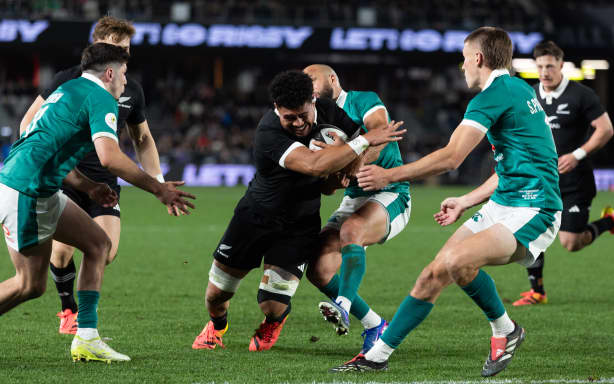
All Blacks captain Ardie Savea barges over for a try.
Brett Phibbs / www.photosport.nz
All Blacks captain Ardie Savea is the example Pasifika players should look up to.
He’s the benchmark – he has always stressed the need for players to focus on what they need to be doing. Do your part first, leave the rest for later.
For Fiji, Samoa and Tonga going forward, that is a discussion that needs to happen now.
All three unions must get players to sign on and fully commit to the course. No in-betweens.
Player contracts must be finalised ahead of getting players on tour, with that signed and sealed for good. Player welfare must be a priority.
Anything less will result in disappointment for everyone.
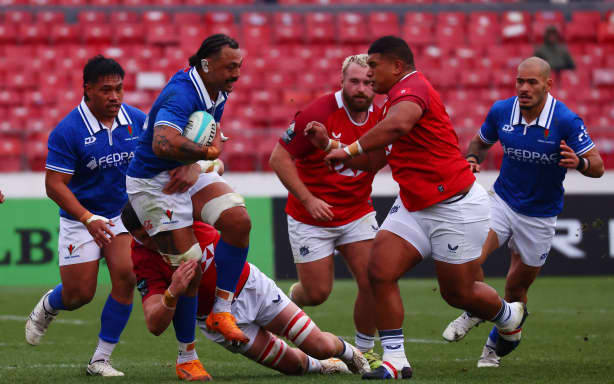
Marcelo Hernandez / World Rugby/World Rugby via Getty Images
On the field
Samoa and Tonga started their Nations Cup campaigns well and got wins at the start. However, they fell short in their next two matches.
Reviews of their matches showed they were in it throughout. It was finishing things off that let them down, especially when the fight for possession was tight and close.
Inconsistency is something that needs to be addressed in its totality by the respective coaches and their coaching teams.
Key areas like winning the set-pieces, making the right decisions with opportunities presented and playing the right game plan in the right part of the field must be worked on.
The Fijians were the most disappointing of the Pasifika lot, simply because they had so much promise but just could not produce the results.
Big-name players were on their match-day 23s for all three games.
Even then they could not find the right rhythm to get the wins in the end.
Poor game management, ineffective game plan implementation and ill discipline stood out in all three games.
Yes, they had the talent, but what is talent when you cannot combine that into a winning combination?
The All Blacks were different. They showed what should have been done and they ended up with three wins, keeping a clean record against international teams at Eden Park to cap their schedule off.
A 50-50 performance against France in their first Test under new head coach Dave Rennie and his coaching team was worrying for some critics.
They lifted that to 60-40 against Italy, coming back strong in the second 40 to beat the Italians in the New Zealand capital.
Against Ireland it was a 70-30 ranking as they raised the bar and won the confidence of some doubting fans with their winning performance.
That performance and the overall improvement seen put the team in good stead as they prepare for their upcoming tour of South Africa, where they will also play four Test matches against the world champions.
Moving forward, the Flying Fijians will compete at the Pacific Cup in September against Japan, Canada and the USA and then round off the year with the second leg of the Nations Championship.
Samoa and Tonga will wait until November for the second round of the Nations Cup competition.
It is critical for all three teams to get their homework done, patch up the areas that need patching up and get some clarity on player contracts and allowances, making sure player welfare issues are taken care of.
The lessons need to be taken on board now, with at least 15 months left to the Rugby World Cup.
Now is the time to fix what needs fixing before the big one in 2027!
