


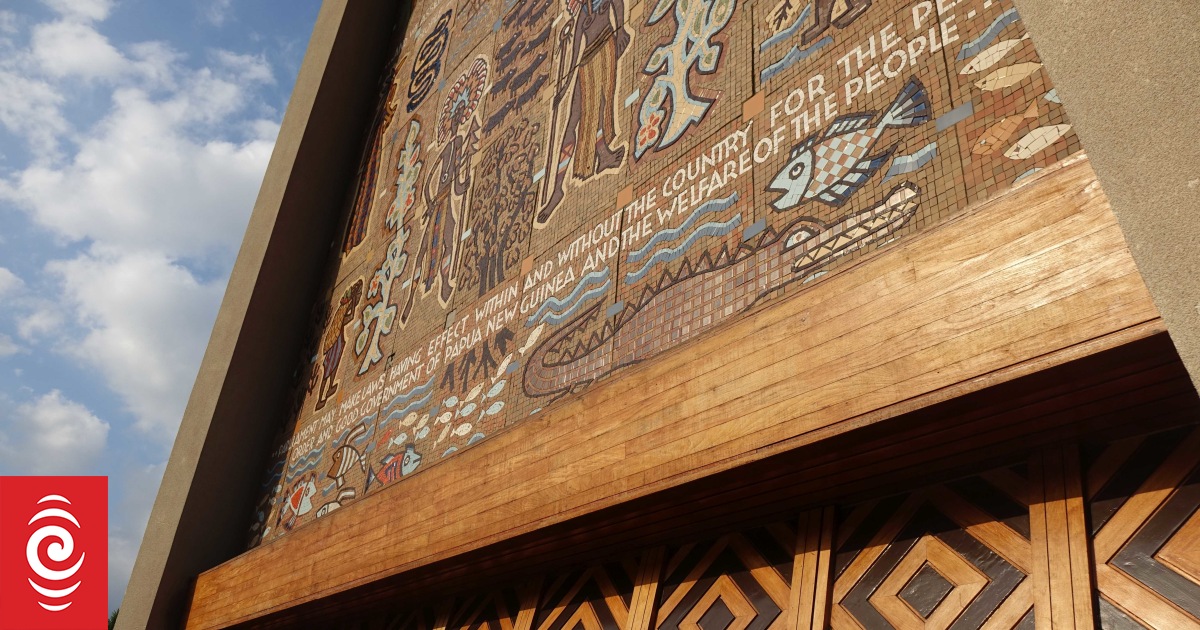
Papua New Guinea ‘s national parliament in Waigani.
Photo: RNZ / Johnny Blades
Papua New Guinea’s parliament has set a higher than expected threshold for the vote on ratification of Bougainville’s independence.
The national parliament has adopted the Sessional Order which will allow it to formally consider the result of the 2019 referendum in Bougainville in which 97.7 percent of people voted for independence.
PNG’s parliament has the final say on whether to ratify this non-binding result, but the Speaker of Parliament has controversially set a high threshold for the vote on ratification, prompting an accusation about a lack of consultation with the Bougainville side.
On Tuesday, the Minister of Bougainville Affairs Manasseh Makiba introduced the sessional order to allow parliament to divert from standing orders to formally consider the result of Bougainville’s independence referendum result, and related consultations.
The order had been developed by speakers of both the PNG parliament and the parliament in the Autonomous Region of Bougainville. The parliament passed Makiba’s motion to adopt the sessional order.
But PNG’s government surprised Bougainville leaders and others by announcing the ratification vote threshold will be three-quarters of MPs, not the two-thirds threshold usually required for constitutional amendments in PNG.

Ezekiel Masatt
Photo: PINA
It drew scathing criticism by the vice president of the Autonomous Bougainville Government, Ezekiel Massat.
“Today’s events confirm that there is a National Government Strategy to poison the waters and make it impossible to come close to reach the voting threshold.
“The National Government Strategy now reduces MA (Melanesian Agreement) Framework to nothing but an academic exercise,” Massat said.
Consultation
A former Minister of Bougainville Affairs, Sir Puka Temu, now an opposition MP, questioned where the new threshold had come from.
“Looks like you have done your job without further consulting your counterpart in Bougainville,” Temu said to the Speaker of Parliament, Job Pomat.
“The only provision in the constitution where three-quarter absolute majority is required is when the parliament is voting for a boundary change. No other provision in the constitution requires us to vote for a three-quarter absolute majority. Where is this coming from?”

Sir Puka Temu in Bougainville durnig the 2019 referendum.
Photo: RNZ Pacific / Johnny Blades
In response, Pomat said parliament did not need a three-quarter majority for a boundary change.
Offering clarity, Prime Minister James Marape said both parties agreed in the sessional agreement to the three-quarter absolute majority threshold.
“This is already clear, both governments are clear. We will have another meeting in July,” Marape said in Tok Pisin.
He emphasised that the process around the referendum outcome was in its final stage, and that PNG would continue to adhere to the Peace Agreement provisions.
“As to what date we will bring this vote to parliament, I have proposed the 30th off August but both sides will (need to) agree,” he said.
“So we are now coming to the final stage. We have now voted on this sessional order and I am grateful for this thank you.”
In the interim, the sessional order allows the parliament to deliberate further on the result and a related consultation report, ahead of an eventual vote by MPs.
