

“Biology does not pause for a cyclone warning.”
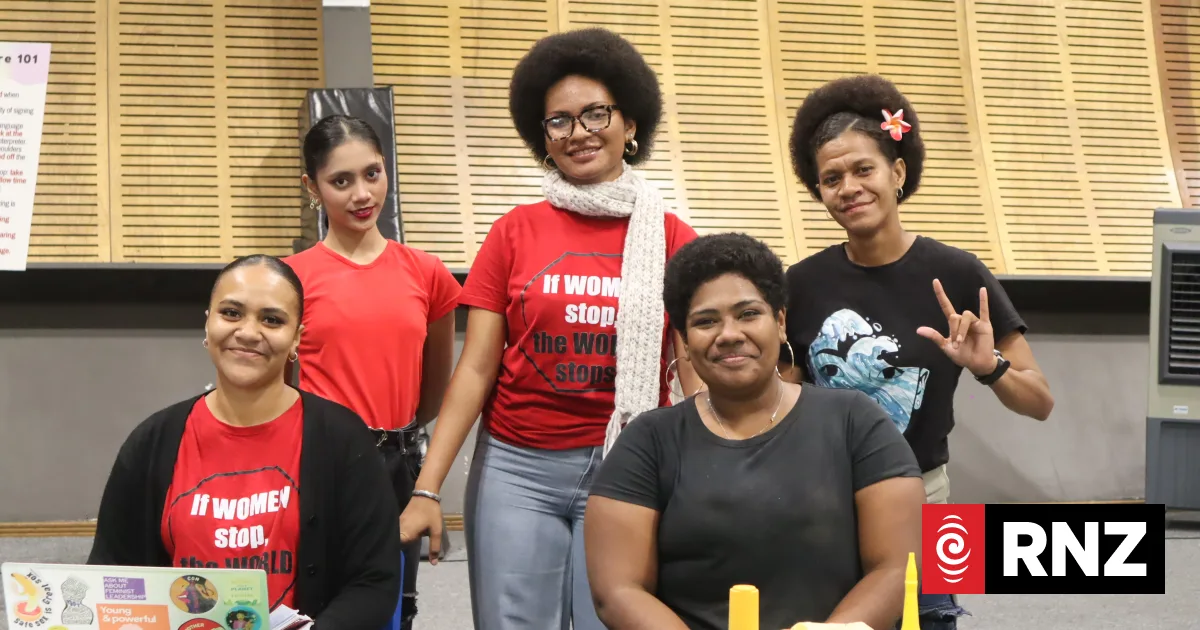
That was one of the key messages from this year’s Let’s Talk Periods! Festival in Fiji, where around 200 people gathered to discuss a growing concern across the Pacific – ensuring menstrual health is recognised as an essential part of disaster preparedness.
While Pacific Island countries contribute the least to an ongoing climate crisis, they continue to bear some of its most severe consequences, with severe cyclones, floods and rising sea levels becoming an increasingly common reality across the region.
Homes can be destroyed, communities cut off, water and infrastructure becoming unsanitary, with people forced to rethink how they live. (maybe a link to an article we have)
And while emergency responses focus on food, water and shelter, advocates have said that too often, the basic needs of women and girls are often overlooked.
A matter of dignity
United Nations Population Fund (UNFPA) Pacific representative Bidisha Pillai said menstruation does not stop when disaster strikes.
Pillai works with governments and civil society organisations to “make sure that every pregnancy is wanted, every childbirth is safe, and every young person’s potential is fulfilled”.
She said only when these three conditions are met, the population of a country can thrive.
“Periods, unfortunately or fortunately, do not stop for a cyclone or an earthquake, and neither therefore should our commitment to dignity and access to these services,” she said.
Attendees at Lets Talk Periods Festival 2026
Fiji Women’s Right Movement
Menstrual health is an absolutely fundamental part of sexual and reproductive health and cannot be treated as an afterthought during humanitarian responses, Pillai said.
“It’s a normal biological process. It’s not something to be ashamed about or to hide,” she said.
She said stigma surrounding menstruation continues to shape attitudes towards women’s health, reinforced by cultural taboos and misconceptions that discourage dialogue around women’s health.
“There is sometimes a culture of silence around talking openly about periods, talking openly about reproductive health, talking openly about the bodily changes both young girls and boys will go through.”
Alongside stigma, many women and girls in the region are faced practical barriers, such as limited access to clean water, sanitation facilities, private toilets and affordable menstrual products.
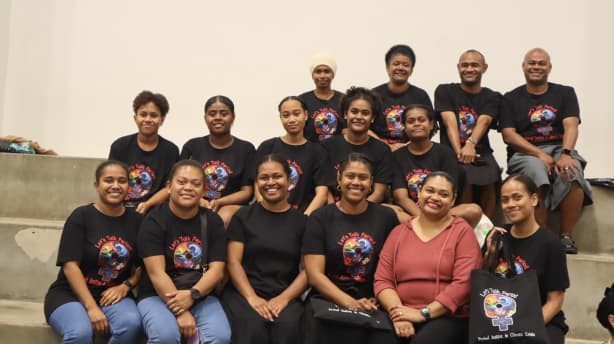
Attendees at Lets Talk Periods Festival 2026
Fiji Women’s Right Movement
However, Pillai said not all Pacific nations fall under the same umbrella, and period poverty is oftentimes more severe for those living in remote maritime communities, people with disabilities, and gender-diverse individuals who were more likely to be excluded from services and information.
Pillai noted the issue impacts “diverse groups of people that are being excluded and left behind” rather than “whole nations”, and barriers become even greater during climate-related disasters.
“We know the Pacific is living really on the frontline of climate change and crisis … this is our daily life here. And when a crisis strikes, whether it’s a cyclone or earthquake, several of these barriers get amplified, many fold,” she said.
“I think that’s the other aspect that we see here, being particularly vulnerable to climate change, and when there’s a climate-related crisis, I think the services break down even further.
“We know that for women and girls, this infrastructural barrier then triggers a whole cycle of events, which includes they have no access to privacy, they are forced to manage their periods in unhygienic ways, unfortunately, which will impact their health. It triggers a rise in gender-based violence.”
In response, UNFPA has distributed around 2000 dignity kits following recent disasters across the Pacific, including in Fiji, Vanuatu and Solomon Islands. The kits contain menstrual hygiene products and are distributed through community organisations alongside information on menstrual health and protection services.
However, Pillai said emergency relief alone is not sufficient.
“If a government has a preparedness plan, and that is only about food and water and shelter, then that means that typically population groups like women and girls and young people will get overlooked, or their needs are likely to be deprioritised and overlooked,” she said.
Young Feminist Network representative Sigalima Bola agreed menstrual hygiene remained largely absent from evacuation planning.
“Whenever there is a climate disaster, we get sent to evacuation centres and there is no proper planning … women, children and people with disabilities are just not thought of that way.”
UNFPA Gender and Youth Programme specialist Dr Eunji Kim said menstrual health should be built into disaster preparedness from the outset, rather than considered once an emergency had already begun.
But Pillai said lasting change depends on far more than emergency response alone.
“UNFPA is working with governments across nine Pacific countries to deliver family life education in schools, helping young people understand puberty, respectful relationships and sexual and reproductive health while breaking down the stigma surrounding menstruation,” she said.
‘Best solutions come from within’
Pillai said real progress will also come from communities themselves, pointing to the strength and determination of Pacific women across the region.
“When I hear from young people and young women in the Pacific, I just find that they are incredibly bold, they are incredibly aware, and they are willing to stand up and demand their rights,” she said.
“So, that gives me a lot of hope. The best solutions [to barriers that are faced] really come from within.”
Designing solutions for differently abled people cannot be done without “having them at the table” so they can explain individual barriers and co-create solutions, Pillai added.
“It’s really important to make sure that the solutions that we are developing and supporting are co-created with communities, with civil society organisations, with young people and women themselves, and then, of course, with the governments that we work with.”
