


Palau’s President Surangel S. Whipps Jr. urged world leaders to strengthen, rather than scale back, global climate commitments after New Zealand announced a lower long-term methane reduction goal. The decision has drawn criticism from some Pacific leaders and climate advocates.
Speaking during the COP30 climate talks in Belem, Brazil, Whipps said the change sends the wrong message at a time when small island nations are facing intensifying climate threats. “We all need to be working toward reducing emissions, not dropping targets,” he said, emphasizing the vulnerability of low-lying states.
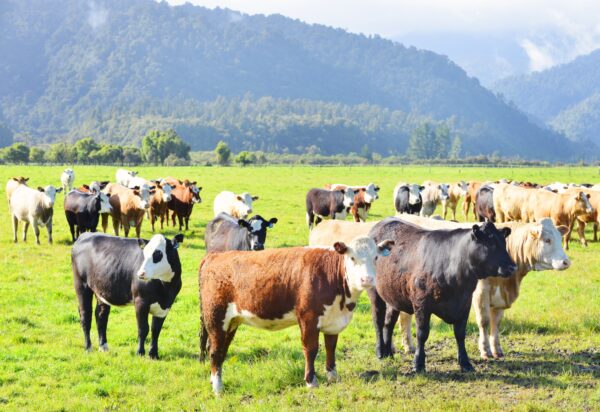
New Zealand recently reset its biogenic methane target to 14 to 24 percent below 2017 levels by 2050, replacing the earlier target range of 24 to 47 percent. The government has also confirmed that the new target will undergo a formal review in 2040.
The revised target has prompted criticism from scientists, environmental groups, and some Pacific officials who argue the change reduces ambition at a time when stronger methane cuts are needed. Critics say it risks undermining alignment with the goals of the Paris Agreement. The New Zealand government has rejected that interpretation and says the target is consistent with its international commitments. New Zealand also maintains that it remains committed to reaching net zero for long-lived greenhouse gases by 2050.
New Zealand’s Climate Change Minister Simon Watts defended the revised range as a “credible and achievable path” that balances emissions reductions with the realities faced by rural communities. Agricultural groups have also commented on the policy’s implications for farming practices arguing that the revised target provides farmers with workable flexibility and avoids what they describe as excessive pressure on rural communities.
However, this framing overlooks a central reality: reductions in biogenic methane emissions are not optional if global temperature goals are to remain viable. The suggestion that productivity and emissions reductions are inherently at odds reflects an outdated understanding of agricultural mitigation potential. Numerous studies show that targeted investment in improved waste management and pasture measurement technologies can significantly reduce methane output without sacrificing economic performance.
By resisting stronger methane commitments, agricultural lobby groups risk positioning New Zealand as a climate laggard at a moment when international expectations are tightening, not loosening. Their skepticism may resonate politically, but it does little to advance the innovation and structural support that farmers actually need. A transition that delays action now will only raise costs and undermine competitiveness in future markets where low-emission production is increasingly the norm. It is important to acknowledge that aligning agriculture with national and global climate goals is not only scientifically necessary but also strategically prudent for long-term rural resilience.
For Palau and other Pacific Island nations, which are already confronting sea-level rise, stronger storms, and increasing coastal erosion, shifts in climate ambition by larger emitters raise concerns about global progress.
New Zealand’s retreat illustrates the broader challenge of maintaining durable climate policies in politically sensitive sectors such as agriculture. Countries facing similar tensions should prioritize methane reduction strategies that are both scientifically robust and politically feasible. Options include improved manure management technologies and precision agriculture tools that reduce emissions without harming productivity. Creating long-term, cross-party agreements on methane goals can also help insulate climate commitments from political changes.
For Pacific Island nations, strategic diplomacy will remain vital. Palau and its regional partners can use forums such as COP, the Pacific Islands Forum, and the emerging International Court of Justice climate obligations process to push for stronger accountability mechanisms. These may include standardized global reporting on methane reduction and increased international financing for agricultural transformation. Expanding access to resilience funding for early-warning systems, coastal protection, and climate-resilient infrastructure will be essential to reduce the burden on frontline communities.
