


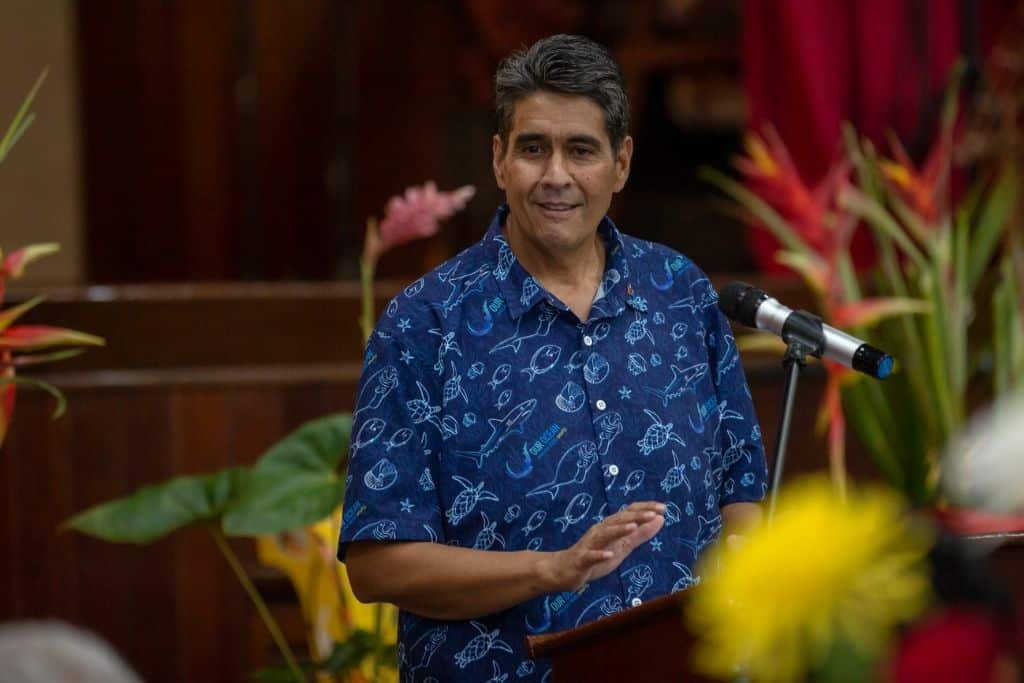
As President of the Republic of Palau, Surangel Whipps Jr. has positioned his tiny Pacific island nation at the forefront of global ocean conservation, from pioneering the ratification of the UN High Seas Treaty to enforcing massive marine sanctuaries. Yet, as Palau faces existential threats from rising seas and local economic pressures, Whipps must navigate a delicate balance between strict environmental stewardship and pragmatic resource management.
—
By Jason Tang
Surangel Whipps Jr. has served as the President of the Republic of Palau since 2021, winning reelection in 2024 for a second term. The Republic of Palau – a tiny archipelago nestled in the Western Pacific – has made serious waves in ocean conservation. Under Whipps’ leadership, Palau became the first nation in the world to officially ratify the UN High Seas Treaty, the world’s first treaty to protect and conserve marine biodiversity, in 2023.
Whipps moved to Palau at the age of three, driving boats and scuba diving to help the family tour business in his late teens. He accompanied his father during the “Save Palau” campaign in the 1970s, where his father advocated against a controversial Japanese fuel superport proposal. “We often refer to the ocean as our father, and the land is our mother. That teaches a very important principle, because if the ocean is your father, it provides, but also you have a responsibility to take care of it. You don’t just take,” he told Earth.Org in July.
The Palau National Marine Sanctuary, which went into effect in 2020, is one of the largest marine protected areas in the world, closing 80% of Palau’s exclusive economic zone to all fishing and extractive activities. The sanctuary protects various pelagic species like tuna, marlin, and wahoo, while honoring bul – a traditional Palauan conservation practice the tiny nation has practiced “for thousands of years,” Whipps explained. “Chiefs would get together as they were abusing this area: Stop, let it regenerate, let it be healthy again. That is where this whole philosophy of stewardship comes from.”
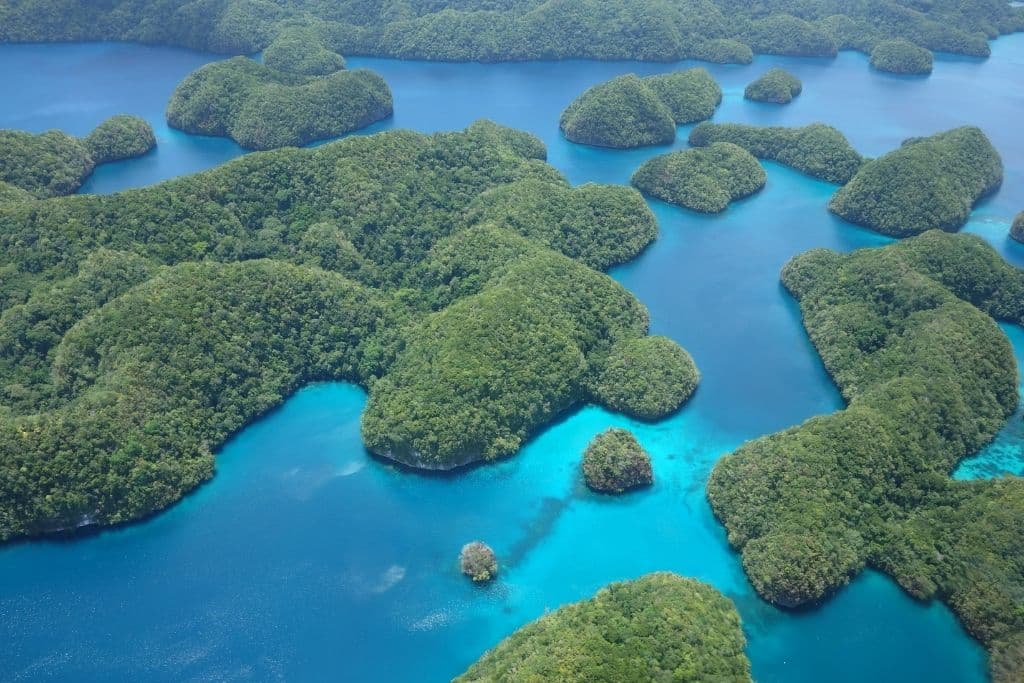
Palau continues to face existential threats from rising sea levels and extreme weather, worsened by rapidly warming global temperatures. Data collected by the Coral Reef Research Foundation indicates sea levels around Palau have risen by roughly 2.3 to 3 millimeters annually. Storm surges have become a regular occurrence, destroying farmland that cultivates traditional staples like taro. “Sea level rise is real, storms are real. I always say that for those of us who are the most vulnerable, who have contributed the least, we must not give up. We need to continue to fight. And if people are denying, it means we have to work harder.”
Controversies
The president, who hosted regional leaders and development partners at the Pacific Island Forum (PIF) this year, believes that the Pacific is “unified on climate,” citing the PIF leaders’ commitment to being the world’s first region powered by 100% renewable energy. Forum leaders have long viewed climate change as the “single greatest threat” to Pacific security. However, Whipps acknowledged divisions over another controversial topic: deep sea mining. The Cook Islands, Nauru, Tonga and Kiribati have been the strongest proponents of the practice in the Pacific, viewing it as an opportunity for economic diversification. Whipps, who has called for a moratorium on deep sea mining, stresses that “we should proceed with caution, because if we do that, we may destroy the ocean, which now is the largest carbon sink.”
Scientists and experts still have a limited understanding of the deep sea, but research shows that deep sea mining could discharge toxins and carbon reserves and destroy sea floor habitats. The destructive nature of the practice could have a profound impact on fisheries, and food security. Because deep-sea life grows and reproduces extremely slowly in cold, high-pressure conditions, the damage could be irreversible.
While Whipps has been a vocal climate advocate on the global stage, he has also styled himself as a pragmatic and business-friendly leader. He argues the Pacific needs to become the “OPEC of tuna,” where the region can not only benefit from catching fish, but also by exporting it. A government-backed proposal plans to scale back the no-fishing zone from 80% of Palau’s marine sanctuary to a minimum of 30%. Some environmental groups and former Palauan President Thomas Remengasau Jr. have criticized Whipps for calling to shrink the Palau National Marine Sanctuary to allow for more fishing, accusing him of tarnishing the country’s image as an environmental leader. Whipps told Earth.Org that his government’s marine spatial plan is designed to “improve management systems” and review its impacts on local communities. In 2020, the Guardian reported that Palau’s National Marine Sanctuary had “backfired.” The closure of its exclusive economic zone to commercial fishing vessels led to a shortage of fish, resulting in local restaurants and shops serving vulnerable reef fish instead of pelagic species like tuna.
Looking Ahead
“How do we, as Pacific Island countries, continue to be good stewards?” asked Whipps. “That requires investment in protection, but also requires investment in production. Production is building ports, processing facilities in the Pacific, so that the people in the Pacific benefit from the resources in the Pacific.”
Whipps acknowledged rising climate denialism in the West, but continues to have faith in multilateralism. He extended an invitation to US President Donald Trump to visit Palau, telling Earth.Org he hoped to “show him some coral bleaching.” At this year’s COP31 in Turkey, Whipps hopes to rally a strong and united Pacific coalition to elevate Pacific priorities such as securing climate finance, growing the green economy and speeding up the Pacific’s transition to 100% renewable energy. He admitted that red tape has “always been a challenge” to accessing financing. Small Island Developing States like Palau spend years submitting hundreds of pages of accreditation paperwork to access climate adaptation funds, often costing more in administrative overhead than the grants themselves provide.
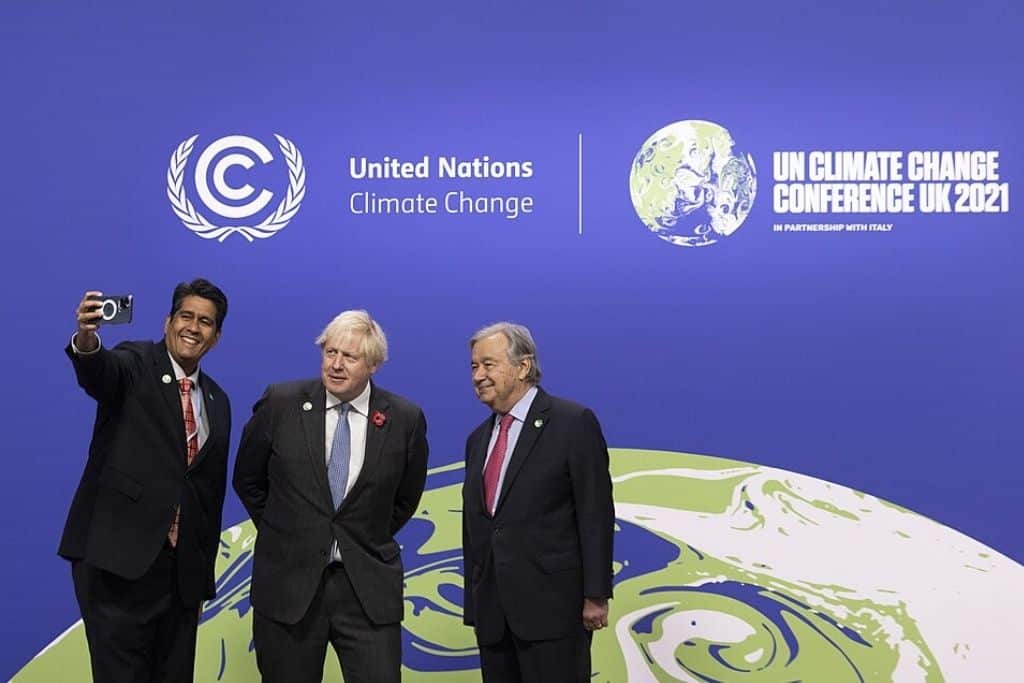
As one of the last three remaining Pacific countries to officially recognize Taiwan, relations between China and Palau are often strained. But despite the tensions between the two nations, Whipps pointed to the growing transition to renewable energy in China, the world’s biggest emitter, as a source of hope. “It makes economic sense,” the president said, citing China as a global leader in solar energy and electric vehicle production. “So if China is able to continue that trend, there is hope. Because as the biggest emitter, the biggest factory in the world … producing half of the world’s steel, you know, if they can electrify that process using renewables and nuclear, coal goes away.”
In 2017, Palau became the first country to require an eco-pledge upon arrival, legally binding tourists to be good environmental stewards. The Palau Pledge, co-created by local children, is a promise to ensure that the children of Palau inherit the archipelago’s pristine resources. For Whipps, preserving that legacy is not just a top-down policy effort. It relies on grassroots action from the next generation.
His message to young people worldwide is simple: “Climate action involves everyone, whether it’s reducing the amount of meat we eat, walking more, riding bicycles, driving electric. So that’s an individual person to make those choices. If everybody and every young person makes that commitment themselves, we don’t need governments to change. We make the change. You have the power. Just start acting and doing it.”
Featured image: Wang Yu Ching / Office of the President.
—
About the author: Jason Tang is a 17-year-old author, student and ocean advocate from Hong Kong with a focus on international relations and environmental policy. He serves as a student representative and board member at the English Schools Foundation, representing over 18,000 students. Jason has co-authored several books through Elephant Community Press and served as a literary editor for the inaugural issue of He(a)rd magazine. In 2022, he self-published ‘A Spark of Cerulean Light’, donating all proceeds to Bring Me A Book Hong Kong.

This story is funded by readers like you
Our non-profit newsroom provides climate coverage free of charge and advertising. Your one-off or monthly donations play a crucial role in supporting our operations, expanding our reach, and maintaining our editorial independence.
About EO | Mission Statement | Impact & Reach | Write for us
