


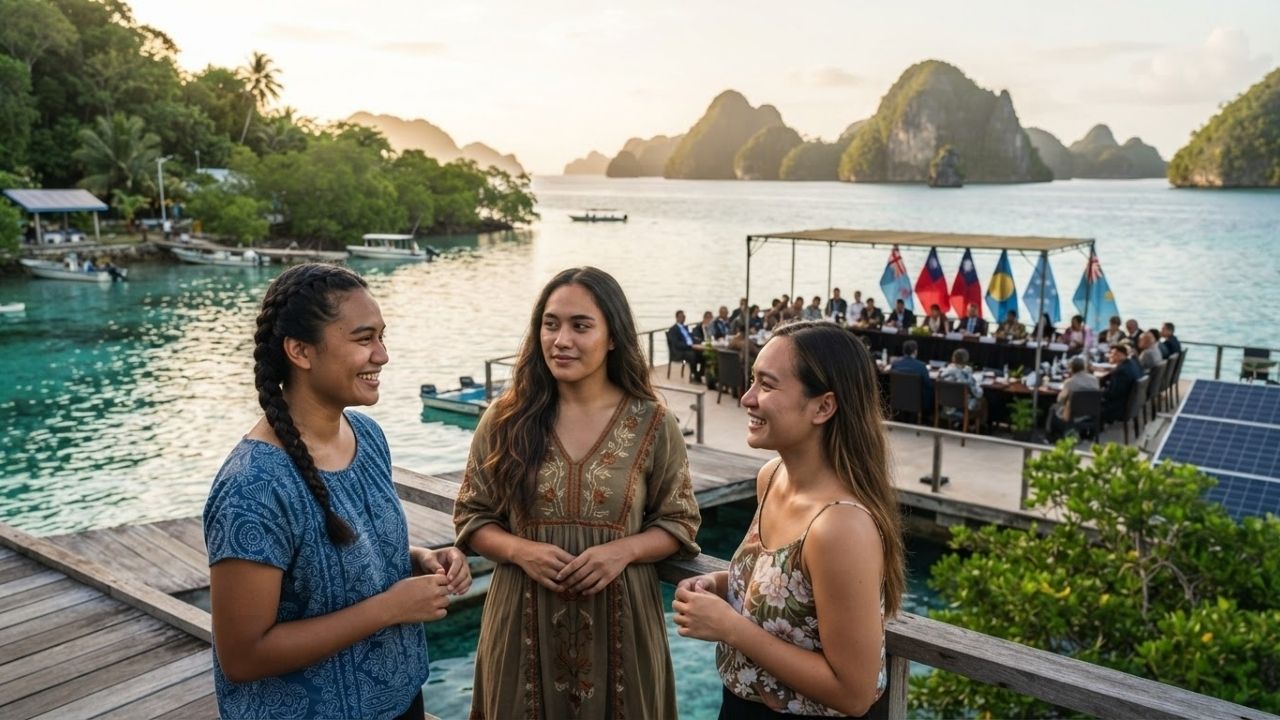
Host nation Palau has brought together the Pacific Islands Forum to build regional defenses against rising sea levels while resisting external geopolitical pressures from global superpowers.
The Local Trend: Climate Diplomacy and Island Autonomy
Pacific island nations are reshaping global diplomacy by transforming regional meetings into platforms for environmental defense. Once viewed primarily as remote holiday destinations, these nations are leveraging their vast Exclusive Economic Zones (EEZs) — which contain important fisheries and potential seabed resources — to assert their rights.
At the Pacific Islands Forum (PIF) summit in Palau, regional leaders met in the capital, temporary diplomatic hub, to coordinate common security and climate policies. The consensus-based model of the forum allows smaller island states to present a collective voice, helping them negotiate with larger international partners on their own terms.
Navigating Geopolitical Rivalries and Regional Unity
The Pacific’s location between major global regions has increased its strategic value in maritime security, trade routes, and defense planning. External powers have expanded their financial, diplomatic, and security engagement with island nations. The challenge for Pacific leaders is maintaining national independence and regional unity while accepting infrastructure and development support.
This strategic interest has created diplomatic friction during regional events. Disagreements have emerged regarding the participation of external dialogue partners. These tensions are highlighted by competing diplomatic representation issues involving China and Taiwan, particularly since the host nation, Palau, maintains official diplomatic relations with Taiwan. Leaders emphasize that the Pacific should focus on regional priorities, such as climate adaptation and sustainable development, rather than becoming a platform for external rivalries.
Pacific Islands Forum Summit Key Focus Areas (2026)
| Regional Challenge / Metric | Strategic Environmental Concern | Operational Policy & Action Plan |
|---|---|---|
| Long-Term Climate Threat | Sea-level rise and coastal erosion | Lobbying for global climate finance |
| Economic Vulnerability | Reliance on high-cost imported fuel | Solar and clean energy fleet expansion |
| Vast Marine Resource Zones | Defense of exclusive economic zones | Sustainable fishery and resource controls |
| External Superpower Push | Geopolitical positioning and security | Reaffirming Pacific neutrality rules |
| Internal PIF Unity Model | Consensus-based regional agreements | Managing differing foreign policy goals |
| Host Nation Secretariat | Republic of Palau diplomatic hub | Strengthening small island state lobbies |
Climate Vulnerability and Renewable Energy Targets
While geopolitics attracts international attention, immediate environmental challenges remain the most urgent concern for island communities. Sea-level rise, coastal erosion, and changes in rainfall patterns present risks for populations living on low-lying islands, affecting food production and freshwater availability.
Because these nations depend heavily on imported commodities, energy security is a major priority. Fluctuations in global fuel prices create economic difficulties for communities. To build resilience, leaders are focusing on the expansion of clean energy projects, particularly solar power, to reduce dependence on imported fuels. Additionally, seeking climate finance from developed nations remains a primary focus of Pacific diplomacy.
Destination Specialist Local Insider Tips
To help travelers visit the islands responsibly, local specialists recommend the following insider tips:
- Sign the Palau Pledge Upon Arrival: All incoming visitors must sign a passport pledge to act in an ecologically responsible manner during their stay, protecting local heritage.
- Hire Certified Eco-Guides for Jellyfish Lake: When visiting the famous Jellyfish Lake (Ongeim L’Tketau), book with local guides who enforce rules against applying sunscreen containing harmful chemicals.
- Familiarize Yourself with Conservation Areas: Palau has established the Rock Islands Southern Lagoon as a UNESCO World Heritage site; ensure you carry valid permits when boating.
- Respect Marine Sanctuaries: Do not touch coral reefs or disturb nesting marine turtles, as Palau has some of the world’s most strictly enforced marine protected zones.
- Purchase Locally Sourced Crafts: Support local communities by buying handmade items at the night markets in Koror, keeping tourist capital in the island economy.
Future Outlook
The PIF summit in Palau demonstrates that small island states can influence international discussions by coordinate their actions. By prioritizing climate resilience and energy transitions while managing external pressures, Pacific nations aim to protect their communities and resources, ensuring their regional priorities drive the development of the Pacific.
