


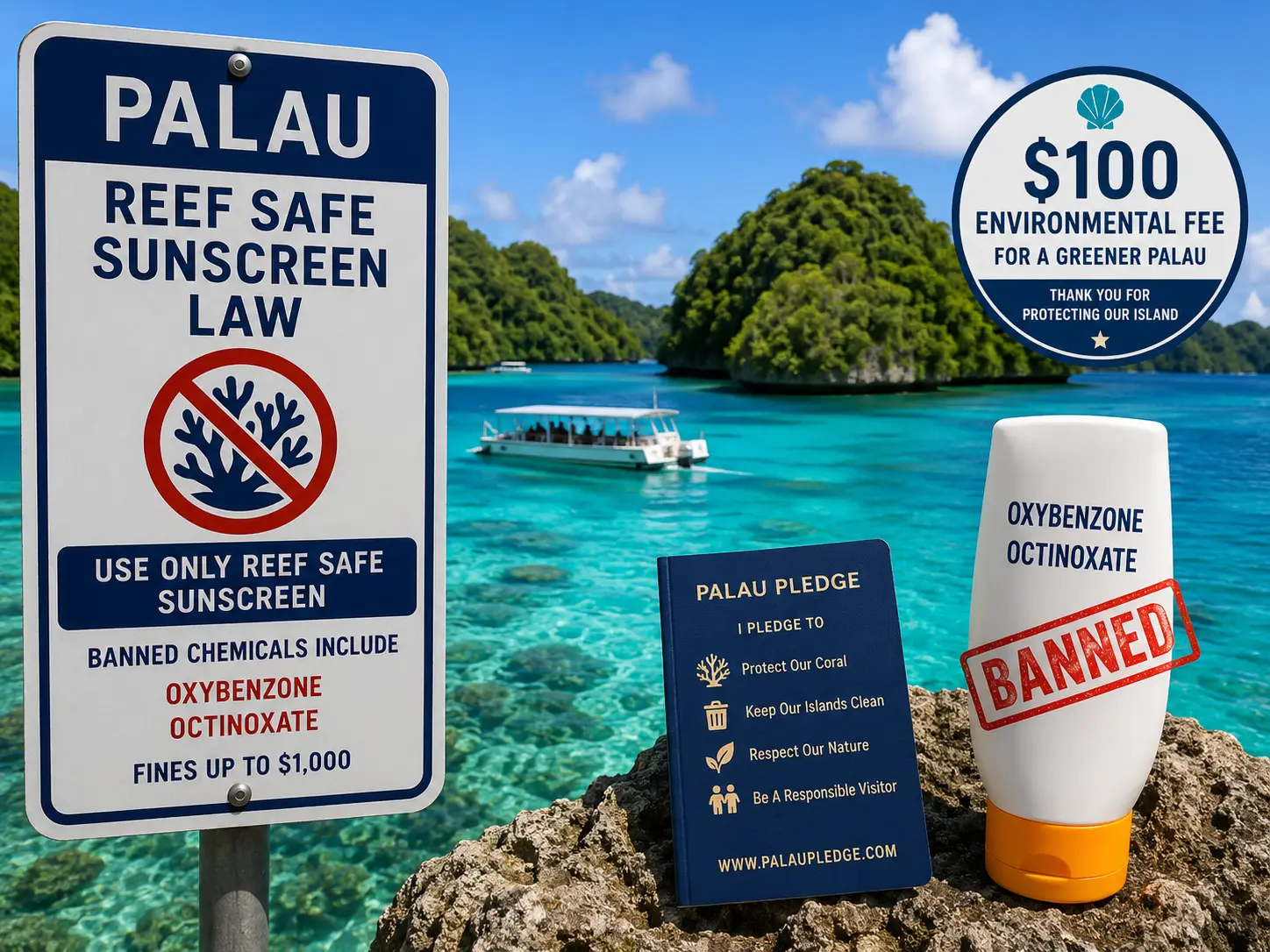
Palau has banned the sale of sunscreen products containing chemicals that damage coral reefs, in one of the Pacific nation’s toughest marine protection measures. The move targets ingredients including oxybenzone and octinoxate, which officials say can cause coral bleaching, DNA damage and wider ecosystem harm.
The island country has also begun charging foreign visitors a $100 environmental fee and requires them to accept a conservation pledge on arrival. Authorities say the package of rules is designed to protect fragile marine life while steering tourism towards more responsible behaviour.
Businesses that break the sunscreen rules can be fined up to $1,000, and prohibited products can be confiscated if found in tourists’ luggage at the border. Palau, which has a population of about 21,000, says it is trying to safeguard its reefs and sensitive sea habitats from the pressures of growing tourism.
Palau has become one of the world’s strictest countries on ocean protection. It has closed around 80% of its seas to commercial fishing and mining, and gives special protection to sharks, manta rays and other vulnerable marine species.
The sunscreen ban is notable because Palau was the first country to introduce such a restriction, according to the report. Officials say the decision followed concerns about chemical build-up in lagoons used heavily by tourists.
A major factor behind the policy was research at the famous Jellyfish Lake, a UNESCO-listed site known for millions of golden jellyfish. Scientists found sunscreen chemicals in the water and in the bodies of the jellyfish, adding to pressure on the government to act.
The environmental fee applies to foreign visitors entering Palau and is valid for future visits as well. Revenue from the charge is used for conservation projects, with the government aiming to encourage visitors who respect the natural environment rather than mass tourism.
Travelers must also agree to the “Palau Pledge”, a conservation promise stamped into passports on arrival. The pledge asks visitors not to damage coral, not to leave litter and to behave responsibly in nature. The text was written by children in Palau, according to the report.
Officials see the measures as part of a broader effort to defend the archipelago’s reefs, lagoons and wildlife from environmental damage. By combining fines, entry rules and protection zones, Palau is trying to make tourism work without undermining the ecosystems that attract visitors in the first place.
