


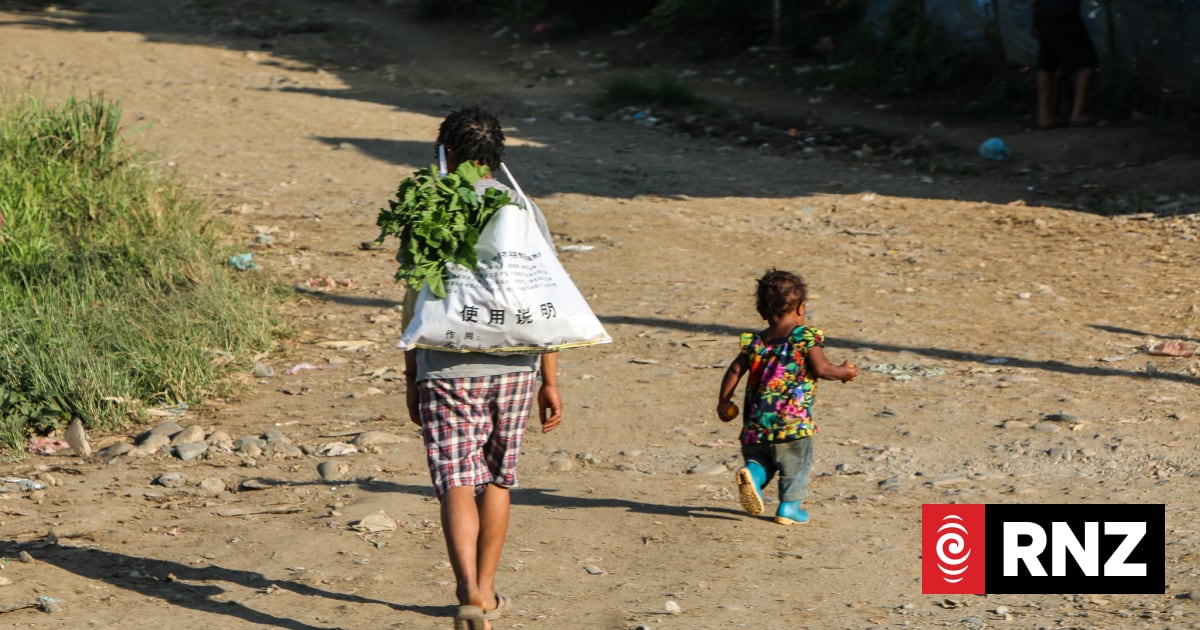
Pacific leaders urge for more global action on climate issues
Pacific leaders pulled no punches in their climate messaging at the United Nations General Assembly (UNGA) in New York this month.
Countries from all three regions – Melanesia, Micronesia and Polynesia – have called on the international community to do far more on climate action.
They say climate change is not merely an environmental concern, but an existential problem of planetary proportion.
Tonga’s Prime Minister Lord Fatafehi Fakafanua questioned why the Pacific’s climate concerns are still a reccuring theme at the UNGA.
Lord Fakafanua was among several other Pacific leaders who pointed out that the nations doing the least climate damage are left to deal with the worst impacts.
But it is a message they have been conveying for years.
“I stand here mindful that Pacific leaders have come before me, raising the same warnings, making the same appeals,” Lord Fakafanua said during his UNGA address.
“Today, I’m compelled to make them again. The question before us is not whether the world has heard our message, but why has it still not acted?”
Federated States of Micronesia’s Vice-President Aren Palik warned that global climate action is not progressing fast enough.
Palik reminded world leaders there are less than five years to achieve the United Nations Sustainable Development Goals, which are global objectives to end poverty, protect the planet and ensure prosperity for all by 2030.
He said the international community must scale up efforts or small island nations will be the ones left burdened with the cost – financial and physical.
“The recent typhoon, and severe flooding in our states, and more frequent king tides affecting our low-lying islands, demonstrate that these are no longer isolated events, but recurring pressures that test the resilience of our communities on the front line of climate crisis.”
Samoa’s Deputy Prime Minister Mulipola Anarosa Ale Molioo said global climate financing needs to be scaled up to better support the needs of the most heavily affected.
Mulipola shared how climate adaptation is taking money away from other development needs.
“Resources intended for education, health, water, and social protection are now diverted to disaster recovery,” she said.
“Small nations are being asked to finance both development and survival. No nation should have to borrow its way out of a crisis it did so little to create.”
Palau’s President Surangel Whipps Jr said the region needs financing that reaches communities without adding debt.
He told leaders these countries are already bearing the cost of problems they did not create.
“Those who contributed the least to this climate crisis, yet confront the worst threats of rising sea levels must not be burdened with debt simply to purchase a life jacket for their survival.”
Marshall Islands President Hilda Heine reiterated that these smaller nations affected by climate change deserve proper compensation.
She shared how schools are being destroyed by rising seas, salt water is poisoning wells and disease outbreaks have been linked to environmental change.
“This injustice must be addressed, our communities deserve restitution. The Marshall Islands and vulnerable people everywhere need sufficient, timely, and accessible finance for adaptation and loss and damage. Those who have profited to the detriment of the many must pay.”
PNG’s Prime Minister James Marape urged world leaders to think about the needs of the future generation.
United Nations
Papua New Guinea’s Prime Minister James Marape said countries must always bear in mind the needs of future generations
He urged the international community to put differences aside and work together to protect the planet.
“It is where we live, it is where we grow our food, it is where we fish, it is the inheritance we will pass on to our children. In our interconnected world, decisions made in one country can affect people thousands of kilometres away.”
Marape urged other countries to prioritise humanity ahead of war – reminding them that decisions made today will shape tomorrow.
“Think of the children. A child born today did not create climate change,” he said.
“That child did not choose the worst of this generation. That child did not create pollution or the environmental destructions.
“Yet the child will inherit the consequence of the decisions we make today. We must therefore be custodians not only of the present, but also of the future.”
