


Pacific leaders have agreed to call for greater transparency around missile testing in the Pacific but the region’s push for a united position on China’s recent missile test has revealed a rare split.
The final communiqué from the 55th Pacific Islands Forum Leaders Meeting in Palau records Naoero’s (formerly Nauru) dissent over the missile statement – the only recorded break from consensus during the meeting.
Leaders expressed concern about China’s intercontinental ballistic missile test in July, which overflew several Pacific countries without advance warning.
They called on all countries carrying out such tests to provide at least 24 hours’ notice and respect the sovereignty of Pacific island nations.
Forum Chair and Palau President Surangel Whipps Jr said the issue had tested the region’s unity.
“Our unity is our solidarity as a region, and it is essential.”
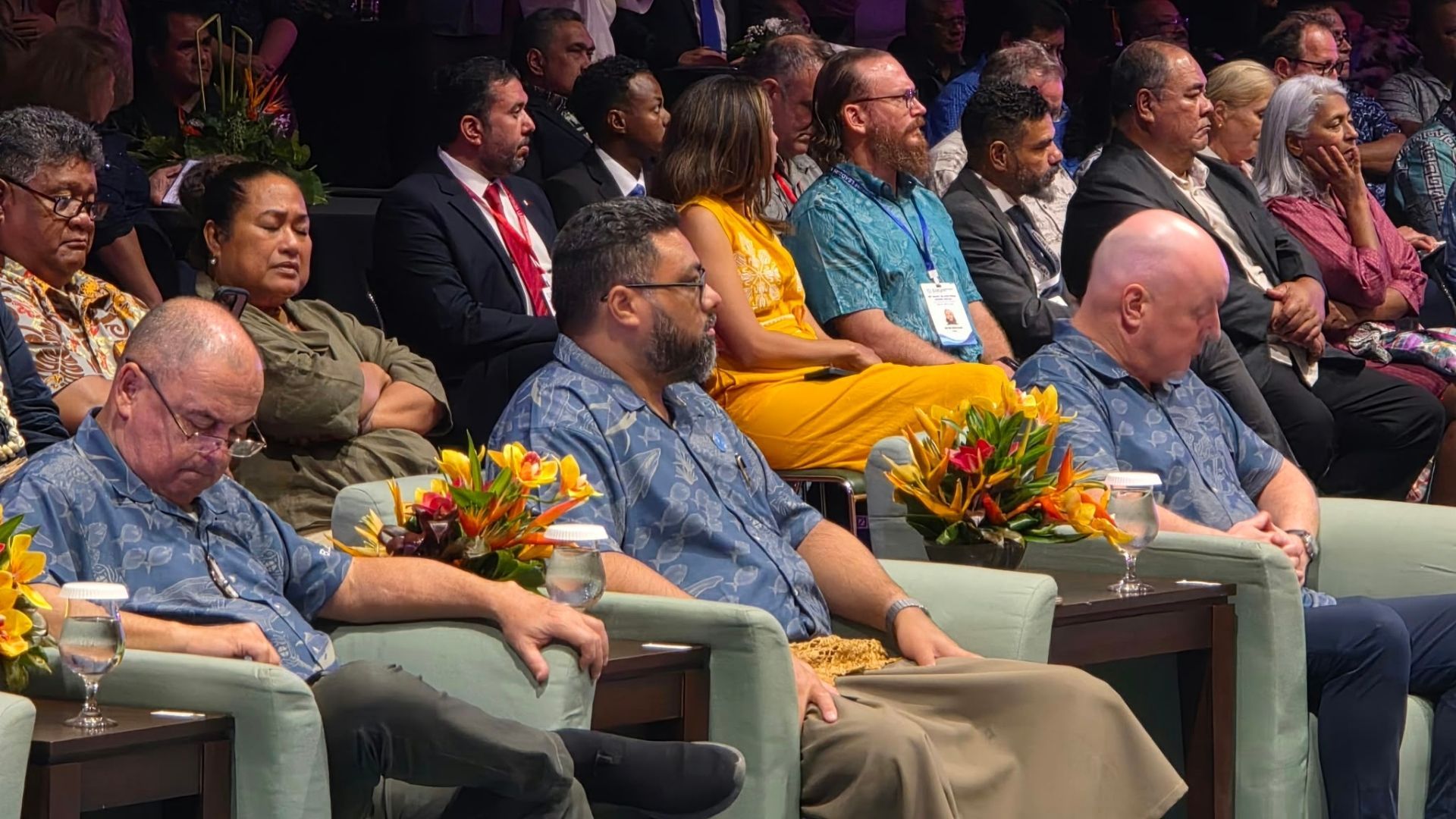
New Zealand Prime Minister Christopher Luxon, far right, joins Pacific leaders ahead of the announcement of the final communiqué at the 55th Pacific Islands Forum Leaders Meeting in Palau. Photo/PMN News/Thomas Tarurongo Wynne
New Zealand Prime Minister Christopher Luxon said Naoero’s dissent should not stop the Forum from putting forward a regional position.
“I think it was important that we actually had a statement in the communiqué. It was very important to me,” he said.
“And New Zealand obviously expressed ourselves in much stronger terms… But I think it was also very important for them to have a statement in the communique.”
He said New Zealand did not want missile testing to become normalised in the Pacific. “I don’t want to see this normalised across the region.”
The disagreement comes as Pacific countries face growing pressure from major powers while the Forum is also trying to make its own partnerships more focused on regional priorities.
But the communiqué also shows areas where leaders were able to move together.
Leaders endorsed a regional Peace and Security Action Plan, aimed at strengthening the Pacific’s response to security threats including transnational crime.
Whipps said Pacific countries were also strengthening cooperation between police, customs and security agencies to share intelligence and respond to the growing drugs threat.
“There’s no doubt about it, we have a real challenge with transnational organised crime across the region,” Whipps said.
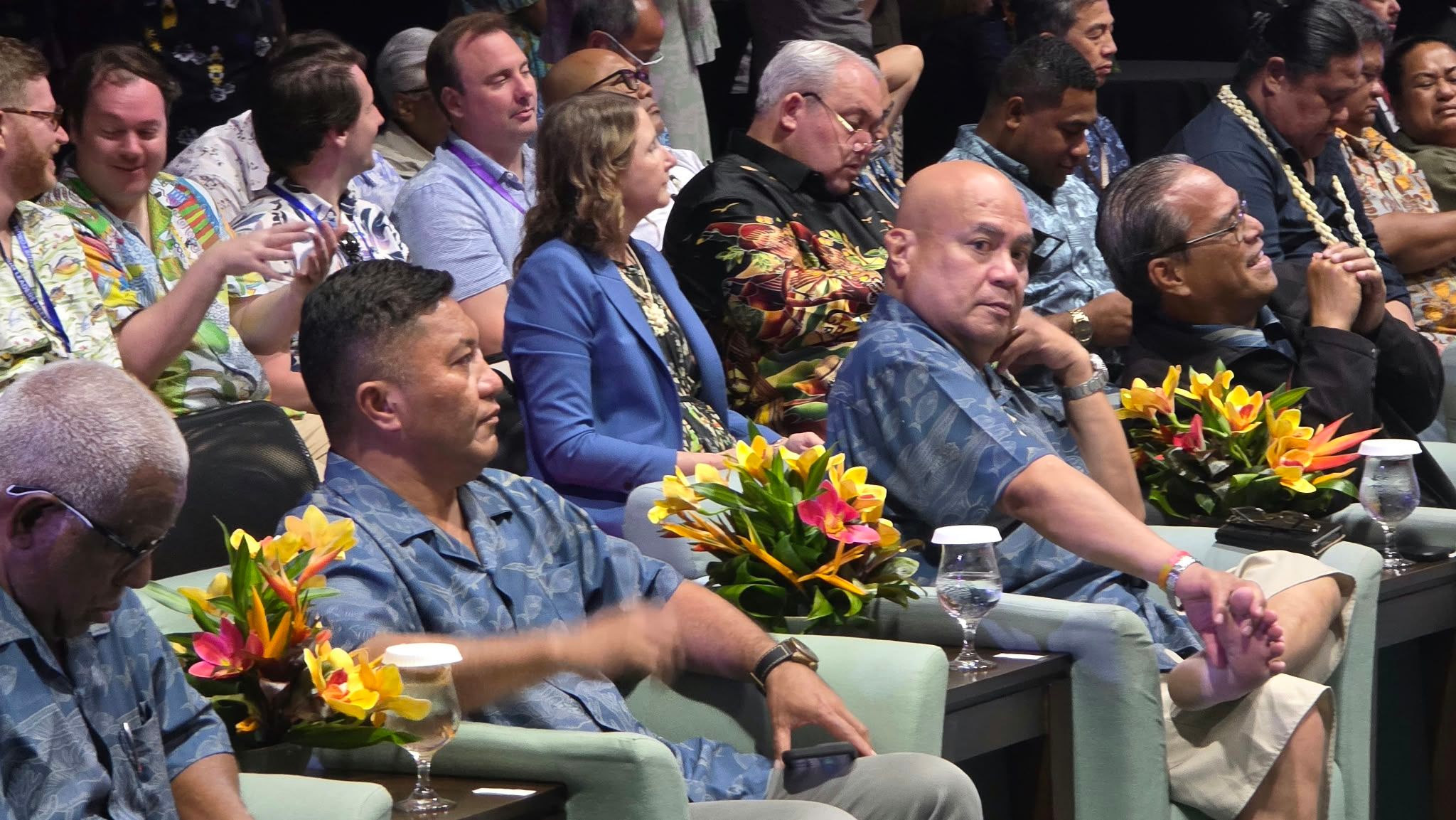
Pacific leaders take part in the closing ceremony of the 55th Pacific Islands Forum Leaders Meeting in Palau on Thursday. Photo/PMN News/Thomas Tarurongo Wynne
They also moved the review of the Forum’s regional architecture into its implementation phase, aligning it with the 2050 Strategy for the Blue Pacific Continent.
The move follows calls during the Forum for the regional body to become more effective and deliver practical results.
Luxon has argued that countries working with the Pacific need to better coordinate their support and investment.
“If you want to be a development partner of PIF and the PIF countries here, you’ve got to step up and you’ve got to be very clear about where your investments are going to go,” Luxon said during the Forum.
Luxon said leaders had also agreed to a new two-tier system for Forum dialogue partners, aimed at making outside engagement more focused on Pacific priorities.
“We’re actually looking for partners that genuinely can lift the living standards of our people across the Pacific,” he said.
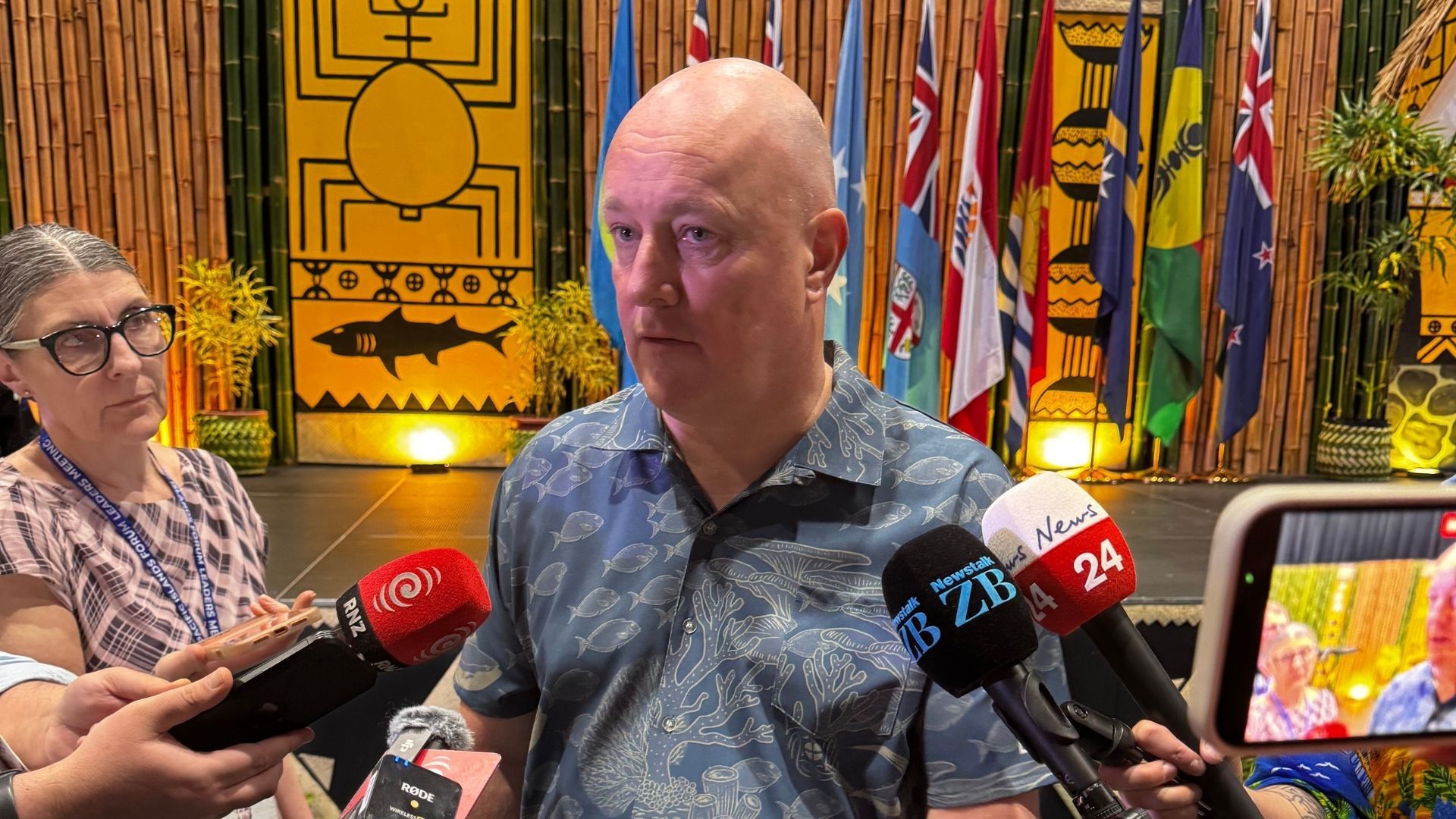
New Zealand Prime Minister Christopher Luxon speaks to media during the 55th Pacific Islands Forum Leaders Meeting in Palau. Photo/PMN News/Thomas Tarurongo Wynne
Fisheries also feature strongly in the final outcomes, with leaders adopting the Waka Manu Regional Pacific Fisheries Strategy for 2026 to 2035.
The strategy comes as Pacific countries face growing pressure on one of the region’s most important sources of food, jobs, and government income.
Leaders also adopted Pacific Digital and Artificial Intelligence Technology Principles, which will help guide the development of the region’s first AI governance framework.
Climate action remains at the heart of the Forum’s work, with leaders unanimously endorsing the Bao Declaration for Urgent and Inclusive Climate Action and the Pacific Gender Climate Pact.
The declarations reaffirm the region’s push to keep the 1.5°C goal within reach ahead of Conference of Parties (COP31).
Leaders also welcomed a further US$20.5 million (NZ$34.85 million) in pledges for the Pacific Resilience Facility while agreeing to keep fundraising for the regional climate finance mechanism.
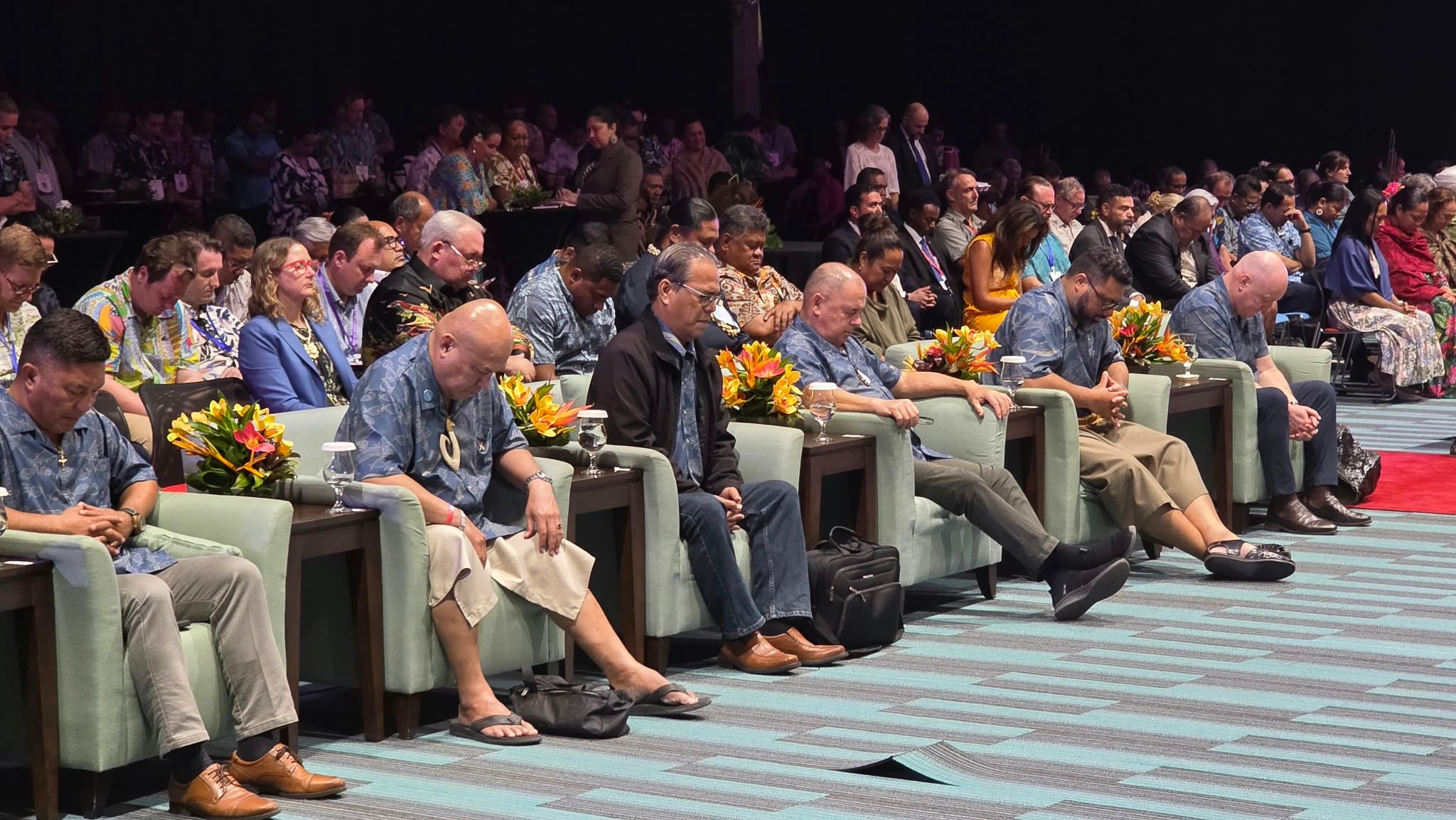
Photo/PMN News/Thomas Tarurongo Wynne
On development, leaders endorsed a refreshed regional framework for people with disabilities and highlighted the need to tackle non-communicable diseases, which President Whipps said account for 75 per cent of deaths across the region.
They also backed the KAVA Declaration to promote kava as a distinct Pacific agricultural product.
For Whipps, the challenge now is turning the decisions made in Palau into action.
The final communiqué sets out a wide regional agenda but the disagreement over the missile test shows how difficult maintaining a single Pacific voice can be when the region’s relationships with major powers are at stake.
The 55th Pacific Islands Forum Leaders Meeting concludes in Palau on Friday.
All eyes now turn to Aotearoa, which will host the Forum in 2027 with Pacific leaders looking to New Zealand to help turn the Palau commitments into action.
