


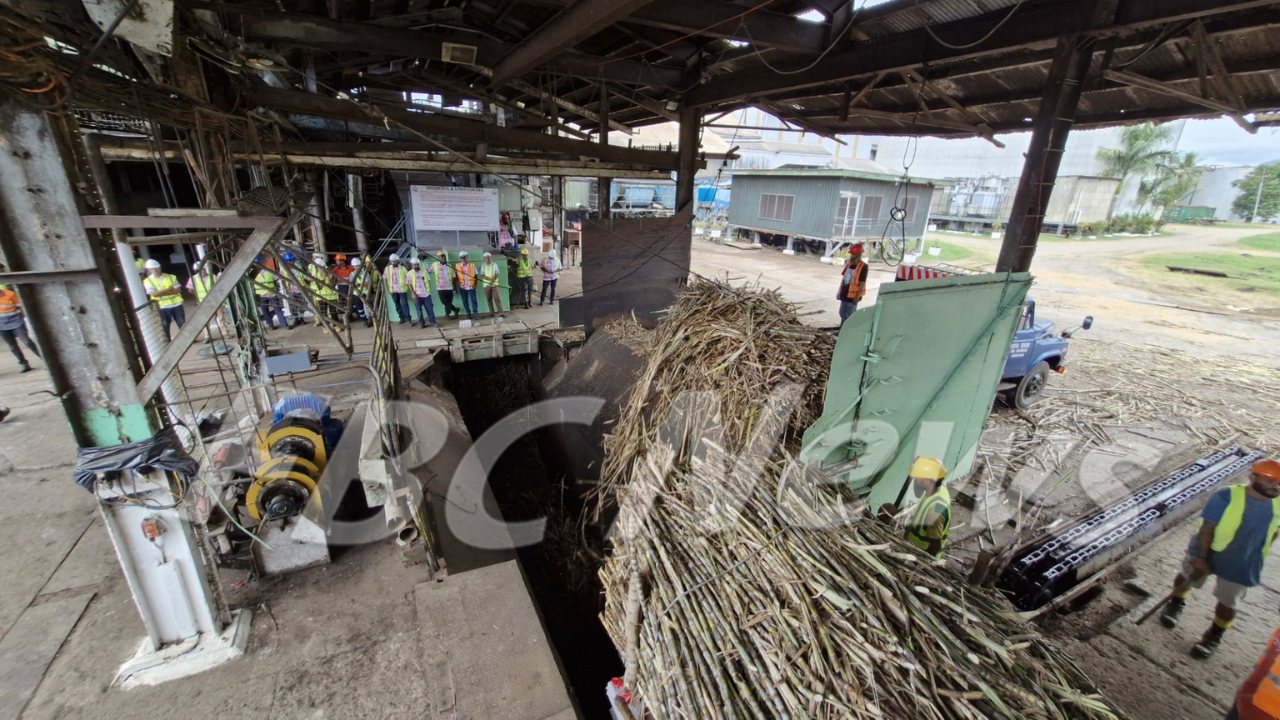
Sugarcane crushing at the Labasa Mill
The sugar industry is continuing to face major production challenges as large volumes of unapproved cane varieties are still being supplied to mills across the country during each crushing season.
Minister for Sugar Tomasi Tunabuna has now issued a strong warning to farmers, reminding them that supplying unapproved cane varieties is illegal under the Master Award agreement, and that mills have the authority to reject such cane.
Tunabuna says farmers were previously given three years to phase out unapproved varieties, and this year will be the final season these cane types will be accepted for processing.
“However, I must inform you that the current yield is not viable for the sustainability of the sugarcane sector in Fiji. It is our collective responsibility to improve cane yield from the current average of about 50 tonnes per hectare to at least 65 tonnes per hectare in order to make sugarcane farming profitable.”
The Minister says current production levels are no longer profitable for either farmers or the mills, placing further pressure on the industry’s long-term sustainability.
He says while the Labasa Mill has the capacity to crush more than one million tonnes of cane annually, it is currently operating at only about half of its capacity.
Tunabuna adds that cane supply must increase to at least 700,000 tonnes for the Labasa Mill to reach its break-even point and operate more efficiently.
Industry stakeholders say improving cane quality, increasing production, and adopting modern farming methods will be critical in securing the future of Fiji’s sugar industry amid ongoing economic and climate-related challenges.
