


This is the second in a series of three articles examining how the Hormuz closure is reshaping energy, governance and inequality across Asia and the Pacific.
To grasp the full extent of the current jolt across the region, it’s useful to look beyond the phrase “energy crisis”. That suggests that what is at stake is solely the price of fuel, which is a problem of affordability, temporary and bounded.
What the Hormuz disruption has produced is something more significant: a layered shock in which the next level up is the productive economy — that is, the network of processes by which energy is converted into food, manufactured goods, electricity and services. When those are interrupted — as we’re seeing across the region — the consequences cascade. That involves seeing the lines at the fuel pump while also seeing beyond them to the multitude of industrial processes that are, for better or worse, currently reliant on that energy.
This sustained disruption to energy supply raises the costs across all sectors while degrading the productive capacity of multiple sectors simultaneously.
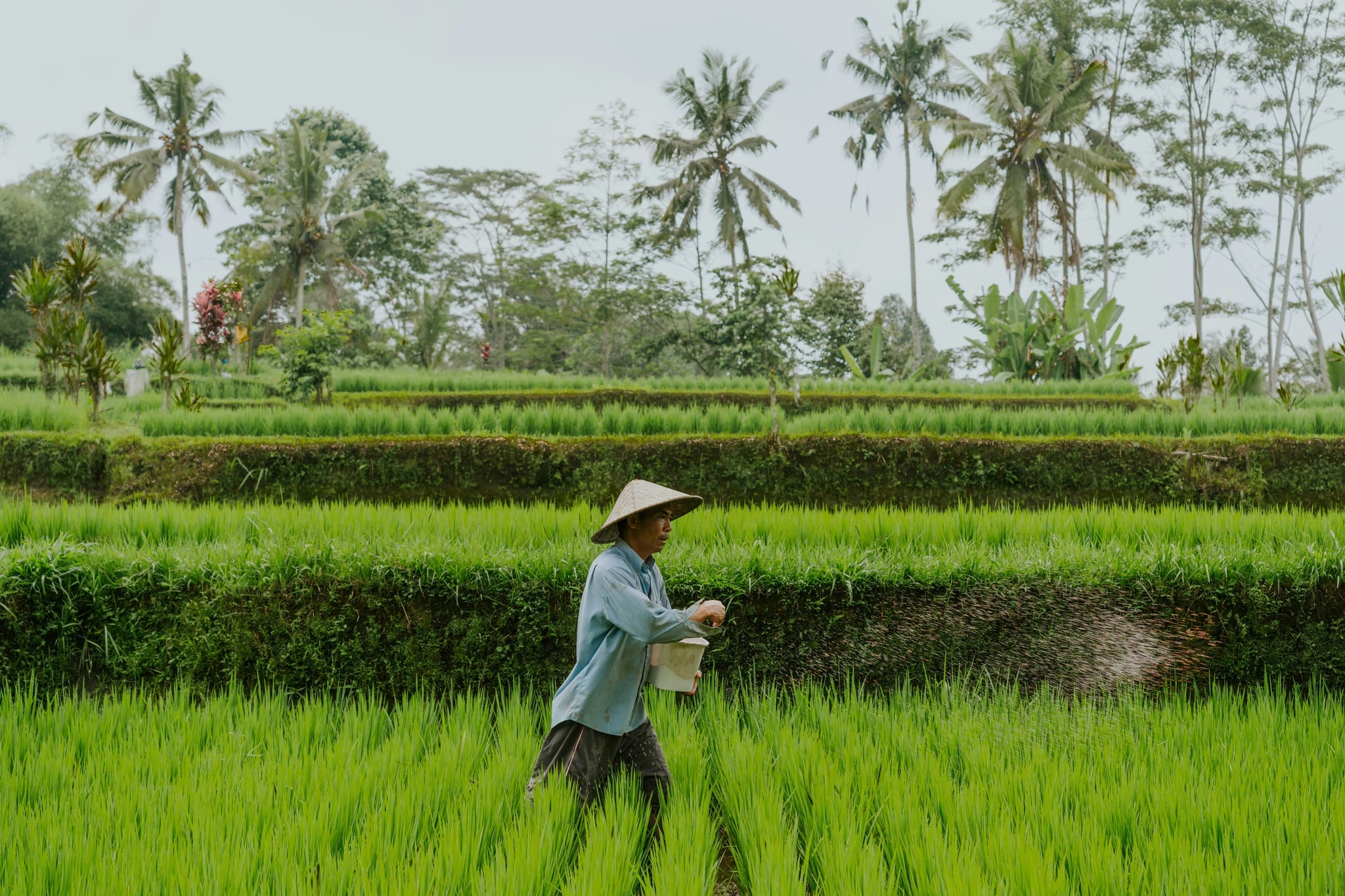
The most immediate knock-on effect has been through food supply chains, due to lack of access to fertiliser. Around one-third of the most widely used nitrogen fertiliser is exported from Gulf countries through the Strait. Since early March, millions of tonnes of fertilisers have been stranded with no viable alternatives available and, as a result, prices have risen by 35% since late February.
The timing has been particularly troubling. Bangladesh’s boro — the rice crop that provides the bulk of the country’s domestic food supply — requires consistent fertilisation and irrigation from March onward. Multiple reports from March 2026 note that Bangladesh has shut or suspended production at four of its five state-run fertiliser factories because of a worsening gas shortage.
Indian media reported at least one domestic fertiliser plant shutting down and others cutting production, while Sri Lanka’s March planting season was similarly disrupted, with the LPG shortage that eliminated cooking gas for households also cutting off the cooking fuel and agricultural inputs on which smallholder farming depends.
The downstream consequence is not only cost but yield. The damage will likely not fully materialise until harvests in the second half of 2026, producing what the Food and Agriculture Organization foresees as a second wave of economic pressure lagging several months behind the supply disruption itself.
Other industries are also visibly affected, squeezing the supplies of petrochemicals needed to make everyday items like shoes, clothing and plastic bags, with price rises on plastics, rubber and polyester. Bangladesh is feeling this in the starkest sense. Its ready-made garment sector accounts for 84% of the country’s export earnings and employs millions of workers, the majority of them women. With power cuts doubling to as much as five hours per day, factories have faced difficult choices. Running diesel generators during extended outages dramatically increases operating costs. Reports suggest that many textile and garment factories operated at only 40-50% of capacity, and these production losses threatened export orders.
Further along the supply chain, India’s ceramics industry in Gujarat — a sector dependent on gas for kiln firing — shut down in early March. In Mumbai, restaurants closed partially or entirely as cooking gas deliveries stopped arriving. Across Southeast Asia, Hormuz-related shortages are already forcing plastics and chemical plants to cut output, and manufacturers in Indonesia, Vietnam and Thailand have warned that continued disruptions could translate into shortages and higher prices for everyday packaged foods, household products and other consumer goods.
The electricity dimension has been less visible in global coverage but is structurally significant in many countries in Asia and the Pacific where supply challenges are already an issue. Gas supply to Bangladesh’s power sector dropped considerably in March and into April, with officials warning that the reduction could lead to blackouts. Sri Lanka introduced a four-day working week partly as a demand-reduction measure for the grid. In Pacific Island nations, where diesel generators underpin most electricity generation, prices for diesel, petrol and kerosene rose by as much as 70% in Papua New Guinea, and daily power blackouts lengthened across communities that had no alternative generation capacity to draw on.
All these knock-on effects raise a concerning question: to what degree are the economies in the region being hit by structural damage — that is, effects that reshape the economy’s productive capacity in ways that outlast the disruption itself? That depends not only on the degree of energy-import dependence from the Gulf, but the concentration of that dependence in large sectors dominated by low-income workers, and limited recourse to buffers such as reserves, social protection or productive diversification.
By those criteria, Bangladesh faces acute structural exposure. Its near-total dependence on imported energy coincides with a garment-dominated export sector that is both energy-intensive and time-sensitive. A prolonged closure of the Strait could have an economic impact stretching over years, not months. Sri Lanka, still working through an International Monetary Fund-supported recovery from its 2022 sovereign debt crisis, remains one of the most vulnerable South Asian economies to renewed external shocks, with narrow foreign-exchange buffers and high debt burdens. In Southeast Asia, countries like Vietnam have high structural vulnerability: highly import-dependent, with large informal sectors. In the Pacific, poverty, food insecurity and inequality could worsen, alongside job losses and displacement of migrant workers.
The United Nations is already predicting region-wide inflation. As parts of the region’s productive economy fail, they do so along the most vulnerable links and, in Asia and the Pacific, those links tend to run through the same populations that were already on the margins before the first oil tankers were halted.
In the third and final instalment in this series, we will examine what recovery actually means for Asia and the Pacific, along three tracks: physical supply restoration, price normalisation and a slower return to pre-crisis growth, food prices, remittances and tourism. We argue that the crisis could accelerate the energy transition, but that the distribution of harm ultimately reflects pre-existing conditions and governance capacity.
Read part 1 and part 3.
