


Overview:
After nearly four months tied to the dock in Koror, the Indonesian fishing vessel Sinar Arindo-6 has finally sailed home — but one crew member won’t be returning with it. A Palau Supreme Court settlement freed the vessel and its remaining 28 crew this week, closing one chapter of a case that raised hard questions about how Palau treats foreign fishermen caught in the middle of a maritime dispute.
By: L.N. Reklai
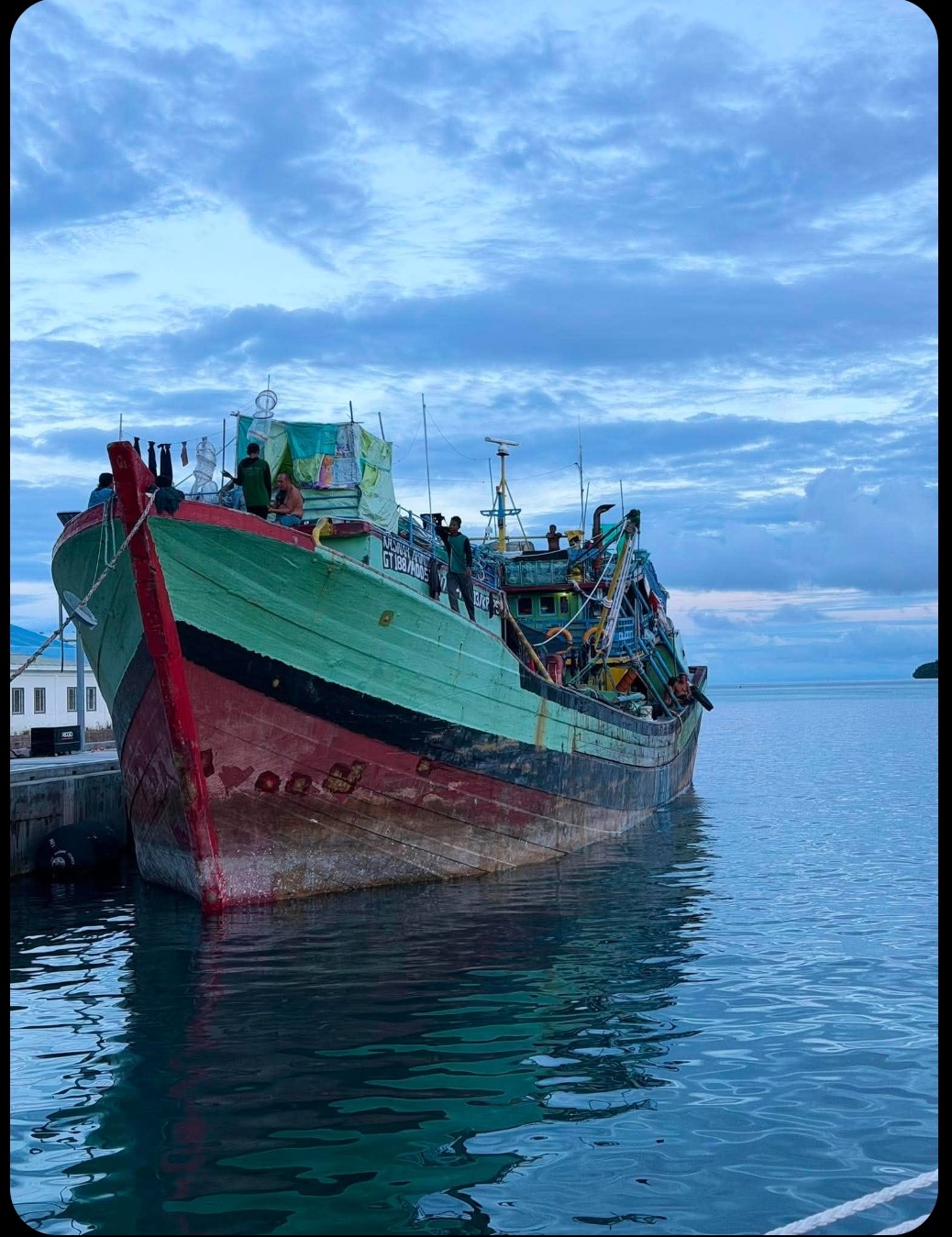
KOROR, Palau — An Indonesian-flagged fishing vessel held in Palau for nearly four months has finally departed — but not before one of its crew members died, raising questions about the treatment of foreign fishermen detained in maritime disputes.
The F/V Sinar Arindo-6 left Palau this week with 28 of its original 29 crew members after the Palau Supreme Court approved a joint settlement between the Republic of Palau and the vessel’s owner, PT Sinar Arindo Semesta.
The vessel’s departure came one week after Domo Sumendap, 48, died at Belau National Hospital. Hospital records list the cause of death as severe sepsis brought on by leptospirosis, a bacterial infection spread through water, food, or soil contaminated by infected animals such as rats.
An attorney representing the vessel said conditions aboard the ship, moored at port for months, likely contributed to the infection.
“The vessel was tied at the port for nearly four months, and rats may have climbed on board while it was moored,” the attorney said.
James Then, a representative sent by the vessel’s owners to manage the case, described the crew’s living conditions as severe.
“When the vessel is moving, there’s breeze and crew don’t feel confined. But when tied at the port and not moving, it is very hot, and inside the vessel becomes very unsanitary,” Then said, adding that such conditions can easily lead to illness.
Crew members were barred from coming ashore because they lacked passports and Palau entry permits, and were confined to the vessel throughout the proceedings. Only the ship’s captain, Sujarwo, faced criminal charges.
Then said he was troubled by how Palau handled the crew’s basic needs. “In other countries, when a vessel is confiscated and the crew are taken, that government would provide food, medical service and other basic necessities until the case is resolved. The Palau government did not provide any of these to the crew,” he said.
The vessel’s owners, who Then said are nearly 80 years old and unable to travel, authorized him to represent them and assist the crew directly.
Disputed Waters
Then maintains the vessel was operating in Indonesian waters at the time of its apprehension, based on maps provided by the Indonesian government and navy. He disputes allegations that the vessel was fishing illegally inside Palau’s Exclusive Economic Zone (EEZ), noting that the area where the vessel was seized is claimed by both nations and remains the subject of ongoing boundary negotiations.
Settlement Terms
Citing concern for the crew’s well-being, the vessel’s owners agreed to a joint stipulation approved by the Palau Supreme Court, establishing bond amounts and release conditions for both the vessel and its catch.
Under the agreement:
- The seized fish — excluding all sharks and shark parts — would be released to the company upon posting a $60,000 bond with the Clerk of Courts. If the bond went unpaid within two weeks, Palau could sell the catch at fair market value, with proceeds held in escrow until the case concludes.
- A separate $60,000 bond secured the vessel’s release, on the condition that its fishing gear remain disabled until the vessel returns to undisputed Indonesian waters.
The owners posted the full $120,000 bond, which will remain in escrow pending the outcome of the underlying lawsuit. If Palau prevails, the government keeps the funds; if the owners prevail, the bond will be returned.
Captain’s Case Deferred
In a separate criminal case, Palau agreed to defer prosecution of the vessel’s Captain Sujarwo for two years. Under the agreement, Sujarwo must pay a $500,000 fine, leave Palau immediately, and never return. He is permitted to pay the fine from Indonesia and has waived his right to a speedy trial.
If Sujarwo fails to meet those conditions, Palau retains the right to prosecute him.
The arrangement leaves open questions about enforcement, given that Sujarwo will be outside Palau’s jurisdiction for the duration of the payment period.
