


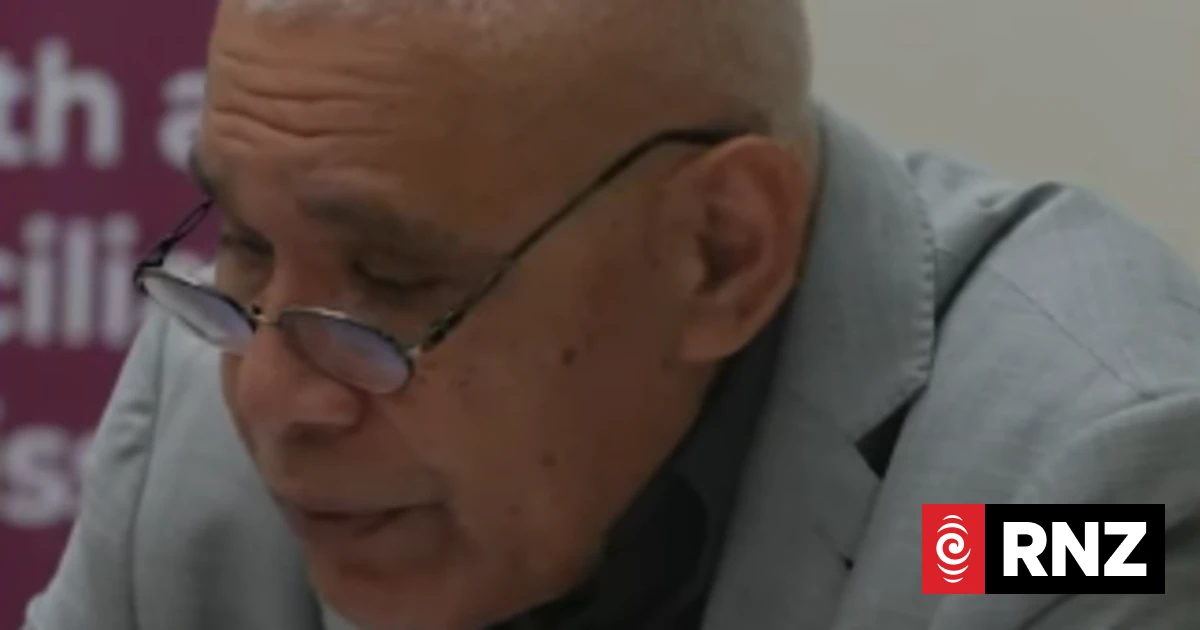
A former coup convict in Fiji claims the country will remain unstable while the iTaukei (indigenous people) are economically marginalised.
Josefa ‘Jo’ Nata, who spent 24 years in jail for treason, told the Fijian government’s Truth and Reconciliation Commission that “the lot of [the] iTaukei has not improved a single bit [as a result of the coups], if anything their situation has regressed”.
“Indigenous [iTaukei] should never again be hoodwinked into supporting any coup supposedly carried out in their name, to raise their standard of living or correct supposed past injustices,” the 68-year-old said.
Fiji has been rocked by four coups since gaining independence in 1970. The first two, in May and September 1987, were led by then-military lieutenant Sitiveni Rabuka, who is the current prime minister.
In 1999, Mahendra Chaudhry was sworn in as the country’s first Indo-Fijian prime minister. Nata was an MP in the Fijian Association Party, a coalition partner in the Labour-led government.
Chaudhry’s election stoked racial tension in Fiji and a year later, the Republic of Fiji Military Forces (RFMF) rebel, Counter-Revolutionary Warfare (CRW) unit soldiers, led by businessman George Speight, staged an armed takeover. Chaudhry and his government were held hostage for 56 days.
Nata became the public face of the coup on 14 May 2000, and although he told the Truth and Reconciliation Commissionin May that he was not involved in planning it, he admits he played a key role as a negotiator.
Fiji’s 2000 coup leader George Speight, middle, waves from the top deck of an inter-island freighter “Dausoko” while returning to Nukulau Island, 5 September 2001, with an unidentified man, right, and his former media officer Josefa ‘Jo’ Nata on the left.
AFP / Torsten Blackwood
“Without realising it, I was getting myself involved. So much so that I was the one administering the oath of office at [swearing-in] before usurper-nominated President Ratu Jope Seniloli,” he told the Commission.
“My face was plastered on TV on every home around Fiji and around the world. The overseas parachute press had started to drop
in. If I think back now, the whole charade was a burlesque of Pygmalion proportion.”
Nata told the Commission that despite the negative press over the role of the CRW unit in the coup, its soldiers prevented even worse atrocities from occurring to the hostages, including the “last cannibal feast” and “planned assassinations of key people”.
He also claimed that the unit prevented Parliament House in the capital, Suva, from being torched to the ground once it was empty.
According to Nata, the CRW unit was abandoned by those who had allegedly orchestrated events from behind the scenes.
“The unit was left in the lurch carrying the baby. The masters did not show up,” he said.
Nata said that while the court later branded him as one of the masterminds of the coup, that honour belonged elsewhere.
Since his release from jail on 20 December 2023, he has campaigned against coups.
“No coup, in my view, can ever be justified … for those misadventures we know as coups were based on lies, visions of grandeur and opportunism,” Nata told the Commission.
“I have been labelled an opportunist. I do not push back. I accept, worse, I was a hypocrite.”
“I was a traitor, as the court rightly described me. I betrayed my chief, the late Ratu Sir Kamisese Mara, the government, the people I worked with and the profession that gave me wings,” he said.
“The reality of unlawful takeovers is that one group of people will suffer more than others. In 1987 and 2000, it was the Indians that suffered. 2006 gave Fijians our fair dessert,” he said.
Despite living together for over 150 years, indigenous Fijians and Fijians of Indian heritage continued to live largely separate lives, Nata claimed.
Although he admitted that there were examples of strong inter-ethnic relations in certain towns and districts, such as the old capital Levuka, Savusavu, Labasa and Ba, he said these were exceptional situations.
Nata told the Commission that politics was not the answer, and that Fiji needed intentional and deliberate collaboration at the community level to bridge the divide.
“There should be a willingness to come together. Our ethnic and collective identity and openness are not necessarily opposing poles. It could be the vehicle to bring us together,” he said.
Nata also warned against becoming trapped in the past, saying ignoring difficult truths would not pave the way for true reconciliation.
He urged all Fijians to confront unresolved issues together to build a brighter future.
“We should revisit, untangle, rebuild and move forward together,” he told the Commission.
[RELATED] https://www.rnz.co.nz/news/pacific/618693/fiji-investigates-how-alleged-tax-fraud-suspect-fled-the-country-despite-travel-ban
[RELATED] https://www.rnz.co.nz/news/pacific/614885/dozens-of-packages-containing-white-substances-wash-up-around-fiji
[RELTATED] https://www.rnz.co.nz/news/pacific/598296/calls-to-dismantle-joint-taskforce-rejected-by-fijian-government-despite-brutality-allegations
