


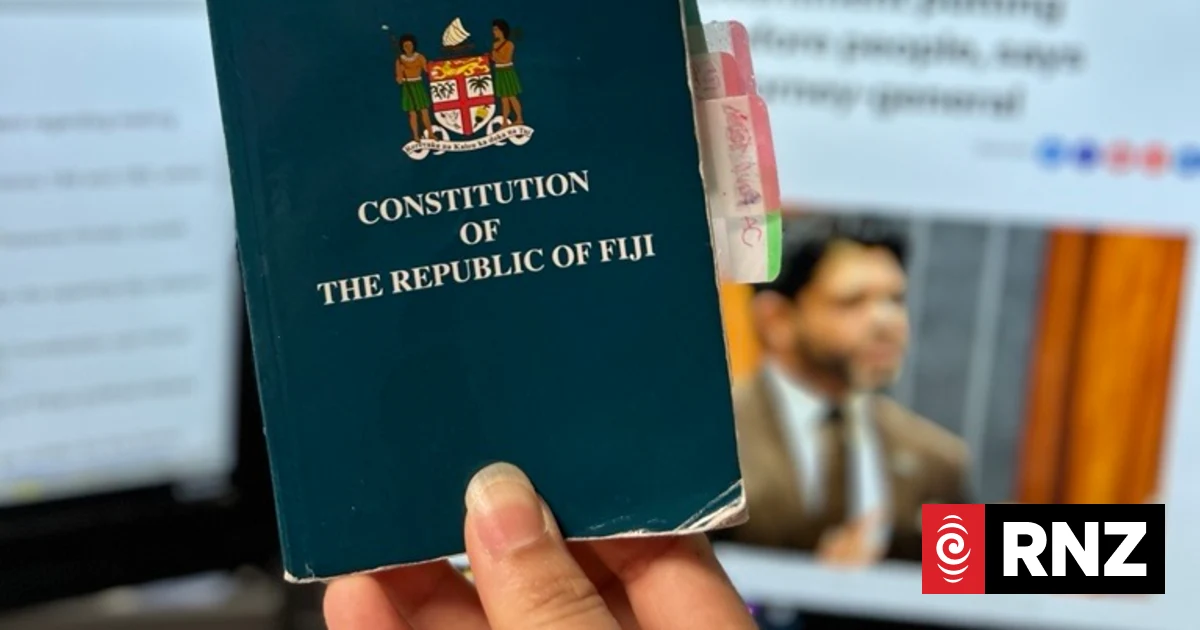
A seven-member commission set up to conduct a review of Fiji’s 2013 Constitution will deliver its much-anticipated final report to the country’s president on Monday.
The Fiji government’s Constitutional Review Commission formally began its work in mid-March and was given a 31 August deadline.
The Commission was tasked with conducting nationwide public consultations, receiving and analysing submissions on the constitution, and reporting recommendations to the president, Cabinet and eventually parliament.
Fijian Prime Minister Sitiveni Rabuka told parliament in late April that the Constitution Review Commission was “a chance for ordinary Fijians, from every community and all walks of life, to have a say in the review of the supreme law”.
In a statement on Sunday night, the Fijian government said the Commission would submit its final report to President Ratu Naiqama Lalabalavu today.
“The submission follows months of nationwide consultations and engagement, during which the Commission travelled across Fiji to hear directly from Fijians on the [2013] Constitution and the country’s constitutional future,” it said.
“Communities, villages, organisations, institutions and other stakeholders participated in the consultation process, sharing their views, concerns, aspirations and recommendations with the Commission.”
Since gaining independence from the United Kingdom in 1970, Fiji has had four national constitutions: enacted in 1970, 1990, 1997 and 2013.
The document has also been widely criticised as “anti-indigenous” by several prominent iTaukei (indigenous) leaders, including the country’s Great Council of Chiefs, which has unanimously rejected the 2013 Constitution. Others have also blamed the document for social ills and the breakdown in societal values.
The Fiji government said once the Constitutional Review Commission submits its report, the focus will shift to its findings and recommendations.
“The consultations are complete, and the final report is ready for submission, marking the beginning of the next stage of Fiji’s constitutional journey.”
