


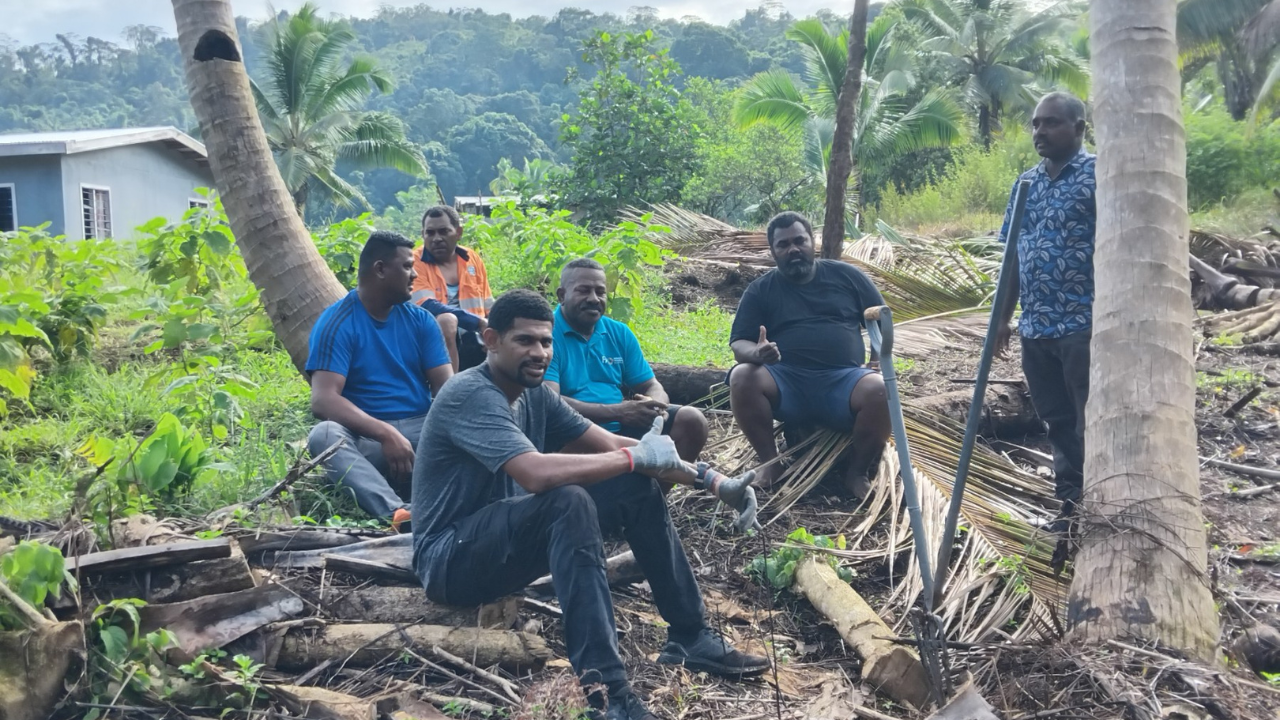
Group of Farmers
Proposed fines under the Public Health (Amendment) Bill 2026 could hurt farmers if they are set too high, the Ministry of Agriculture has warned.
Presenting its submission to the Standing Committee on Social Affairs during live public consultations on the Bill, Permanent Secretary Andrew Tukana said the Ministry supports the proposed law but wants safeguards to ensure farmers and rural communities are not unfairly affected by tougher enforcement.
Tukana said the Bill aligns with the Ministry’s long-term agricultural and sugar industry plans by strengthening water source protection, environmental health, pollution control, livestock management and disease surveillance.
He told the committee that agriculture and public health are closely linked because diseases carried by animals can spread to humans.
“I think some of those areas under the agricultural production are currently not being penalized if they’re not following the regulation of the law. So they might incur new penalties, but we have to see that it does not go to such an extent that it might hinder the agricultural activities that are being carried out.”
While supporting stronger enforcement, Tukana said penalties must be carefully reviewed.
He said the Ministry of Health was seeking to use higher fines as a deterrent, but warned they should not reach a level that discourages agricultural activity.
He added that some farming practices currently outside the penalty regime may need to be brought under the law where regulations are breached.
The Ministry also called for agriculture-specific provisions covering irrigation, water quality standards, safe agrochemical use near waterways, buffer zones around rivers and catchments, and a joint regulatory approach involving the Ministries of Health and Agriculture together with municipal councils.
It also recommended regulations to better manage livestock waste, manure, crop residue, fertiliser runoff, agricultural plastics and sugar industry by-products.
Tukana said farmers should be supported through education, technical assistance and realistic implementation timeframes before penalties are enforced.
Opposition MP Praveen Kumar questioned whether the proposed increase in fines was appropriate, noting that public consultations produced mixed feedback, with some supporting tougher penalties while others feared the financial impact.
National WASH Coordinator Toga Vosataki clarified that the existing Public Health Act already provides for fines of up to $10,000 for infectious disease offences following amendments made during the COVID-19 period.
He said the highest penalty proposed in the current Bill is $2,000 for venereal disease offences, while offences affecting agriculture and water use carry a maximum proposed fine of $1,000.
Opposition MP Ketan Lal said farmers in Labasa had repeatedly raised concerns about fines during consultations.
He also highlighted complaints that disposable diapers and other rubbish dumped into drains are ending up in irrigation systems, contaminating sugarcane fields, damaging crops and worsening flooding.
Tukana agreed illegal dumping into waterways remains a serious problem.
He said rubbish washed from municipal drains into rivers and streams is blocking waterways and affecting farming communities downstream. He called for stronger public awareness, better regulation and enforcement against offenders.
Tukana said people caught polluting waterways should face penalties, but supported a graduated enforcement approach that gives first, second and third warnings before fines are issued.
