


Overview:
Palau has enacted one of its toughest anti-drug laws yet, expanding felony charges for drug-related offenses and increasing accountability for law enforcement officers. The new law also opens the door for more rehabilitation support as the country confronts growing concerns over illegal drugs.
New law targets drug abuse, strengthens accountability and funds rehabilitation efforts
By: L.N. Reklai
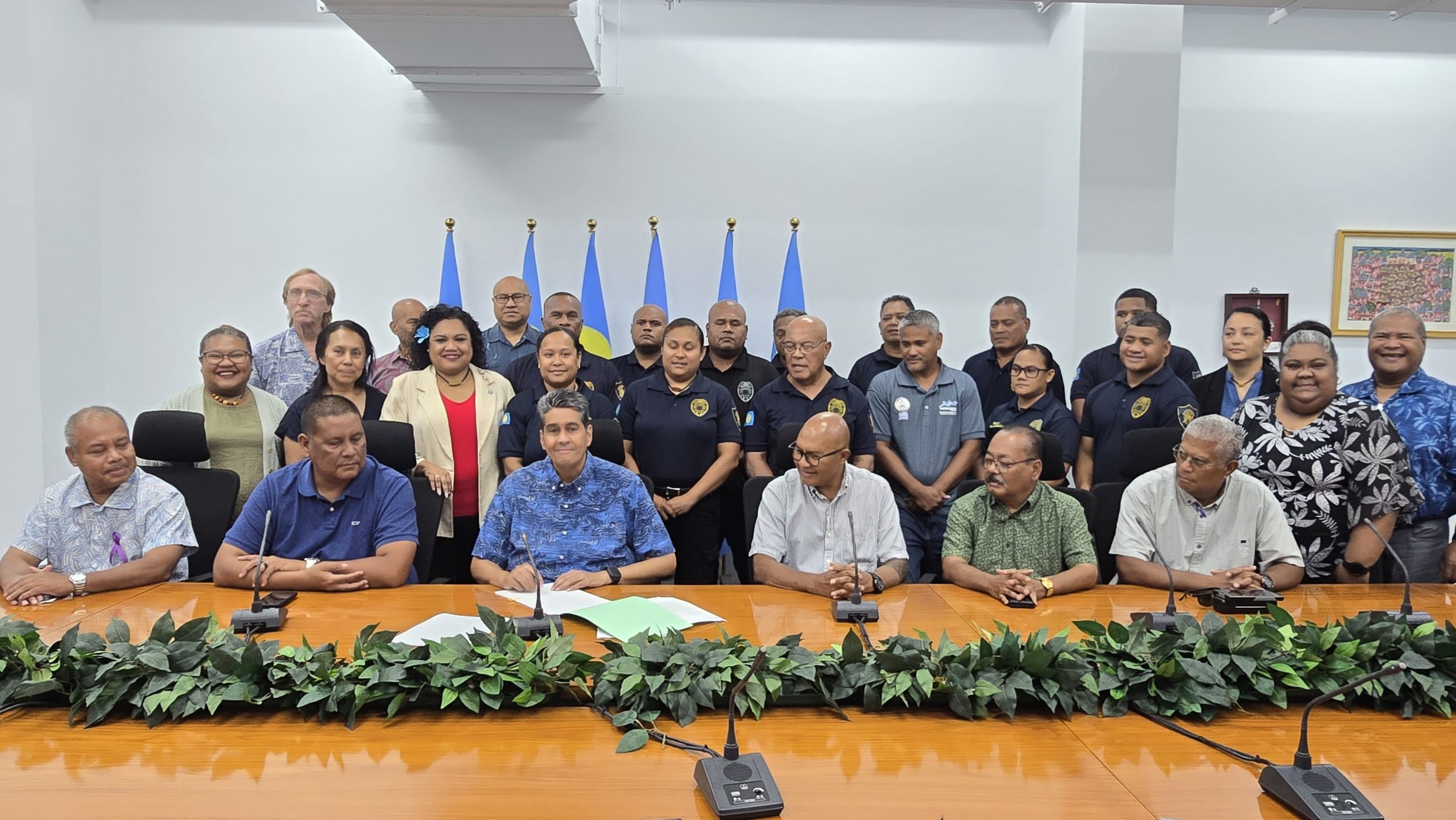
KOROR, Palau – (May 7, 2026) President Surangel Whipps Jr. has signed into law a sweeping anti-drug measure that strengthens penalties for illegal drug offenses and creates tougher accountability standards for law enforcement officers involved with drugs.
The legislation, RPPL 12-5, expands the country’s approach to drug-related crimes, including making it a felony offense for a person found driving under the influence of illegal drugs to be charged with “Possession of Controlled Substance.”
“We proposed a wheelbarrow to OEK and what they sent back was Cadillac,” Whipps said during the signing ceremony, referring to the stricter version of the bill returned by Congress.
One of the law’s major provisions focuses on law enforcement accountability. The legislation includes mandatory testing requirements and penalties for officers who may be involved with illegal drugs.
“This will hold them to the highest standard,” Whipps said, noting that police officers and other law enforcement personnel are expected to serve as trusted public role models.
According to Sen. Seigfried Nakamura, whose Senate Judiciary Committee oversaw the bill, one of the law’s most significant changes involves drivers found under the influence of illegal substances.
Previously, the term DUI, or driving under the influence, primarily referred to alcohol-related offenses. Under the new law, a person caught driving while under the influence of drugs such as marijuana, methamphetamine, cocaine or illegal opioids can now face felony possession charges.

Despite the tougher penalties, lawmakers said the legislation also attempts to provide opportunities for rehabilitation and recovery for first-time offenders and individuals seeking treatment.
The law mandates funding not only for drug testing programs but also for rehabilitation services through the Ministry of Health.
Nakamura acknowledged, however, that gaps remain in addressing rehabilitation and long-term treatment needs.
“We decided, let’s fix the law first … and then let us work with the hospital and the Office of the President to seek other kinds of assistance,” Nakamura said. “It is hard to pile up all in one law, so this is not a Cadillac, it is a Rolls-Royce.”
The comments suggest lawmakers view the legislation as a major step toward addressing illegal drug use and crime in Palau, while recognizing additional reforms and rehabilitation resources may still be needed.
