


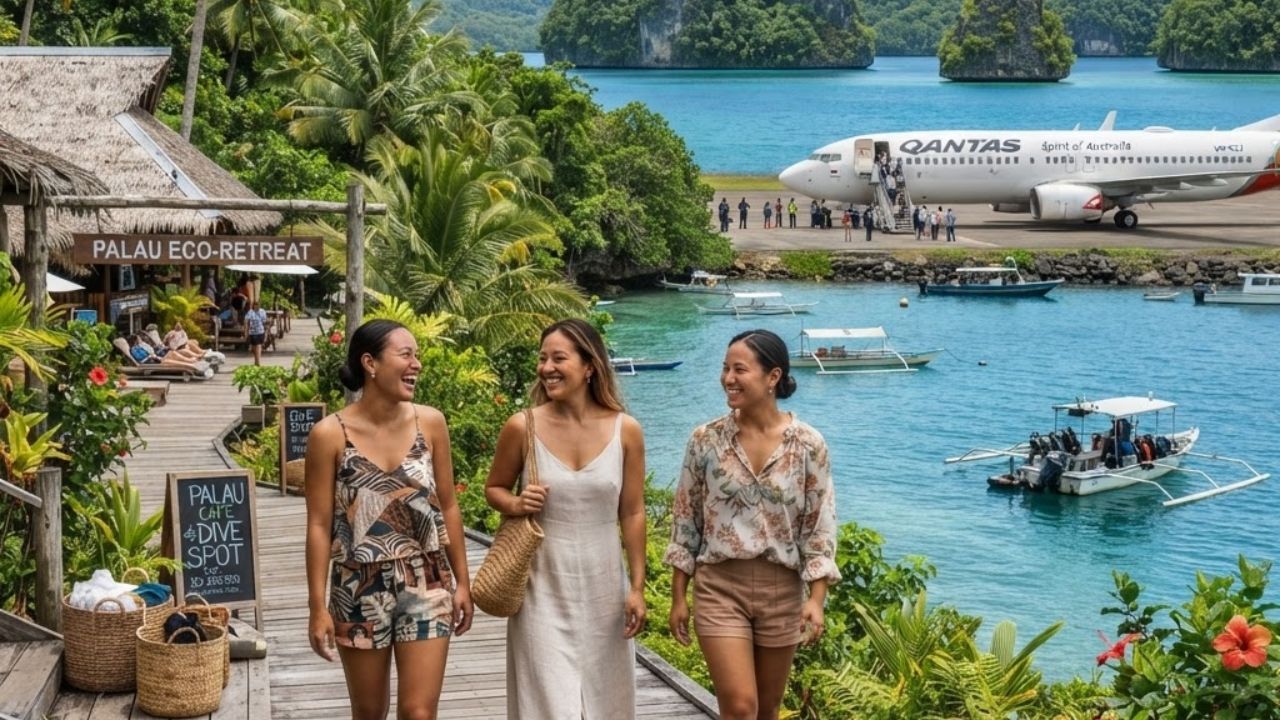
Generating an immediate $10 million economic injection in Palau and cutting overseas revenue leakage by half across the South Pacific, point-to-point flight corridors are rewriting the economic realities of remote island archipelagos.
The Local Trend: Dismantling the Historic Pacific “Transit Tax”
For decades, remote Small Island Developing States (SIDS) across Micronesia, Polynesia, and Melanesia struggled under the structural weight of what aviation economists term the “transit tax.” Reaching remote atolls required travelers to endure multi-stop itineraries through intermediary gateways like Manila, Taipei, Guam, Honolulu, or Nadi—wasting up to four days of vacation time in international transit lounges.
This friction imposed an economic penalty: nearly 70% of gross tourism spending leaked out to foreign trunk carriers, overseas booking aggregators, and intermediate airport hotels before visitors ever touched island soil. Today, an aggressive aviation revolution utilizing extended-range narrowbody aircraft has unlocked direct, point-to-point flight corridors. By connecting major metropolitan gateways directly to remote island runways, Pacific nations are capturing high-disposable-income travelers, converting lost travel days into billable lodge nights, and retaining capital within indigenous communities.
Case Study: The Palau Blueprint and the $10 Million Direct Surge
The benchmark for Pacific connectivity economics is the Republic of Palau. Home to the UNESCO World Heritage-listed Rock Islands Southern Lagoon, Palau historically endured volatile charter flight cycles. To build reliable long-term access, the Australian Government partnered with Palau under the Australia-Pacific Partnerships for Aviation (P4A)—a five-year, $100 million initiative administered by the Department of Foreign Affairs and Trade (DFAT).
Operating under the commercial banner of the Palau Paradise Express, Qantas deployed Boeing 737-800 aircraft connecting Brisbane International Airport (BNE) directly to Koror’s Roman Tmetuchl International Airport (ROR) in under six hours:
- Fourfold Passenger Volume Expansion: Total passenger volume along the corridor quadrupled compared to pre-pandemic baselines, carrying over 15,400 travelers since its inception.
- Surging High-Yield Australian Arrivals: Australian visitation surged 68% in the route’s first operational year and accelerated by 87% year-on-year between January and May 2026. Total inbound visitors climbed past 51,000 through July 2026 (a 27% increase year-on-year).
- Direct $10 Million Treasury & Private Sector Injection: The route generated an estimated direct $10 million injection into Palau’s domestic economy in 2025 alone, fueling a 26% increase in total national visitor spend.
- Lengthened Stays and Direct Spend: Australian travelers averaged stays of 8 to 12 nights (compared to 3- to 4-night budget charters), channeling foreign currency directly into boutique eco-lodges, custom dive charters, and local culinary establishments.
- Corridor Extension to November 2027: At the Pacific Islands Forum Leaders’ Meeting in Koror on September 2, 2026, bilateral partners formally extended the route through at least November 2027, with Qantas expanding service to twice weekly starting December 2026.
Direct Air Corridor Transformations Across Oceania (2026)
| Island Nation / Territory | Commercial Gateway & Route | Operating Carrier & Aircraft | Verified Economic & Strategic Impact |
|---|---|---|---|
| Palau (Micronesia) | Brisbane (BNE) to Koror (ROR) | Qantas (Boeing 737-800) | $10M Direct injection; Australian arrivals up 87% |
| Cook Islands (Polynesia) | Sydney (SYD) & Honolulu (HNL) | Jetstar (A321neo LR) & Hawaiian | Australia share reaches 27%; spend NZD $148–$200+/day |
| Vanuatu (Melanesia) | Brisbane (BNE) to Santo (SON) | Solomon Airlines (A320 / E190) | Bypasses Port Vila; channels capital directly to Sanma |
| Niue (Polynesia) | Auckland (AKL) to Niue (IUE) | Air New Zealand (Boeing 737) | Underwritten weekly flight; exports organic vanilla in |
Regional Multipliers: Cook Islands, Vanuatu, and Niue
Across Polynesia and Melanesia, direct flight connectivity is driving structural economic diversification:
- Cook Islands Diversification via Sydney and Honolulu: Deploying fuel-efficient Airbus A321neo LR aircraft, Jetstar established non-stop service between Sydney and Rarotonga (expanding to five weekly flights during peak season), alongside Hawaiian Airlines’ weekly flight from Honolulu. Australian arrivals grew to represent 27.0% of total inbound visitors by May 2026 (balancing New Zealand’s dominant share at 62.0%), with daily in-country spending expanding to NZD $148–$200+ per visitor. The domestic Mana Tiaki Eco-Certification program ensures this revenue flows directly to locally owned boutique accommodations and indigenous black pearl artisans in Manihiki and Penrhyn.
- Decentralizing Vanuatu Tourism to Espiritu Santo: Following the restructuring of Air Vanuatu, Solomon Airlines launched non-stop service from Brisbane to Santo-Pekoa International Airport (SON) in Luganville (flight IE726, operating Thursdays and Saturdays). Bypassing the urban capital of Port Vila, direct flights channel tourist revenue straight to Sanma Province customary landholders at Champagne Beach, Riri Blue Hole, and the SS President Coolidge dive site, while supporting the Sanma Agri-Food Trade Association’s organic beef, cacao, and vanilla farmers.
- Niue’s Organic Export and Tourism Lifeline: On the raised coral atoll of Niue (population under 1,800), a single weekly Air New Zealand Boeing 737 flight from Auckland—underwritten jointly by the Niue Government and New Zealand MFAT—anchors the entire cash economy. Inbound tourists arrive in precise seven-day cycles, filling local guesthouses, while pressurized cargo holds transport fresh pelagic fish, organic honey, and certified organic Niue Vanilla to fine-dining markets in Auckland and Sydney in under 48 hours.
Destination Specialist Local Insider Tips
Travelers planning an off-the-beaten-path escape across the Pacific can maximize their cultural and ecological experience with these specialist tips:
- Sign the Palau Pledge Upon Arrival: At immigration in Koror, passport officers stamp the mandatory Palau Pledge into your passport, requiring visitors to sign a personal conservation promise to protect local reefs, wildlife, and customs.
- Book Mana Tiaki Certified Accommodations in Rarotonga: When visiting the Cook Islands, look for the official Mana Tiaki eco-label on beachfront villas and car rental operators to ensure your spending directly supports indigenous conservation projects.
- Kayak the Freshwater Riri Blue Hole in Espiritu Santo: Rent a hand-carved outrigger wooden canoe guided by local villagers along the emerald waters of the Riri River to swim in the crystal-clear, spring-fed Matevulu and Riri Blue Holes.
- Pack Reef-Safe Sunscreen Free of Oxybenzone: Palau and Pacific island territories enforce strict environmental bans on sunscreens containing oxybenzone, octinoxate, and parabens; purchase certified mineral-based zinc sunscreens on-island.
- Experience Niue’s Sea Track Chasms at Low Tide: Rent a mountain bike or vehicle to explore the dramatic limestone chasms of Matapa Chasm and Talava Arches during low tide for secluded swimming in natural rock pools once reserved for ancient Niuean kings.
Future Outlook
As ultra-long-range narrowbody aircraft like the Airbus A321XLR and Boeing 737 MAX enter service, secondary Pacific hubs will forge direct links with East Asia and North America. By prioritizing high-value, low-impact tourism models aligned with the 2050 Strategy for the Blue Pacific Continent, island nations are converting sovereign air corridors into enduring engines of economic self-reliance.
