


In brief
- China has warned Taiwan’s strong presence at Pacific leaders’ talks in Palau could have ‘consequences’, but insists not a threat.
- The absence of several leaders raise doubts over united action on climate and regional security.
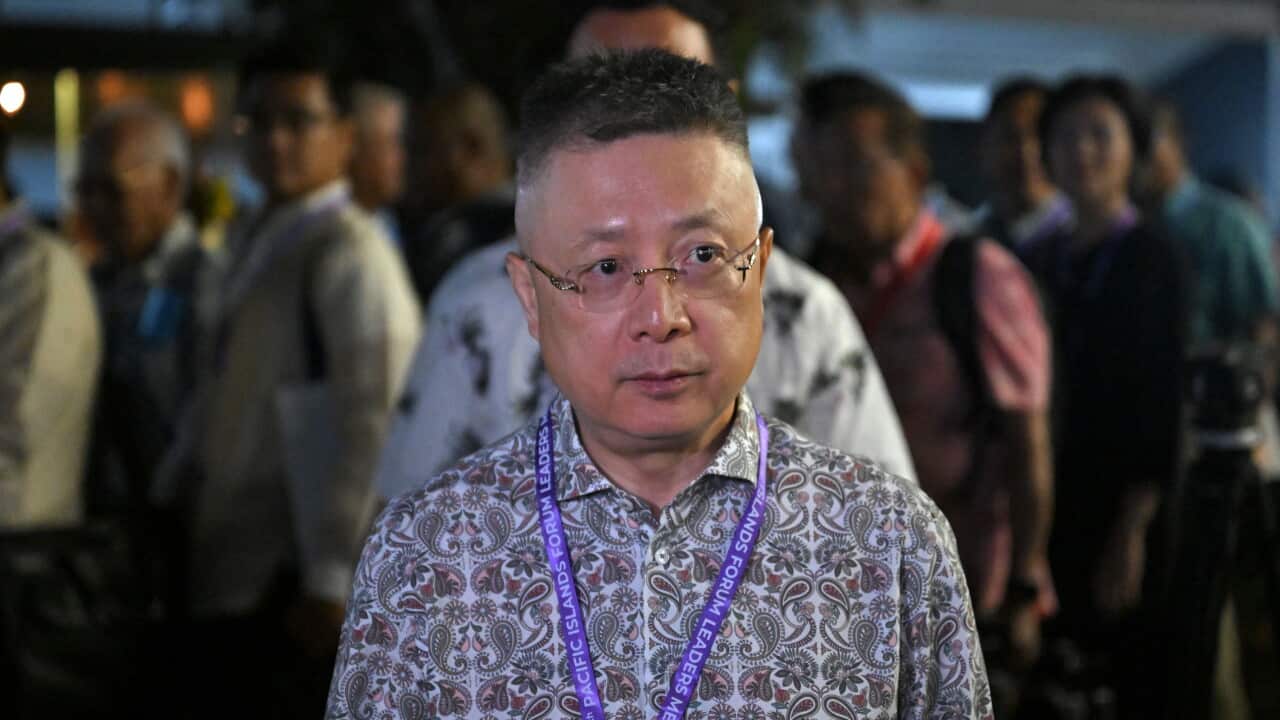
China’s top Pacific Islands diplomat has warned “there will always be consequences” for Taiwan’s strong presence at the annual Pacific Islands Forum (PIF) leaders’ meeting in Palau, kicking off the highly charged three-day talks officially starting on Tuesday.
Qian Bo, Beijing’s special envoy for Pacific Island Countries Affairs, denied his comments were a threat, but said China has “serious concerns” with Taiwan’s status as development partners at the forum.
“There will always be consequences. You know, this is objected to by all, so this should not have happened. We think it’s very inappropriate to do so,” he told Australian reporters while leaving the opening ceremony on Monday.
Neither China nor Taiwan are part of the 18-member group at the forum, but countries including the United States and China have traditionally been invited as dialogue partners. Taiwan has been categorised as a development partner since 1993 and is this year being represented by foreign minister Lin Chia-lung, along with a sizeable delegation.
Palau is one of only three Pacific nations to have diplomatic relations with Taiwan, which has created great friction between the hosts and China over the past decade. In 2017, Beijing placed de facto “tourist bans” on the tiny Micronesian country, which received 40 per cent of its GDP from the tourism industry, in an apparent attempt to sway Palau’s diplomatic position away from Taipei.
Your trusted source for staying up-to-date with the world around you. Get free daily news updates and analysis, straight to your inbox.
Palau’s president Surangel Whipps Jr said on Sunday he was aware there would be “threats” of retaliation if Taiwan attended this year’s talks.
“Let’s not use this as a place that we should be threatening or making people feel uncomfortable,” he told reporters.
“China doesn’t tell us that we cannot be a partner to Taiwan. That is our sovereign decision, not their decision.”
Qian also claimed China has the “understanding and support” of the “majority” of PIF members and has made its position “very clear” to Palau.
This year’s PIF has been mired in controversy ahead of its official start, with six leaders confirmed as no-shows, including outgoing forum chair and Solomon Islands Prime Minister Mathew Wale, as well as Kiribati’s pro-Beijing president Taneti Maamau, who has pointedly sent his former ambassador to China, David Teabo, in his place instead.
Reasons for their absences range from national parliamentary duties and health, with Wale having arrived in Koror and forced to return home on the weekend to face a possible leadership challenge. But key leaders missing have cast doubt over whether there could be meaningful collective action on key agenda items at the three-day event, including on climate action and, specifically, ocean protection.
New Zealand’s foreign minister Winston Peters told the ABC he was “highly suspicious” of the lack of attendees, and earlier alluded to foreign interference at play.
Peters also was disapproving of any potential Beijing reaction to Taiwan’s prominent presence at the talks this week.
“(China) might make a show of this. I’d be astonished if they’re reading the room properly, because this happens to be an 18-country organisation where the insiders get to decide what happens, not outsiders,” he said.
It also raises doubts over whether collective condemnation against China’s ballistic missile test in July while Prime Minister Anthony Albanese was in Fiji signing a historic defence treaty.
Albanese arrived in Palau on Monday afternoon with Pacific Islands Affairs Minister Pat Conroy and climate change and energy minister Chris Bowen, where he’s expected to stay for the leaders’ summit until Thursday.
For the latest from SBS News, download our app and subscribe to our newsletter.
