


Overview:
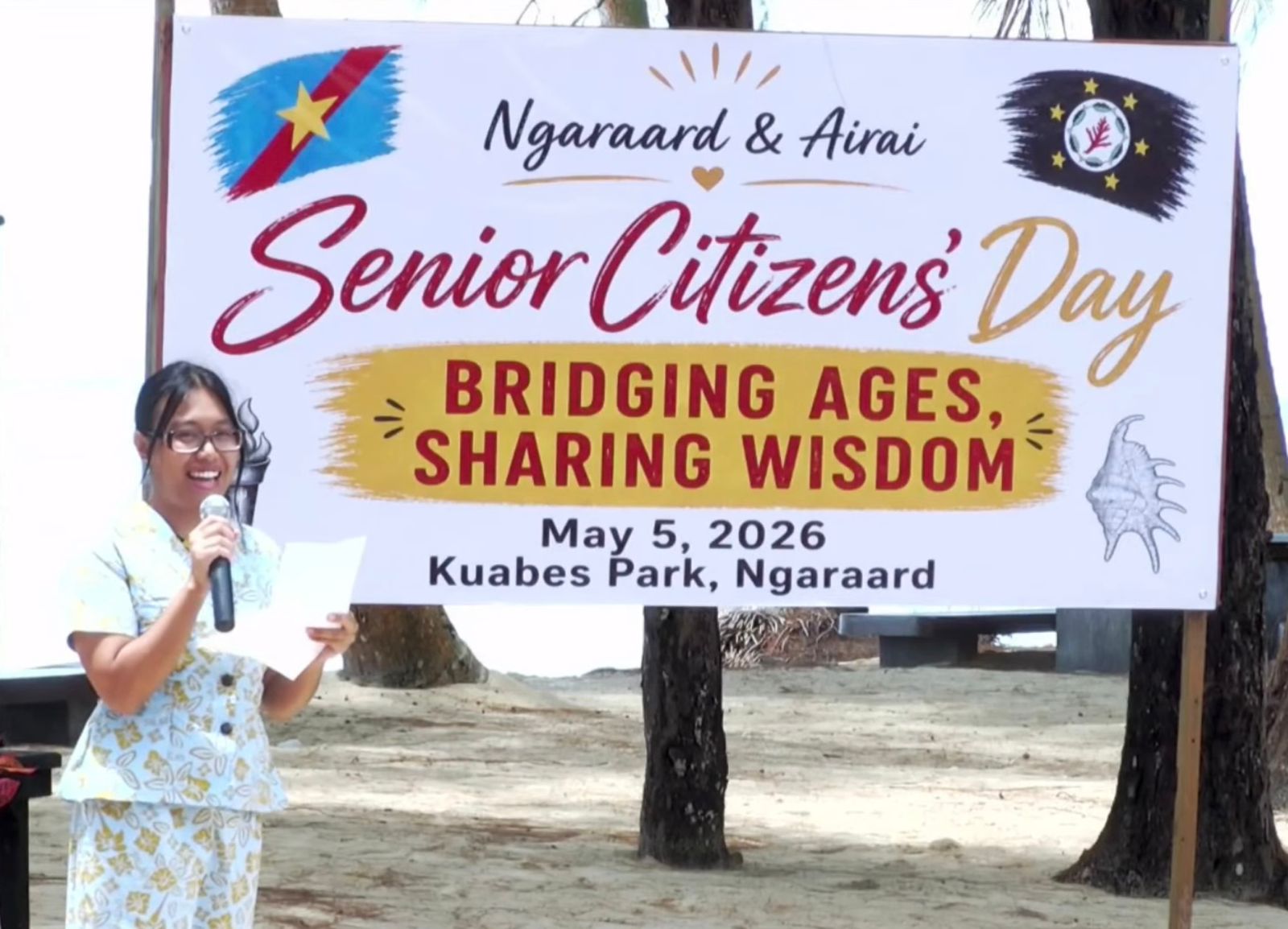
A young poet from Airai and Ngaraard moved audiences during Senior Citizens Day with a heartfelt Palauan-language poem honoring elders, cultural identity, and the enduring bond between the two states under the theme “Bridging Ages, Sharing Wisdom.”
By: Laurel Marewibuel
KOROR, Palau — A young poet from Airai and Ngaraard used verse on Saturday to honor elders and the shared history between the two states, delivering a poem that event organizers called a heartfelt bridge between generations.
“Being from both Airai & Ngaraard, I really wanted to make both states proud,” said Mayumi Remengesau, who wrote the poem for Senior Citizens Day, a joint gathering of seniors from Airai and Ngaraard. “I was so honored when Mrs. Lisa Rdiall Sakuma reached out to me. I felt that this poem represented something much bigger than myself and much deeper than just writing. I was given not only the opportunity but also the responsibility to honor the wisdom and sacrifices of our elders who serve as pillars of our society, and our history that has led us to where we are today. Our stories carry so much of our identity, so I’m very humbled to have been given the opportunity to share it.”
Remengesau said she wrote the piece specifically to reflect the relationship between the two states and to echo the event’s theme, “Bridging Ages, Sharing Wisdom.”
“The Senior Citizen’s Day was a gathering between Airai and Ngaraard, so I was asked to write about the relationship between the two states,” she said. “It was important for me to highlight how their bond continues to live on through every generation and to reflect the event’s theme ‘Bridging Ages, Sharing Wisdom’.”
Central to Remengesau’s poem is Did ra Nambo, which she described as “a powerful symbol of resilience, a reflection of the enduring bond between Airai and Ngaraard, and bridging of culture and wisdom from one generation to the next.” Event leaders had emphasized Did ra Nambo as one of the ceremony’s major themes.
Remengesau said she hopes the poem will encourage Palauans to protect and pass down cultural knowledge. “I hope we can continue to recognize the importance of our cultural heritage and our shared responsibility to protect and pass down our culture, language, and values that keep us grounded and make us unique,” she said. “I also hope we continue to strengthen the bond between youth and elders through the sharing of stories and historical knowledge so that we may better understand our identity and never lose sight of who we are.”
The full poem, delivered in the Palauan language, follows.
Ngaraard a Renguk, Irrai a Kotek
A chimol beokl el mle Did ra Mechorei a ulbechakl er a debel a Irrai el mo er a beluu er a Ngaraard.
Al tang di mle chimol beokl, e ng di ng ullab a betok el ltkel a irechar me a cheldechedechal a Airai.
Al tang ng mla mad el kerrekar e ng di ng ulmung a deleuill el ua rodech el kirel a telcheroll el merael mei.
Tial beokl a mlo Did ra Nambo.
E diak el dil did.
Ng did el ulmak a deleuill, me a omengull, me a klaingeseu e ra delongelel aika el teblo el beluu.
A chimong a dillemii tia el kerrekar, e a chimong a milsang a beches el klengar.
Aikal eru el beluu a di ua blol tang.
Ng dimlak el ngabetechelid.
Ng mle ungil chung.
Me a elecha el sils e ke de tmak el rokui.
Tia el did a mla mes aike el mla mengodech er a beluu.
A re mle mekekerei e mla mo meklou.
Se el kulbedebek el kirel, ak mo lotketterir ar delad me ar demad.
A klisichir a mechellakl el ua dichel a buil.
A rengrir a bekerurau el uai se el ralm er a Ngerimel.
Ng mui er a klloureng el uai a Ngerchokl el diak le mengemed a lmel.
Meng di uai tia el did el omak a deleuill, kemam a re mekekerei el chad ki momdid a ultil ochemiu, kemiu a rulmechell.
Kom chiloit a kelsbengiu me a lengeliu lomralm a klisichel a ureor me elechang e aki ngeltengat el meritem er a rdechel.
Alta ng aki mengades a beches el rael e mengedechuul a beches el teletael, E ng di dolemolem el mengereomel e mesebechakl er a luukel a klengar
Meng diak ki moridii a klebelau me a klechibelau er kid el dikesed rarecheuodel el mei.
Me di uai al nga er ngii a blai er a Irsuuch er a Ngaraard me a blai er a Irsuuch er a Airai
A Meribang er a Ngaraard me a Meribang er a Airai
A NgaraSeseb er a Ngaraard me a NgaraSeseb er a Irrai
A Did er a Mechorei er a Irrai el mlo Did er a Nambo er a Ngaraard
Ke re di mo tang.
Teblo el beluu el mla mechaus el mo chimol oreuikl.
Teru el rudos loba kmes el deleuill.
Teblo el beluu el kildemklii a chimol rael.
E le de ta el bekall e ng ungil merael.
Ke de ulekrael,
E kauchad el beluu
El kaseues el mo e mei,
Ra irechar, chelechang, me a taem el merael mei.
Mayumi Remengesau
