


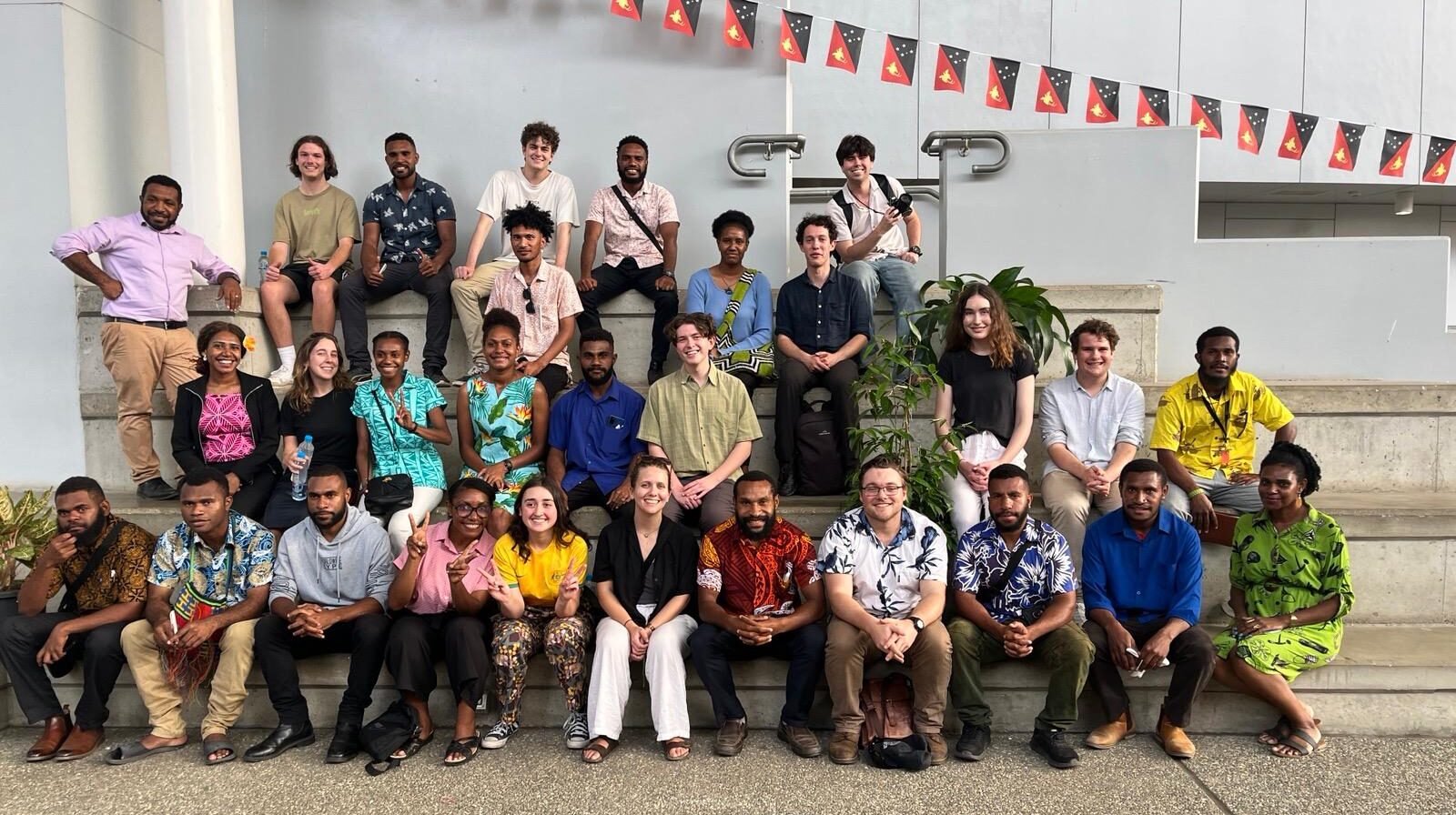
In July 2024, a group of students from the Australian National University attended an in-country field school in Papua New Guinea, funded by a New Colombo Plan Mobility grant. The field school focused on the political economy of service delivery and included meetings with stakeholders from the private, government and non-government sectors. We also met with students from the University of Papua New Guinea and Divine Word University. In this testimony, we reflect on our experiences in PNG and the lasting impact this opportunity has had on us as participating students.
The field school involved travel across metropolitan and regional districts, provinces and villages, where key stakeholders helped students understand the realities of service delivery in PNG. Our cohort came from a diverse range of academic and professional backgrounds, including health sciences, economics, development studies, law and justice, international relations, security and politics. We were fortunate to have been hosted by a range of different service providers, including members of the police and judiciary, metropolitan hospital staff, regional health clinic employees, education providers, private security contractors, farmers, politicians, community and religious leaders and diplomats. Each meeting included opportunities for discussion, allowing students to explore specific topics that informed their coursework, while also engaging with the core course theme of how politics and economics affect service provision.
The field school provided a deeply enriching experience for our cohort, sparking continued reflection on, and a lasting engagement with, PNG and the wider Pacific region.
As one student observes:
Despite being our closest neighbour, largest aid recipient, and a vital regional partner, PNG is often overlooked in discussions about Australia’s future. This is concerning, particularly as global security moves away from the norms of the post-Cold War era. PNG security is Australian security. This is equally true for national defence as it is for economic stability and human security, which has now been cemented in policy by the Pukpuk Treaty. But PNG remains far from the centre of discussion.
We believe this view is due, largely, to limited education about PNG and its importance to Australia (and, of course, Australia’s importance to PNG). The opportunity to participate in the ANU field school — to see Port Moresby and the issues faced in the capital as well as what impacts people in their regional villages — is a firm step towards resolving this educational gap.
ANU students visit the Rai Coast District in Madang Province, PNG (Malika Knapp)
Another student says the school is just the start of the journey.
It is unclear what the long-term impacts of climate change, globalisation, regional population increase and changing US strategic priorities will have on PNG. But these impacts will all certainly be felt in Australia. Australia must be prepared.
For another student, the field school underscored the importance of advocating for PNG literacy and engagement:
Participating in the field school in PNG was a transformative experience that highlighted the importance of strengthening PNG literacy, particularly among young Australians. Compared to the extensive youth engagement programs we have with Indonesia, such as through ACICIS and the DFAT-supported Australia Indonesia Youth Exchange Program, opportunities to build youth engagement with PNG and the wider Pacific remain limited. Student study tours like this one are critical in bridging that gap, providing firsthand, in-country experience of development challenges, cultural nuances and diverse perspectives — from local communities, rural health clinics, police stations and courts to the UN and the Australian High Commission.
For us, the tour was the first step in building lifelong connections with PNG. We forged strong friendships, have kept in contact with peers at PNG universities. It highlighted that meaningful engagement requires direct, on-the-ground experience — something no classroom can provide — to understand, from Papua New Guineans themselves, the challenges they face.
The value of in-country learning resonated strongly with our cohort. In-country learning — hearing about the most pressing issues from those impacted by them every day — enables more intimate access to a wider array of actors than classroom learning. This is all the more important in PNG, where access to digital infrastructure is so often lacking.
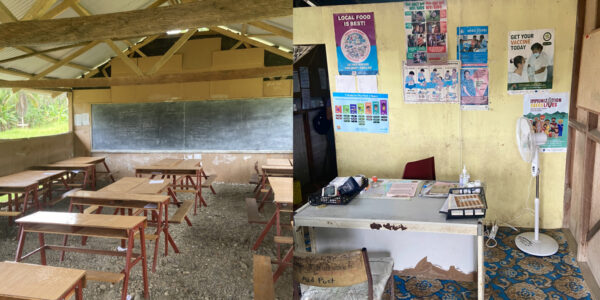
A school and a health clinic in the Rai Coast District in Madang Province, PNG (Malika Knapp)
As one student reflects, the opportunity to meet and converse with stakeholders in the field was especially important given the decentralised nature of service delivery in PNG:
Decentralised service provision in PNG entails unique resourcing challenges and solutions. Appreciating these solutions and challenges requires interaction with multiple service providers within and across service areas. In this sense, PNG is particularly suited to field learning. Where classroom overviews would surely caricature PNG’s political economy, intimate field learning allows students to draw commonalities and identify important distinctions affecting service provision in different local contexts. Similarly, field learning allows students to appreciate firsthand PNG’s cultural and linguistic heterogeneity.
As the policymakers and researchers of the future, it is vital that we continue to make experiences like the PNG field school available to Australian students. Building deep mutual understanding is crucial for achieving better outcomes for both nations.
