

Papua New Guinea is undertaking some of the most significant education reforms since its independence. The introduction of the new 1-6-6 education structure, the abolition of grade 8 and 10 national examinations and the rollout of the Standards-Based Curriculum are all intended to improve access, equity and learning outcomes.
These reforms address important structural problems. Yet they raise a broader question that receives far less attention: what kind of citizens is the education system producing?
Education policy debates in PNG tend to focus on enrolment, infrastructure, examinations and curriculum content. These are important issues. However, education is not only about transmitting knowledge. It is also about shaping values, behaviours and attitudes that influence how people participate in society. If education is the foundation of national development, then it must also be the foundation of nation-building.
Historically, PNG’s education system has been heavily content-driven and examination-oriented. Success has largely been measured through syllabus completion, grades and progression through the system. While this approach has helped create pathways to further education, it has often left little room for the deliberate development of civic responsibility, cooperation, leadership and social accountability.
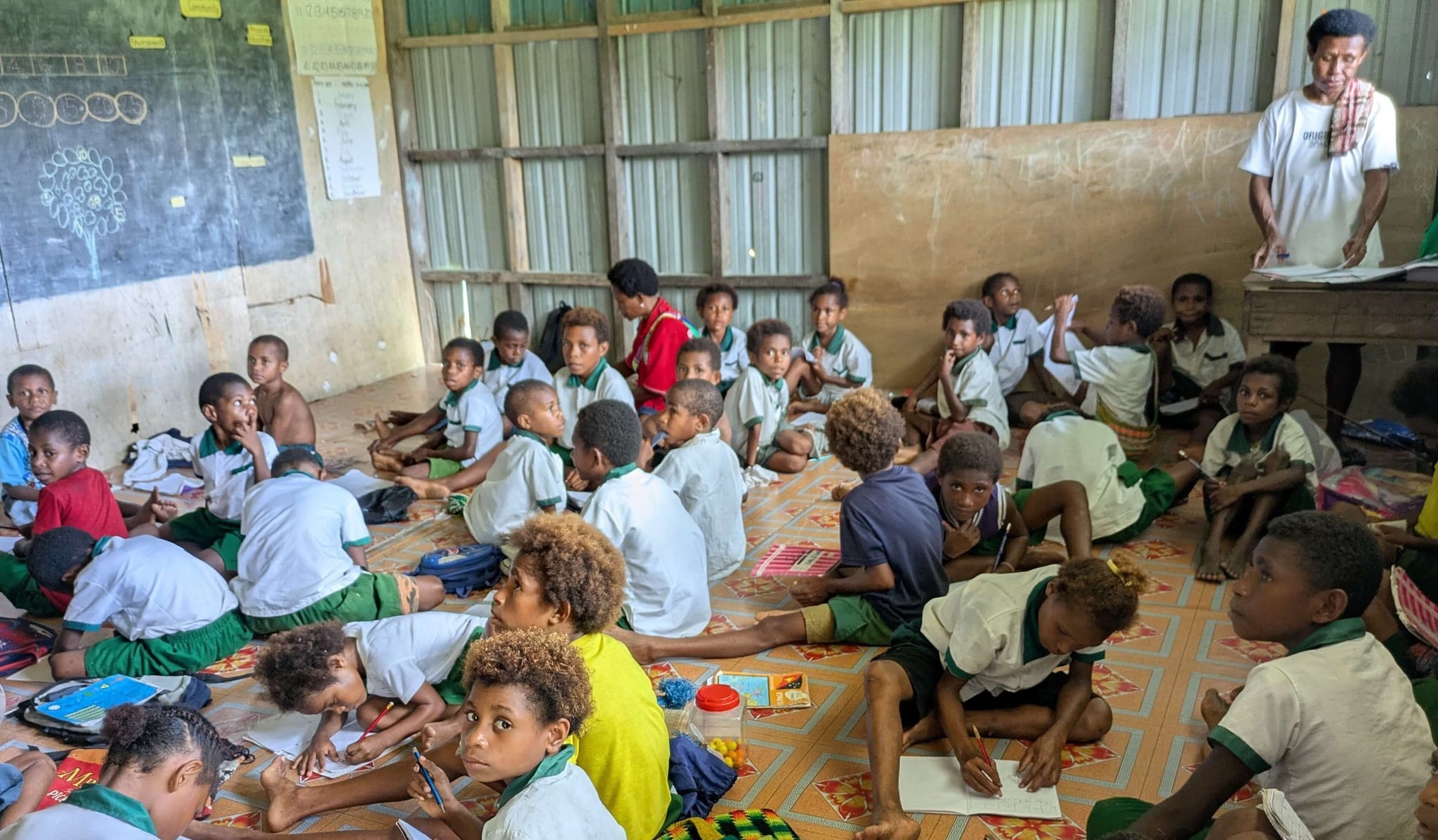
The new Standards-Based Curriculum aims to move classrooms towards more learner-centred and skills-based approaches. However, implementation remains challenging, and many schools continue to rely on traditional teaching methods because of limited teacher training, inadequate resources and overcrowded classrooms. In practice, content delivery still dominates much of everyday teaching.
My recent visit to Japan and the Philippines highlighted alternative ways of thinking about education reform. One of the most striking examples was Japan’s Tokkatsu approach or “special activities”, a whole-child component of the official curriculum that integrates social and character development into everyday school life. Students participate in classroom management, cleaning activities, meal organisation and school events. These activities are not treated as extracurricular; they are part of the educational process itself.
Tokkatsu is not without its critics in Japan, where it has been linked to the long working hours of teachers and questioned for promoting conformity, and schools have begun scaling back some activities in response. The lesson for PNG is not that Japanese practices should be copied. Educational systems are deeply shaped by local cultures and contexts. Rather, the example demonstrates that schools can intentionally develop cooperation, responsibility, respect and leadership alongside academic learning.
This issue is particularly relevant as PNG reforms its education system from the ground up. The incorporation of early childhood education (ECE) into the national education system creates an opportunity to rethink what children should learn during their formative years. Research shows that early childhood education influences not only cognitive development but also social behaviour, civic attitudes and lifelong learning outcomes.
At present, much of PNG’s reform agenda focuses on access and progression through the education system. The abolition of grade 8 and 10 examinations, for example, seeks to remove barriers that previously prevented many students from continuing their education. While this reform may improve access, concerns remain about how learning standards will be monitored and maintained. Recent analysis has also highlighted challenges relating to school capacity, teacher workloads and resource constraints.
More fundamentally, expanding access alone will not necessarily produce stronger institutions or better governance outcomes. Schools are among the first public institutions that children encounter. They are where young people learn how authority operates, how responsibilities are shared and how communities function. Values such as honesty, accountability, cooperation and respect are not developed through policy statements alone; they are learned through daily practice.
This connection between education and governance is often overlooked. Discussions about governance challenges in PNG frequently focus on politics, public administration and leadership failures. These are important concerns, but the foundations of civic behaviour are laid much earlier. The habits and values formed during childhood influence how future citizens engage with communities, workplaces and public institutions. Examples of this are visible across PNG. Concerns about vandalism of public infrastructure, poor maintenance of community facilities, disregard for public rules and limited civic participation are often discussed as governance problems. While these issues are influenced by many factors, they also raise a broader question about how schools help young people develop responsibility, respect for shared resources and a sense of duty to their communities. Education alone cannot solve these challenges, but it can play an important role in shaping the attitudes and behaviours that support stronger institutions and communities.
For this reason, PNG should consider complementing its structural reforms with a stronger focus on character formation and civic development. The ongoing development of an ECE policy provides a timely opportunity to design a curriculum that reflects PNG’s own cultures, values and community practices. Rather than relying on and using models and curriculum from elsewhere, PNG can build a home-grown approach that embeds cooperation, shared responsibility, community participation and respect for others into everyday learning.
This need not require major new subjects or costly reforms. Rather, the curriculum itself could place greater emphasis on character formation by embedding structured, age-appropriate activities into everyday school life.
The challenge is to translate civic values into structured daily school routines within existing curriculum time and resource constraints. Alongside academic learning, schools could incorporate activities that intentionally cultivate respect, kindness, resilience, self-discipline, teamwork and a sense of responsibility. These might include shared classroom responsibilities, collaborative group work, peer mentoring, preparing simple meals, maintaining classrooms and school grounds, school gardening and community projects involving parents and local leaders. Such activities would not be treated as extracurricular but as an integral part of the educational experience, allowing students to learn cooperation, leadership and civic responsibility through daily practice. Teachers could also integrate discussion of local community issues, customary values and practical problem-solving into everyday lessons. As teacher professional development expands under the current reforms, practical strategies for implementing these approaches could be incorporated into in-service training alongside curriculum implementation.
Education reform should therefore be viewed not only as a sectoral reform but also as a nation-building project. Improving access remains essential, and raising learning outcomes remains equally important. However, these goals should be complemented by deliberate efforts to cultivate civic responsibility through everyday school life. Small changes in classroom practice, teacher preparation and school culture can help ensure that education reforms strengthen not only academic achievement but also the values and behaviours needed for effective citizenship. If reforms succeed in doing both, they will contribute not only to a better education system but also to stronger communities and institutions across Papua New Guinea. Ultimately, the success of PNG’s education reforms will be measured not only by how many children enter and complete school, but by whether they leave as capable, responsible and community-minded citizens who strengthen their communities and the nation.
