


Overview:
After navigating thousands of miles across the Pacific and enduring severe weather, including Typhoon Sinlaku, the crew of Alingano Maisu has returned safely to Palau. The voyage may have been shortened, but its mission of preserving traditional navigation and cultural connections remains a success.
Traditional voyaging canoe completes 4,280 nautical miles as crew navigates severe weather across the western Pacific
By: Ngeldei Tulop
KOROR, Palau — The traditional voyaging canoe Alingano Maisu was formally welcomed home during a closing ceremony May 29 at Drop Off Bar & Grill, marking the crew’s safe return after severe weather, including Typhoon Sinlaku, forced the vessel to shorten its planned Pacific voyage.
The voyage began Feb. 15 in Palau and was originally scheduled to cover approximately 6,200 nautical miles with stops in Taiwan, Okinawa, Guam, Saipan, Satawal and Yap.
However, worsening weather conditions across the western Pacific required the crew to adjust its route. Alingano Maisu ultimately traveled through Taiwan and Okinawa before returning safely to Palau in May, completing approximately 4,280 nautical miles.
Despite cutting the journey short, the canoe and its crew returned without incident after successfully completing the majority of the planned voyage.
The expedition was organized by the Micronesian Voyaging Society with support from regional partners to promote traditional navigation, cultural exchange and the sharing of Indigenous knowledge.
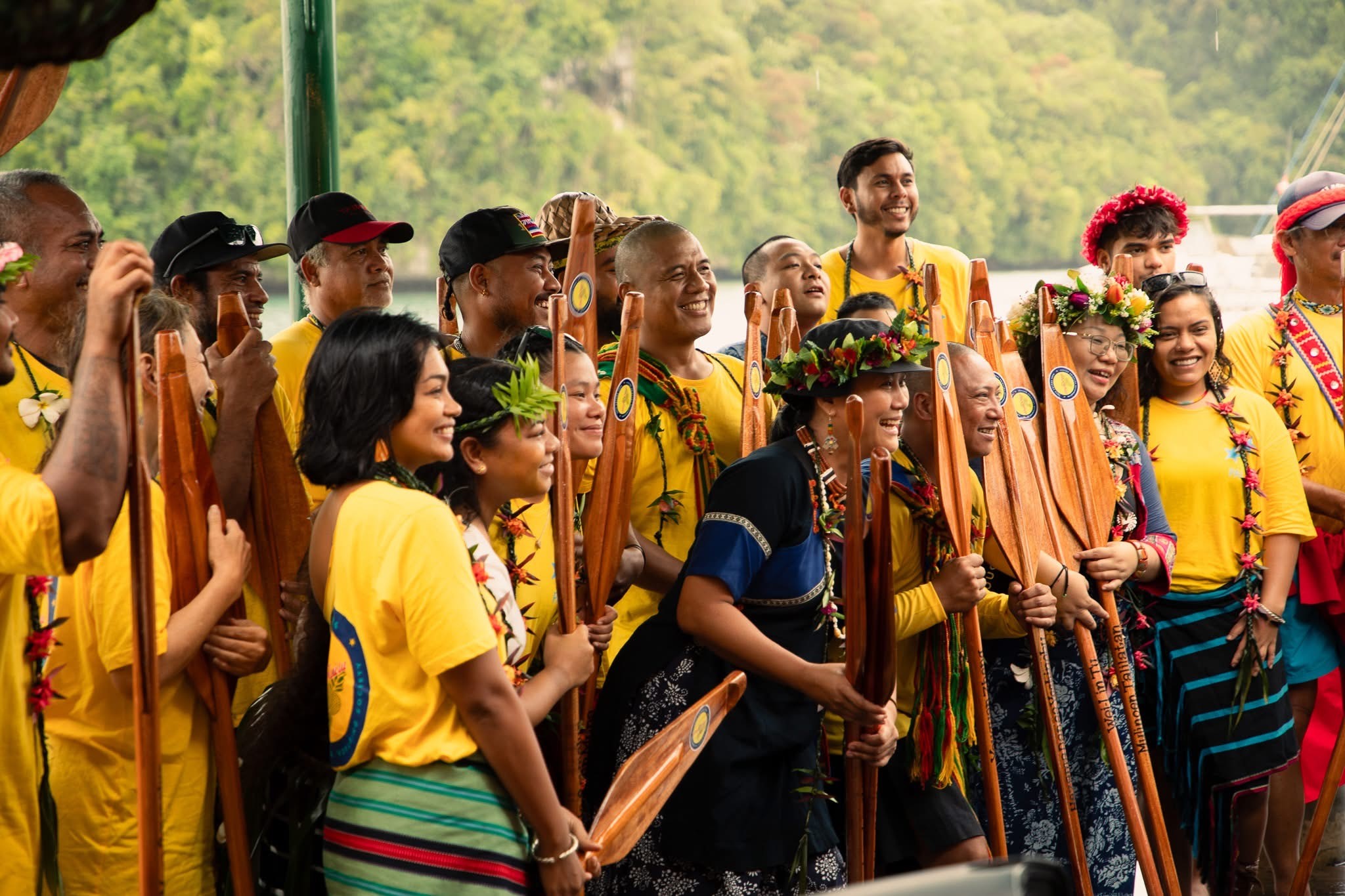
Community members, cultural leaders, supporters and members of the voyaging community gathered during the closing ceremony to recognize the crew’s accomplishments and celebrate the successful completion of the voyage.
A highlight of the event was the recognition of Master Navigator Sasario Sewralur by Grand Master Navigator Ali Haleyalur for safely guiding the crew home through severe weather conditions using traditional navigational techniques.
The ceremony reinforced the enduring importance of traditional seafaring practices and ongoing efforts to preserve Micronesian navigation knowledge for future generations.
Led by Grand Master Navigator Sesario Sewralur, the voyage also served as a platform for educational outreach, cultural diplomacy and regional collaboration. Throughout the journey, crew members engaged with students, Indigenous communities and maritime organizations, sharing traditional voyaging practices and principles of environmental stewardship.
Alingano Maisu, a double-hulled voyaging canoe gifted to renowned master navigator Mau Piailug in 2007, remains a powerful symbol of the revival and preservation of traditional Pacific navigation.
Since arriving in Palau, the canoe has played a central role in training new generations of navigators while strengthening cultural ties across Micronesia and the broader Pacific region.
The safe return of the crew following months at sea and challenging weather conditions was celebrated as both a successful voyage and a testament to the resilience of traditional navigation in the modern Pacific.
