


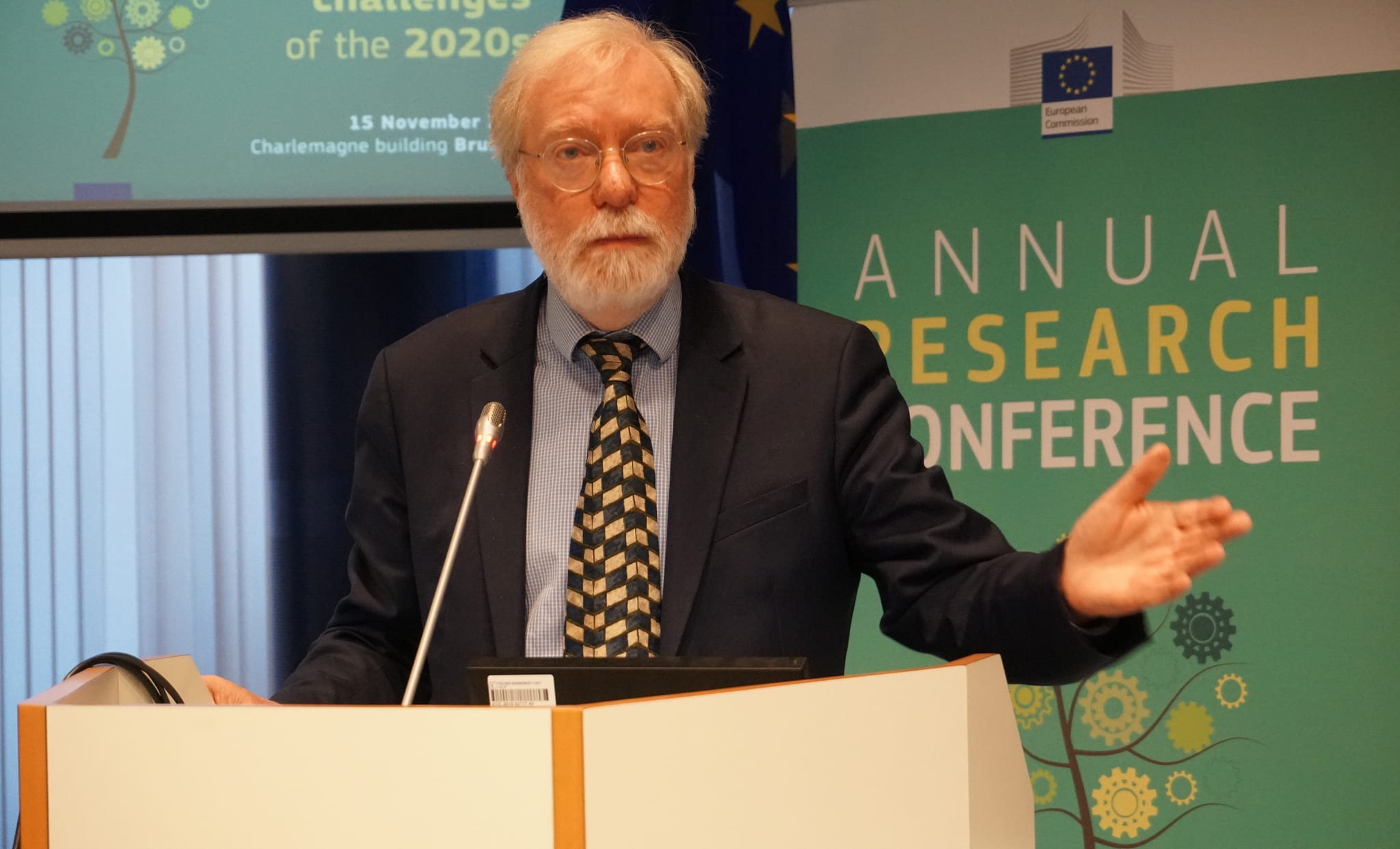
The subject of this article, Paul Collier, born in 1949, is a British development economist and Professor of Economics and Public Policy at the Blavatnik School of Government, University of Oxford. He is perhaps best known for his book The Bottom Billion (2007) and his research on conflict, governance and fragile states. His latest book, Left Behind: A New Economics for Neglected Places, was published in June 2024.
In February of this year, friends and colleagues came together at the Blavatnik School of Government (BSG) at Oxford to celebrate Professor Paul Collier’s impressive career to date. I wish I could have been there, but I was unable to travel to attend. Here, I want to share how I first discovered Paul’s work, what I learned from working with him, and why I believe he truly lives the ideas he writes about.
I first came across Paul’s work in 2005. While pursuing my MA in Development Economics as a Fulbright scholar at the Center for Development Economics at Williams College in Massachusetts, I was assigned to review and critique his article “Greed and Grievance” on the causes of civil war. Because I come from Afghanistan — a country that has endured decades of conflict and civil war — his analysis resonated deeply with me. Unlike some other theoretical accounts, Paul’s research captured important aspects of the realities on the ground and highlighted the limits of grand theories that often struggle to explain complex conflicts.
In Afghanistan, although repression, exclusion and corruption by successive governments generated significant grievances, the conflict was sustained and prolonged from 1978 onward by external financing and support for both the state and non-state armed groups — provided by the US, the Soviet Union and regional rivals during the Cold War — as well as income from narcotics.
From that point on, I followed Paul’s work with great interest. I was inspired not only by the depth and rigour of his scholarship, but also by his empathy and approach to some of the most pressing problems in development and conflict. He would ask difficult but necessary questions, such as what is not working and why. Equally importantly, he would deliberate on what and how can be done to improve outcomes.
After completing my PhD at ANU, I joined Oxford and Princeton as an Oxford-Princeton Global Leaders Fellow. The fellowship allowed me to learn more from Paul and converse on topics of mutual interest, including my own research.
In 2017, I joined the BSG as a Research Fellow, working with a wonderful team and having Paul as my supervisor, working with the Oxford-LSE Commission on State Fragility, Growth and Development, for which Paul was an academic co-director. In this role, I prepared a sample case study on state fragility and coordinated with other scholars and practitioners who developed additional case studies to inform the commission’s findings and recommendations. This role gave me the opportunity to work closely with Paul, receive his regular feedback, and engage in thoughtful deliberations and discussions with him.
While Paul’s work had already inspired me for many years, working closely with him revealed an even deeper source of inspiration. I saw firsthand that he truly believes in the values he writes about. He approaches the challenges of fragile and conflict-affected places with a rare combination of intellectual rigour, empathy and humility. He has remained remarkably humble, listening attentively to those with real-world experience and engaging them with thoughtful, constructive challenge. This is evidenced by the relationships he has established with practitioners, policymakers and scholars from developing countries, and in the space he created at BSG for the exchange of ideas and lessons. So, he remained and remains relevant and engaged.
What makes Paul’s work so influential is his powerful explanation of why some of the world’s poorest countries have fallen behind and what can be done about it. In The Bottom Billion, he argued that while most people in developing countries were becoming richer at an unprecedented rate, a group of countries remained trapped in persistent poverty. He identified four major traps that help explain this condition: conflict, dependence on natural resources, being landlocked with bad neighbours, and bad governance in small countries. Earlier, in “Greed and Grievance”, he and his coauthor, Anke Hoeffler, challenged dominant explanations of civil war by showing that the viability of rebellion — its financing, recruitment and military feasibility — often had greater explanatory power than grievances alone, even though the two could also interact.
At a time of growing conflict between states, rising extremism, deepening distrust and widespread uncertainty, voices like Paul’s are needed more than ever. These global trends have further deepened fragility, poverty and stagnation in countries already affected by conflict and instability. While the future remains uncertain, one thing is certain: much more must be done in societies affected by fragility and conflict to prevent further human suffering. While there may be different views on Paul’s ideas and arguments, he truly deserves to be celebrated for his scholarship, commitment and contribution.
