


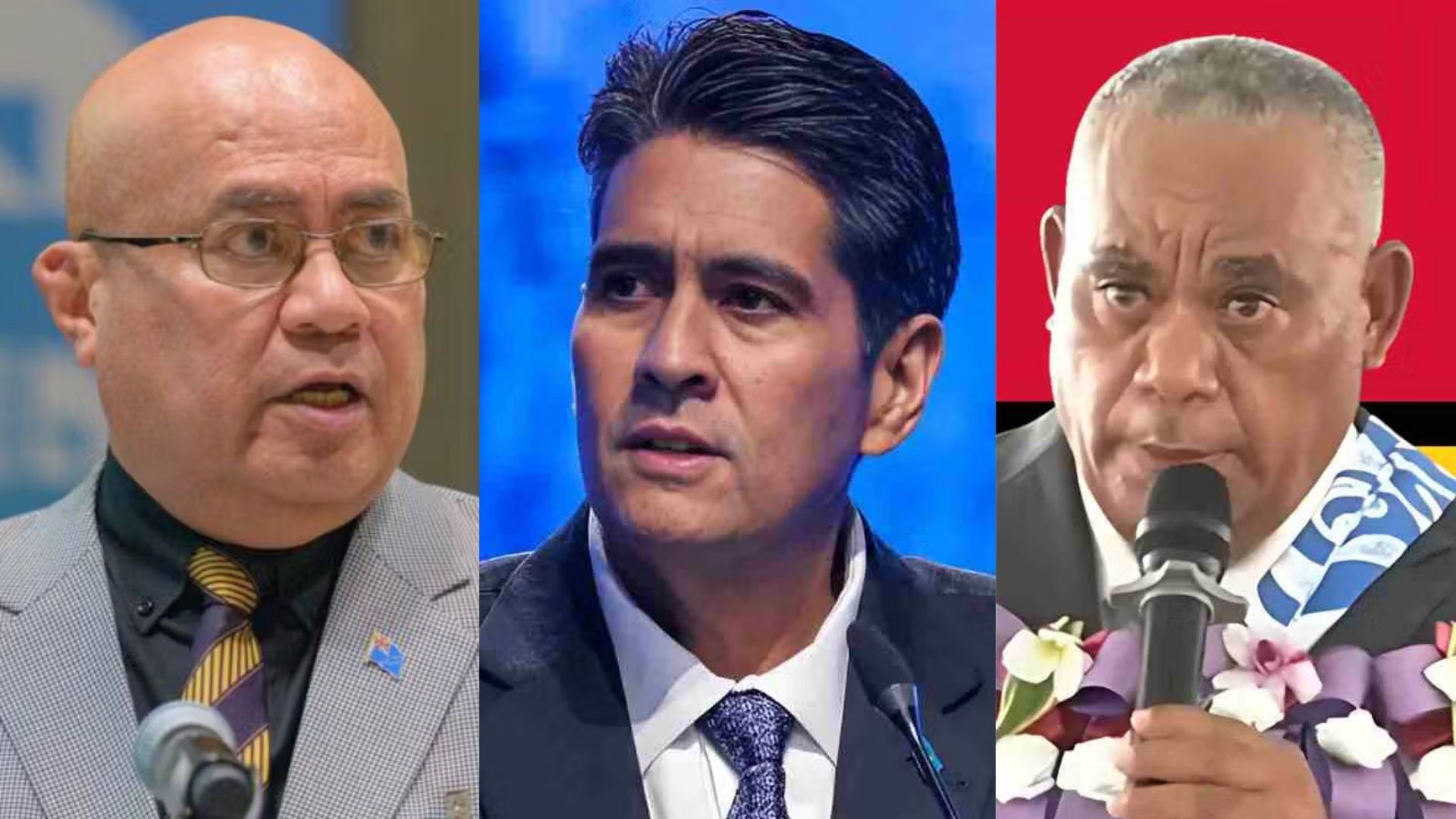
Three more Pacific governments have condemned China’s recent ballistic missile test over the Pacific, adding to growing regional pressure for major powers to respect the Blue Continent’s commitment to peace.
Leaders in Tuvalu, Vanuatu and Palau have all issued strong statements over the launch, joining Fiji’s Defence Minister Pio Tikoduadua and other Pacific leaders in warning against growing militarisation in the region.
The latest responses come as Pacific Islands Forum (PIF) leaders prepare to release a joint statement on the missile test following meetings in Brisbane on Wednesday.
Tuvalu Prime Minister Feleti Penitala Teo said the launch was “contrary” to the Pacific’s long-standing commitment to peace and a nuclear-free region.
“I share the same grave and serious concern and disappointment of other Pacific leaders for the recent launch of a Nuclear Capable Ballistic Missile into the Pacific Ocean by China,” Teo said.
“The Pacific region has long advocated for peace, security, and freedom from nuclear threats.”
He said the missile launch went against the PIF’s Ocean of Peace Declaration agreed by leaders in Honiara last year and conflicted with the region’s commitment under the Treaty of Rarotonga.
“As a leader of one of the smaller island countries in the Pacific, I join the call of other Pacific Leaders on all countries with military capabilities to respect our collective determination for the Blue Pacific Continent to be defined by peace, cooperation, and stewardship and not by militarisation and strategic competition amongst the major powers, and for those superpowers to refrain from using the Pacific Ocean as a testing ground for their military arsenals,” Teo said.
Vanuatu also expressed “serious concern” over the missile launch, saying it was inconsistent with the region’s vision of peace.
Pacific leaders are calling for the Blue Pacific to remain a region of peace, with Tuvalu, Vanuatu and Palau among the latest governments to raise concerns over the impact of military activity and strategic competition in the region. Photo/Facebook/Pacific Islands Forum
“The Pacific must remain a zone of peace, free from nuclear weapons and militarisation,” the Office of the Prime Minister said.
While reaffirming China as an important development partner, the government in Port Vila said all countries must respect decisions made by Pacific leaders.
“We are also concerned by the lack of prior consultation and transparency surrounding this launch. Such actions raise questions about commitments to peace, security and stability in the Blue Pacific.”
Vanuatu called on China to immediately stop ballistic missile testing in the Pacific and urged greater transparency over activities that could affect the region.
Palau also condemned the launch, describing it as a threat to regional peace and security.
“Pacific nations have worked for decades to ensure our region remains a place of peace. Actions that heighten military tensions have no place in our Blue Pacific,” President Surangel S. Whipps Jr. said.
Watch Associate Professor of Pacific Studies at Auckland University, Dr Gordon Nanau’s full interview with William Terite on Pacific Mornings below.
Earlier this week, Fiji Defence Minister Pio Tikoduadua revealed he had personally urged the Chinese Embassy in Suva not to proceed with the launch before it took place.
“China is a big power, we are only a small nation,” Tikoduadua said. “If we all have respect for each other in a quest for peace, I’m sure incidents like this can be avoided.”
The Pacific Elders, an independent group of former presidents, prime ministers, and prominent leaders from across the region, also warned that increasing geopolitical competition risks undermining Pacific sovereignty.
The group said regional security decisions must remain firmly in the hands of Pacific leaders.
The growing chorus of Pacific voices sends a clear message: while Pacific countries value partnerships with major powers, they do not want their ocean caught in strategic rivalry or used as a testing ground for military competition.
