

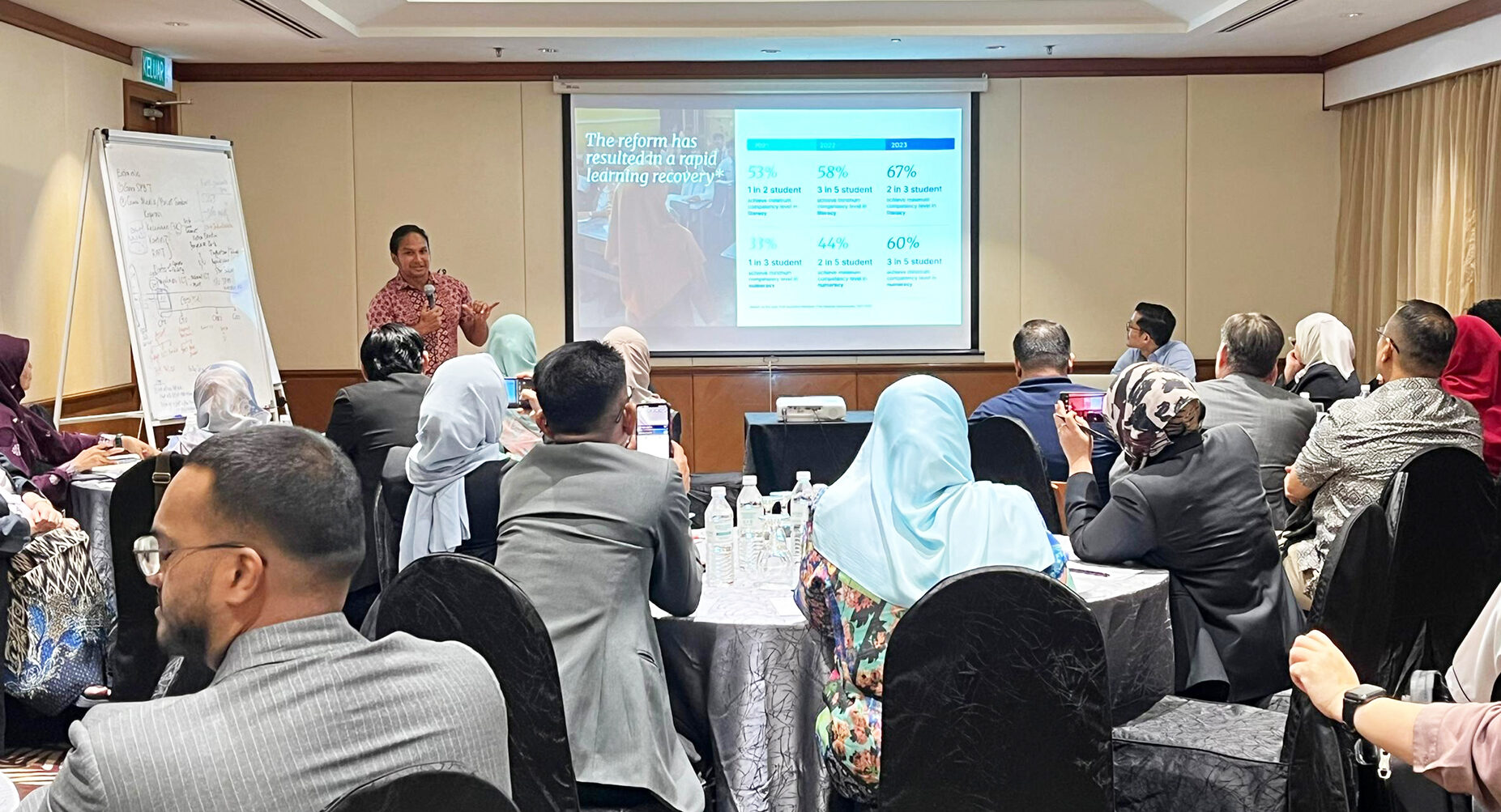
Late last year, at the Australasian Aid and International Development Conference at the Australian National University, I attended a session titled “Whose question, whose answer? Participatory design in every stage of development projects”. One panellist, Idris Jala, former CEO of Malaysia Airlines and current Chairman and CEO of the private consulting firm PEMANDU Associates, spoke about Malaysia’s “Lab and Open Day” approach to public sector reform.
His insights were timely for Papua New Guinea, where concerns about persistent weaknesses and decline in service delivery are consistently highlighted in policy discussions and in government and development reports. Listening to Jala, I was reminded that PNG lacks a systematic, disciplined and transparent method of turning ideas into measurable results.
He spoke about how Malaysia confronted long-standing national challenges by introducing the Government Transformation Program (GTP) and Economic Transformation Program (ETP) in 2010 through the “1Malaysia: People first, Performance Now” agenda. As he explained in a published interview, ” … when we started to work on the GTP, we needed to identify the areas that the people wanted us to change radically”. To drive that change, a Performance Management and Delivery Unit (PEMANDU) was established in 2009 as a unit of the Prime Minister’s department to oversee implementation. It was disbanded in 2018 following the change of government under Prime Minister Mahathir Mohamad, who moved to abolish a number of agencies seen as overlapping with existing departments or too closely tied to the previous administration; PEMANDU’s functions were absorbed by the Civil Service Delivery Unit within the Economic Planning Unit.
PEMANDU was an example of a Delivery Unit: a small central agency that sits close to the head of government, focuses on a short list of priority outcomes and holds line departments accountable for results. The United Kingdom was the first to introduce this model. Following the UK’s success, it has been adopted in more than 25 countries including Australia, South Africa, Pakistan, Kenya and Canada.
Delivery Units typically perform four functions: setting priorities with the cabinet, designing implementation plans, monitoring delivery against key performance indicators (KPIs) and reporting publicly on progress.
What set PEMANDU apart was the method it used to design those plans. The Lab and Open Day approach was the distinctive problem-solving technique that sat inside the broader Delivery Unit model. It worked in sequence. High-level workshops with the cabinet set the strategic direction, informed by public perception surveys and media analysis of citizens’ main concerns.
Selected experts and civil servants, especially frontline implementers such as teachers, nurses and police, were then brought into a Lab: a six to eight week, full-time problem-solving environment where teams were locked in until they produced implementable, costed plans with KPIs. The draft plans were taken to Open Days, town hall-style forums where members of the public were invited to critique the proposed strategies and engage directly with policymakers. Public feedback was used to refine the strategies into final solutions, and the detailed work plans were published in a document, the GTP Roadmap, and handed to departments for implementation. The Delivery Unit then tracked weekly and monthly reports, ran quarterly problem-solving interventions and audited performance against the KPIs, with annual reports presented to the public.
Two principles in this technique resonate strongly for PNG. First, solutions were developed through an intense, structured, multi-stakeholder process grounded in evidence, timelines and clear accountability. Labs were not conferences or workshops in hotels; they were working environments that did not break up until they produced something deliverable. Second, the outcomes were made public through Open Days where citizens could critique and engage with policymakers. This generated public trust, built consensus and created pressure on departments to deliver on agreed commitments.
For Malaysia, the lab methodology delivered significant national results including a 35% reduction in street crimes in one year, 54,000 additional children enrolled in preschools, public transport ridership increased from 12% to 15%, and public confidence in anti-corruption efforts up from 28% in 2009 to 48% in 2010. In addition, 784 kilometres of roads were built in 2010 alone, while the pace of road construction rose from 219 kilometres per year over 2006-2008 to about 1,000 kilometres per year by 2010.
PNG has a different development context. We have produced a similar roadmap in Reset@50 within a short space of time. We also see and hear plans and policies being launched frequently, yet the delivery mechanisms — from planning and design to implementation, monitoring and control — remain disjointed. I agree with the Prime Minister of PNG James Marape when he said in Parliament this year that, ” … PNG has never lacked plans … but we have lacked systematic implementation and the check on those implementations … “.
It is about time the government deployed practical tools that create space where citizens and frontline service providers can work through problems together, rather than relying solely on top-down directives and high-priced consultants. The Lab and Open Day method is one such tool: citizens are not just consulted but help co-produce solutions grounded in everyday realities.
A PNG government-funded Delivery Unit, well-resourced and safeguarded from political interference, could host these Labs and Open Days, support departments to track progress, troubleshoot issues and make sure priorities do not lose impetus after policy announcements. This would align with the government’s Medium-Term Development Plan IV, which stresses results-based management but lacks a strong delivery mechanism to enforce it.
The pressing challenges of education, health, law and order, and infrastructure require more than incremental adjustments. Our development ambitions are high, but without a stronger delivery culture, the gap between policy and reality will persist. Malaysia’s experience offers a practical model for PNG.
Idris Jala reminded the session that transformation happens when bold ideas are matched with bold systems. While the Lab and Open Day approach was not a panacea on its own, combined with the right preconditions and a credible Delivery Unit to house it, I believe it could improve public service delivery in PNG.
