


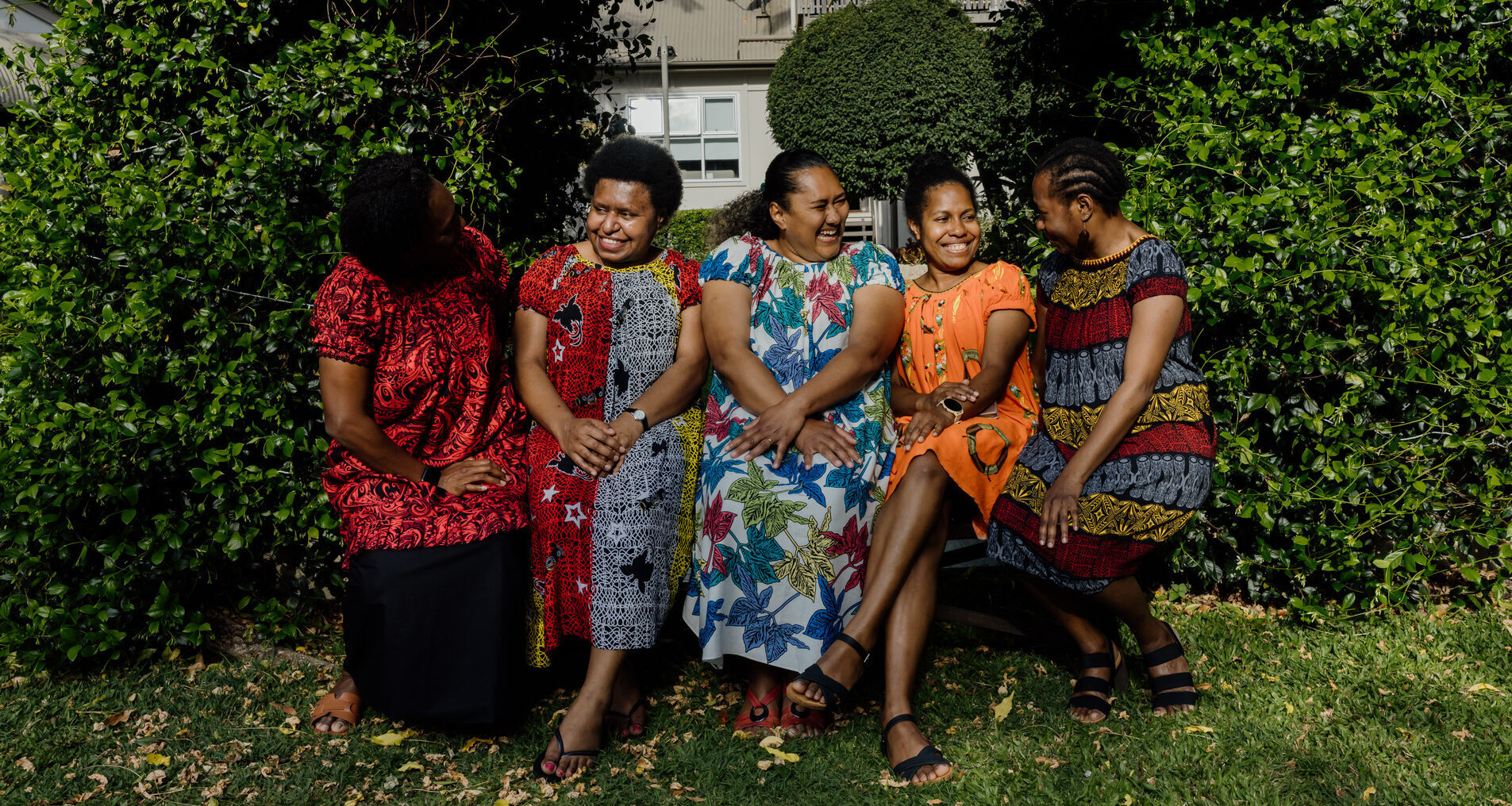
“Leaders” and “leadership” are a key focus of Australia’s engagement in the Pacific. Our regional diplomacy emphasises deepening engagement with Pacific leaders and leadership institutions, and our development program has a strong focus on supporting leadership as a key driver of change.
In both diplomacy and development, the focus has often been on formal spaces. Yet much of the leadership that drives change in the Pacific happens in the everyday — in churches, civil society organisations, businesses and government departments — and women are often at the centre of it. Across the region, women improve patient care in hospitals, help communities adapt to climate change, protect natural heritage, support people with disabilities to exercise agency, and help women build small businesses.
Although this kind of leadership is common, it has received far less policy attention. If Australia is serious about supporting leadership in the Pacific, we need to better understand how leadership is actually practised day-to-day in different contexts, or risk overlooking some of the most important drivers of change within Pacific communities.
Our recent research for the Australia Awards Women Leading and Influencing program sought to better understand everyday leadership from the perspective of women across the Pacific. We spoke with ten everyday women leaders from different countries, sectors and levels of experience. From this, we identified four key insights about how everyday leadership is understood and practised.
First, leadership is relational. For the women we spoke with, leadership was fundamentally about relationships. This shaped both how they understood leadership and how they practised it day to day. While some held formal roles, they did not see leadership as tied to their position; rather, these roles were a vehicle for serving others. Solomon Islands women’s rights and peace advocate Alice Pollard described leadership as “influencing change wherever I am” — whether in her family, church or workplace. Leadership was not something she stepped into and out of; it was part of who she was and how she worked to promote change.
Relationships also shaped how the women saw themselves as leaders. Many did not initially identify as leaders. Instead, they came to see themselves that way because others sought their advice, asked them to step up or trusted them with responsibility. As Tongan disability advocate Kalisi Fe’ao put it, “leadership is not to be chased, but to be given”.
Second, leadership is practised through relationships. Much of the women’s day-to-day leadership involved building and nurturing the relationships that enable people to work together. Many spoke about paying careful attention to how they communicate and behave, emphasising humility, approachability and listening.
Because they see leadership as something expressed through behaviour rather than position, many also focused on developing leadership in others so that change can continue beyond them. Samoan entrepreneur Adimaimalaga Tafuna’i, for example, described herself as the kind of leader who “leads from behind”.
Third, leadership introduces change gradually. Encouraging change often means introducing new ideas in culturally familiar ways. Lily Brechtefeld Kumkee, founder of the Kiribati organisation Nei Mom Uprising, explained this through a simple analogy: “if you want to eat a sweet pawpaw, you have to wait for it to ripen.” Rather than confronting social norms about women’s roles directly, her approach is to introduce ideas gradually so people can recognise their value before addressing more sensitive issues.
Many leaders also emphasised that social change often begins with shifting how people understand themselves and their capacity to act. Papua New Guinean disability activist Ipul Powaseu described how advancing disability rights first required helping persons with disabilities see themselves not as victims but as advocates for their own rights.
Fourth, leadership builds support for change. Because change can disrupt existing ways of doing things, leaders often spend considerable time listening to concerns, negotiating solutions and building agreement among different stakeholders. Elizabeth Erasito, Director of the National Trust of Fiji, recalled how her organisation worked with a community that initially opposed a conservation initiative to reintroduce an endangered iguana species because it required removing goats that provided livelihoods. Over time, through discussion with the community and exploration of alternatives such as conservation tourism, her team developed a solution that supported local livelihoods and allowed the iguanas to be reintroduced.
Many leaders also began with very limited resources. Adimaimalaga Tafuna’i recalled that when Women in Business Development Inc. started, “we had no funding … but we just felt so strongly about this that we went ahead and did it.” As initiatives grow, leaders draw on relationships and networks to mobilise additional resources and sustain their work.
These insights suggest that supporting everyday leadership in the Pacific is less about identifying the right individuals and more about enabling the right relationships.
Programs often look for visible leaders; people with titles or formal authority. Yet many of the leaders shaping change operate through trust, reputation and networks rather than position. Programs therefore need to find ways to identify and support motivated leaders with a vision for change who can work in this way. These people may not yet be highly visible or in a position of authority.
Leadership initiatives should also place greater emphasis on the capabilities that enable relational leadership in practice: diagnosing problems, listening to learn, communicating purposefully, mentoring others, adapting to changing circumstances and negotiating solutions that work for diverse stakeholders. These may be “soft” skills, but they are also the core mechanisms through which change happens.
Programs also need to recognise how many leadership initiatives begin. Many leaders start by contributing their own time and resources to address issues they care deeply about. Flexible and accessible funding can help these efforts grow and sustain momentum, particularly when it supports priorities identified by the leaders themselves.
Finally, monitoring and evaluation approaches need to recognise that supporting leadership is about playing the long game. Investments made in leaders now may not pay immediate dividends, but they will help put in place the foundations that make later change possible. In the short to medium term, progress may be better understood by looking at how initiatives influence people’s understanding of leadership, strengthen their networks, build their ability to work through relationships, and shift how people think about problems.
If Australia is serious about supporting Pacific leaders to drive change, it needs to recognise and invest in the diverse forms of leadership that are already shaping development outcomes across the region. We can take our cue from those who are already quietly leading change every day.
The Everyday Developmental Leadership research was carried out by Elisabeth Jackson, Sara Phillips, Ruth Faleolo, Mercy Masta, Lanique Pitasua and Lorissa Hazelman through the Australia Awards Women Leading and Influencing program.
