


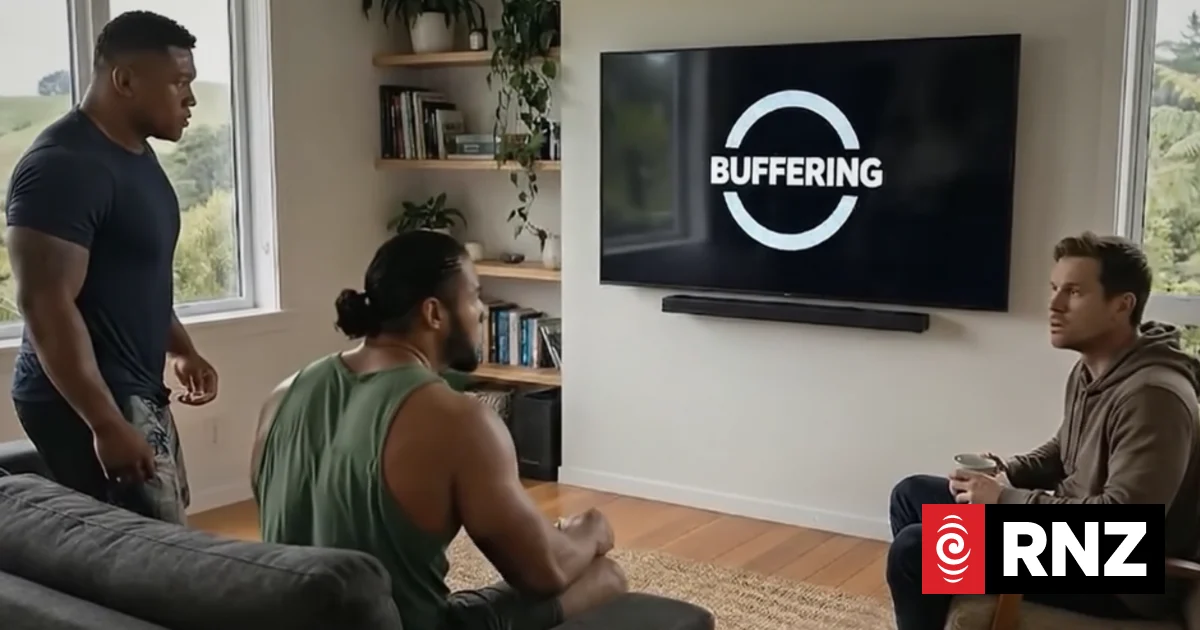
An advertisement by Voyager Broadband that depicts two brown men attacking a Pākehā counterpart after their internet lags out while watching a UFC match has been criticised as ‘lacking cultural due diligence’.
The AI-generated advertisement, which appeared on YouTube ads, has been taken down after questions were raised with the company last week over what kind of prompts were used in the ad.
In the ad, the two brown men are depicted making animalistic noises prior to the attack on the white man, who is hospitalised as a result.
In a statement to RNZ Pacific, a spokesperson for Voyager Broadband said the advertisement was created as part of a marketing activity and was intended to be humorous.
“The advertisement was created using AI generated video as part of our marketing activity,” spokesperson said.
“The concept was intended to depict three mates watching UFC together, with the humour coming from the stream cutting out and their exaggerated reaction. There was no racial intent behind the concept or the portrayal of the characters.”
The spokesperon said that Voyager was now reviewing the prompts and instructions used to generate the video “so we can understand how they contributed to the final content”.
Leon Bristow, founder of BEINGS.co and former Young New Zealander of the Year finalist.
Kiwibank New Zealander of the Year Awards
However, Leon Bristow, the founder of BEINGS.co, a directory that connects advertising agencies with diverse talent, and a former Young New Zealander of the Year finalist, said such advertisements reflect a “huge lack of Māori and Pasifika representation.”
“Aside from it being AI, on the surface it might seem harmless but clearly there’s been a lack of cultural due diligence,” Bristow said.
“The intention may have been to show the frustration of bad internet, but when the people acting violently, accompanied by animalistic sounds, are Māori/Pasifika attacking a white man, it portrays a damaging stereotype our communities continue to face.”
Harmful stereotypes
For decades, Māori and Pacific communities have been subject to misrepresentation in advertising, often through the repetition of harmful stereotypes.
In 2023, the Department of Corrections came under fire for two television ads that the Advertising Standards Authority went on to uphold complaints against Corrections over.
The ‘harmful’ recruitment ads reinforced stereotypes of Māori as criminals and Pākehā as Corrections staff.
Bristow explained that advertising in Aotearoa has suffered from a significant lack of Māori and Pasifika representation “to better inform mass media, and the messages communicated; messages that play an important role in shaping our culture.”
“This [Voyagers] ad reinforces why we need better equity, diversity, inclusion and belonging, so that we don’t risk sending the wrong narratives, again,” Bristow said.
New ‘lens’
Following questions from media about what prompt was used to generate the ad, Voyager’s spokesperson explained the company had looked at the issue with a new perspective.
“Having considered the advertisement through that lens, we could see how aspects of the content could be interpreted differently from what was intended. We removed it immediately.the spokesperson said.
“The portrayal does not reflect how Voyager wants to represent people or communities in our advertising, and we regret that the advertisement was published.”
Bristow said it would be interesting to see what kind of prompt had been used to generate the advertisement in the first place.
Meanwhile, Voyager said it was “reviewing and strengthening our approval process for external marketing content, particularly content created using AI, to prevent this from happening again”.
