

Fiji’s Tourism Minister Viliame Gavoka says people travelling to the island for tourism purposes, such as from Australia and New Zealand, know that HIV is a “global phenomenon”.
Gavoka, who is a deputy prime minister, was responding to questions from local reporters about concerns from tourists who are worried about their travel plans to Fiji after the country declared a national HIV emergency this week.
Tourism is Fiji’s main driver of the economy, contributing around 40 percent of the country’s gross domestic product (GDP). The sector directly and indirectly supports more than 150,000 jobs, with nearly one in every three Fijians relying on tourism for their livelihoods.
The Fijian health minister confirmed on Tuesday that one in every 60 adults in Fiji is living with HIV, rising nearly threefold in five years to around one percent of the population.
The government’s response includes expanding free rapid testing and providing clean needles to drug users, a measure aimed at reducing transmission linked to intravenous drug use.
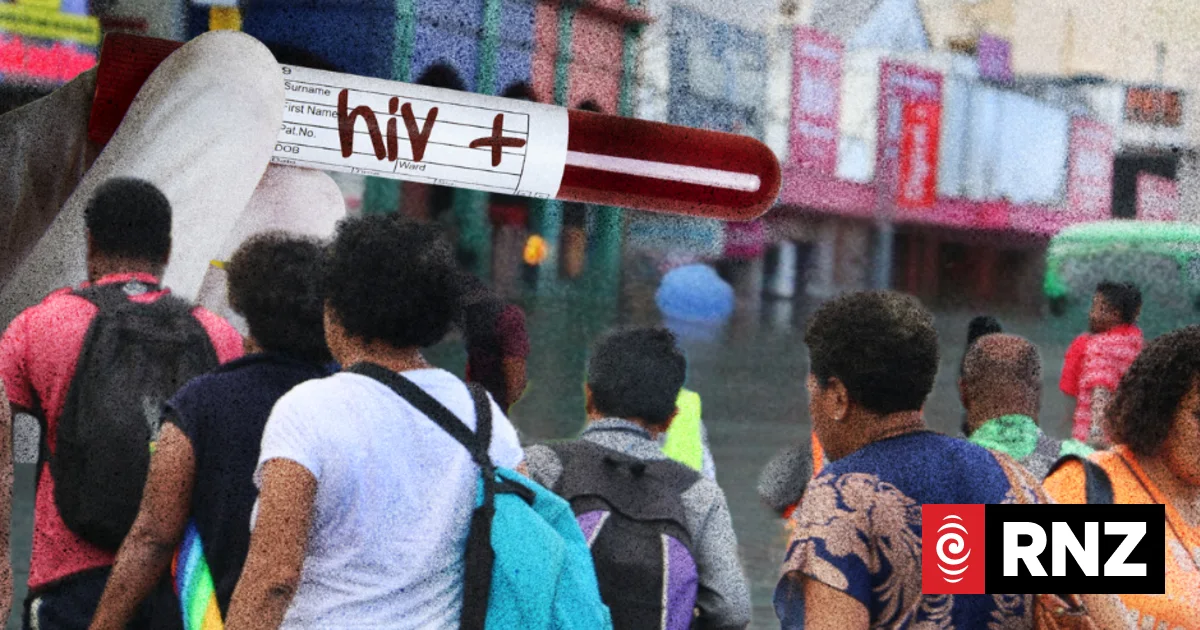
One in every 60 adults in Fiji is living with HIV, the government ha confirmed.
RNZ Pacific Lice Movono
‘3000% increase since 2010’
A New Zealand health researcher has described the situation as “a once in a generation health crisis”.
University of Canterbury’s Dr Jalal Mohammed told RNZ Morning Report that one in 60 adults, or 1.6 percent of Fiji’s population between the ages of 15 and 49, have been diagnosed.
“That’s only those who have been diagnosed. So there is a segment of the population out there that remains undiagnosed and this is a significant issue.
“We’ve seen a 3000 percent increase since 2010 in the number of diagnoses.”
Dr Mohammed said there were several factors contributing to the issue, but pointed out a “significant underinvestment” in the health sector as one of the main drivers.
Gavoka said HIV is not unique to Fiji and travellers to the country need confidence that Fiji knows what it is doing to tackle the issue.
“And that is more important than anything else,” he told Fiji One News.
“We are not sweeping [the HIV crisis] under the carpet. We are very open about it, and travellers today appreciate that.”
The New Zealand Government website SafeTravel has warned people travelling to Fiji to avoid activities that could increase their risk of infection.
Calls for resource prioritisation
However, the Fiji Council of Social Services (FCOSS) told RNZ Pacific that public statements alone were not sufficient and that resources needed to be prioritised for the HIV response.
Resources must be prioritised for HIV epidemic in Fiji
FCOSS chief executive Vani Catanasiga said Prime Minister Sitiveni Rabuka appears to have his mind elsewhere, particularly with Fiji’s constitutional debate ahead of the 2027 election.
“I’m calling for prioritisation of resources [for] HIV because our leaders are currently juggling various issues at the national level, but health is something that really I don’t see the same prominence given to it,” she said.
Catanasiga said FCOSS is directing its available resources, including volunteers, into community awareness activities.
“We should expect the impacts and we have to brace for that. But I think, as Fijians, we’ve been through similar things in the past, and we have survived it.”
Meanwhile, the Methodist Church in Fiji says the HIV epidemic and drug abuse crisis in the country go beyond medical and social concerns.
Reverend Lote Raboila Umari said the response requires a whole-of-community approach, and government, churches, families and communities must work together.
Earlier this year, the church began a three-year campaign against drugs and HIV/AIDS, mobilising its 59 divisions to participate in rotating shifts of week-long prayer and fasting.
