


The term Global Syndemic was first coined in a 2019 Lancet Commission report by Swinburn et al., which described “obesity, undernutrition and climate change” as “three of the gravest threats to human health and survival”. Few regions illustrate this convergence more starkly than the Pacific.
Pacific leaders echo this: climate change remains the single greatest threat to the livelihoods, security and wellbeing of Pacific people. Much of the region is already experiencing the impacts of climate change on child nutrition, as it disrupts the health, food and water systems on which Pacific children and communities depend.
As the Pacific Heads of Health convene in the Cook Islands this week, they have an opportunity to reshape health priorities to address these interconnected challenges and help prepare the region for the changes ahead.
Many Pacific countries have made welcome progress on their child nutrition indicators in recent decades. However, large disparities remain and several countries continue to experience very high rates of stunting and wasting. At the same time, a growing proportion of both children and adults are becoming overweight as communities shift from traditional diets towards more imported and ultra-processed foods. This has contributed to the heavy burden of non-communicable diseases (NCDs) now facing the Pacific. There is also increasing evidence linking malnutrition in early childhood with physiological and metabolic changes that raise the risk of becoming overweight and developing NCDs later in life.
With attention and resourcing often divided between NCD reduction and child undernutrition programs, it is increasingly urgent to acknowledge the connections between these challenges and the role of climate change in worsening both.
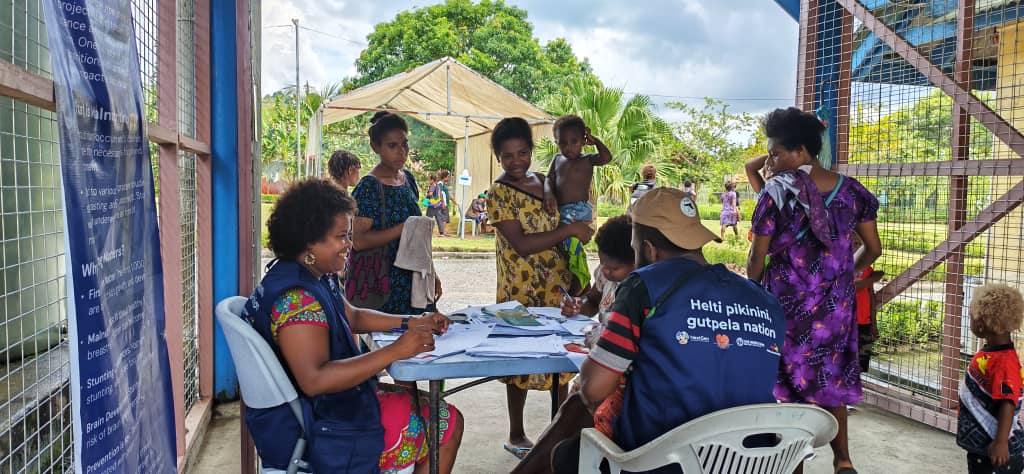
The findings of the Save the Children Australia report “Climate change and nutritional vulnerability: insights from PNG, Solomon Islands and Vanuatu” show that across the Pacific, stronger cyclones, flooding and saltwater intrusion are disrupting agriculture, fisheries and access to markets, reducing both the quality and quantity of diets. Parents and caregivers resort to filling plates with processed and packaged foods that keep longer and remain available after crops are destroyed. As a result, children’s diets lack the diversity of nutrients required for growth, while being high in empty calories that contribute to weight gain. Valuable traditional foods and food culture are also sidelined as palates and food norms change.
Communities also reported that climate-induced disruptions to health services mean children miss out on growth checks and vaccinations, while mothers miss out on antenatal care and safe births, all of which add pressure to already high stunting rates (rates for children under five are 48% in PNG, 32% in Solomon Islands and 29% in Vanuatu). Disruptions to water systems were reported to increase waterborne diseases and to raise household expenditure as the cost of collecting water rose, while in urban settlements user fees rose after cyclones.
These impacts are felt most acutely by women, young children and people with disabilities, whose vulnerabilities are compounded by social and economic inequalities.
While Pacific people are resilient and have lived alongside cyclones, droughts and floods for generations, communities are now caught out by their increasing frequency, and report a continuous cycle of preparing for, surviving and recovering from climate impacts, with little opportunity to rebuild resilience in between.
Yet the Pacific is a place of natural abundance, and communities continually show innovation, ingenuity and a commitment to providing the best for their children. Strategic investments in strengthening local food systems, including fresh and locally preserved foods, together with policies that discourage ultra-processed foods, would deliver multiple benefits: reducing child undernutrition; preventing obesity and NCDs; retaining local food cultures; building local food resilience in times of disaster; and stimulating local economies and livelihoods.
Integrating climate resilience into health and water systems will also be essential to keep services running during disasters. Among newer approaches, PNG’s Child Nutrition and Social Protection Project is a promising example. Backed by the World Bank and the PNG government, it combines a community-based approach to reduce stunting with a nutrition-sensitive cash grant for mothers of young children, linking payments to antenatal care, growth monitoring and nutrition counselling. While the PNG program is still being rolled out, evidence from comparable schemes suggests that pairing cash transfers with nutrition support can deliver sustained gains in food security and dietary diversity. Such programs could be further integrated with climate adaptation goals to support vulnerable households through repeated shocks.
Pacific Heads of Health are meeting a week before leaders gather for the Pacific Islands Forum Leaders meeting. It is essential that governments ensure these interconnected health issues are on the agenda and continue to build on their commitment to mobilising investment and adopting a whole-systems approach to achieve the health goals outlined in the 2050 Strategy for the Blue Pacific Continent. Addressing climate-driven malnutrition, in particular, presents a clear opportunity to turn these commitments into action.
