


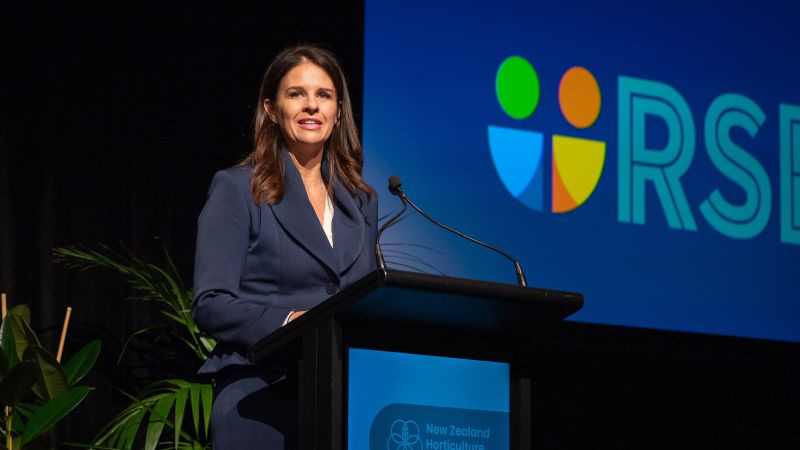
At the end of July, New Zealand’s Immigration Minister Erica Stanford took the stage at the annual Recognised Seasonal Employer (RSE) conference to announce a series of scheme changes. The RSE scheme, launched in 2007, lets New Zealand horticulture and viticulture employers recruit workers from nine Pacific Island and seven Asian countries for seasonal jobs (planting, maintaining, harvesting and packing) when there are not enough New Zealanders available. The reforms — which are the result of a sporadic, multi-year policy review — were framed as practical housekeeping. The RSE scheme “has been a standout success for nearly 20 years”, stated the Minister, but over time the rules have become “complicated and burdensome”.
The reforms are focused largely on streamlining processes for RSE employers and providing better worker protections, and will be implemented from early 2027 to 2029. On the employer side, accreditation will become graduated: new employers will receive a one-year term, extending to three- or six-year terms with a good compliance record. The Agreement to Recruit (ATR) process will be quicker and easier for employers who have Ministry of Social Development endorsement for ensuring New Zealanders remain prioritised for seasonal jobs, and compliance will be more targeted, with proportionate responses to non-compliance. The tasks permissible under RSE work will also be broadened (for example, machinery operation) where this supports the worker’s primary roles of planting, maintaining, harvesting and packing.
Worker protections are strengthened in several ways. There will be greater transparency around worker costs (for example, for accommodation, transport and medical insurance), including a clear list of costs recoverable by employers, and a standard cost recovery agreement will be signed prior to workers travelling to New Zealand. Workers will find it easier to move between accredited employers in certain circumstances outside of approved joint ATR arrangements, such as unforeseen weather events or business disruptions that unexpectedly limit available work, and those who leave because of reported mistreatment will be able to access the migrant exploitation protection visa. Complaints and support processes are also to be improved, with better-defined roles for Country Liaison Officers, Immigration New Zealand (INZ) and the Labour Inspectorate when concerns arise, and pastoral care will be enhanced, including provision of internet access at workers’ accommodation as a prescribed requirement.
RSE worker accommodation was also part of the policy review, but a decision on accommodation standards has yet to be finalised. A tiered rent-cap model — ranging from $150 to $211 per person per week depending on accommodation quality, with employers only able to recover actual costs incurred (not charge more) — has applied since April 2026. Consultation with industry and Pacific partners is ongoing, with the minister foreshadowing a final decision on accommodation by late September.
Cost recovery and accommodation are central to the reforms following a landmark decision by the Employment Court in September 2025. In Soapi v Pick Hawke’s Bay [2025] NZEmpC 208, three Solomon Islands RSE workers challenged the scale and range of wage deductions relating to accommodation, food, fuel, clothing, bedding, protective gear, recovery of airfares, visa costs and wage advances which left workers with only $100 per week to live on. The Court found the deductions breached the Wages Protection Act 1983 and the Minimum Wage Act 1983.
The decision ruled that accommodation deductions must be capped at 5% of wages, unless a “cash value” has been lawfully fixed. The employer in this case had not specified a fixed cash value in the individual employment agreement. Instead, the amount to be deducted for weekly rent was listed solely in the deductions consent form (which had been approved by INZ under the ATR process). The Court declared this was not compliant. Accommodation costs must be quantified in dollars at a cash value that reflects market rates and is agreed by the worker in advance of the contract commencing.
Employers bear many of the upfront costs (such as international airfares and RSE visa costs) for workers to take part in the scheme each season. In the past, these costs were recovered from workers via wage deductions. The Court ruled that workers must be paid at least the minimum wage and deductions that could push pay below this — as occurred in the Pick Hawke’s Bay case — are unlawful. Non-accommodation costs, such as workers’ 50% of the international airfare, can still be recovered by employers but not by wage deductions. Employers must use other cost recovery methods, such as internet banking, EFTPOS transactions and automatic payments.
The judgment upended eighteen years of settled practice. RSE employers had operated on the understanding that deductions approved by INZ through the ATR process were, by definition, compliant. The Court said otherwise; employment law overrides immigration instructions. Critically, the decision found that section 6 of the Minimum Wage Act applies notwithstanding anything agreed in the individual employment agreement. Neither the worker’s consent, nor INZ’s approval of deductions, could make unlawful deductions lawful.
This created what industry described as a regulatory paradox — the Ministry of Business, Innovation and Employment (MBIE) had approved practices that breached legislation MBIE itself enforces — and left employers legally exposed for doing what officials had permitted.
Pick Hawke’s Bay, ordered to repay the three workers almost $35,000 plus interest, has appealed the decision. The Court of Appeal heard the case in late April, and its decision, and any penalties, are still to come.
Against this backdrop, the latest RSE reforms appear partly designed to respond to what the Court decision brought to light. In particular, the defined list of recoverable costs, and the standardised cost recovery agreement to be signed before departure, deal with the uncertainty about what can lawfully come out of a worker’s pay packet — notwithstanding the confusion workers now face when trying to understand the range of cost recovery mechanisms.
Accommodation remains the most contentious issue, hence the minister’s decision to consult further before announcing any reforms to the current accommodation framework. Rent costs incurred by RSE workers are variable (as evidenced by the tiered model which ranges from $150 to $211 per week), and Pacific partners continue to voice concerns about differing quality standards.
For employers, providing accommodation is the largest RSE-related cost, with many having made major capital investments in purpose-built worker accommodation, especially in regions where restrictions on the use of low-cost residential housing exist. Costs, however, can only be recovered from seasonal workers during their actual period of use — not over 12 months.
Aside from the ongoing challenges with accommodation, RSE employers and industry groups have responded positively to the policy changes. The next step is implementation which is scheduled over a three-year period. While the reforms look logical and appropriate on paper, the devil will be in the details, especially as RSE employers are still dealing with an entirely paper-based INZ system, making the feasibility of simplifying processes, and reducing administrative burden, questionable. For now, however, all eyes are on the minister and September’s accommodation decision.
