


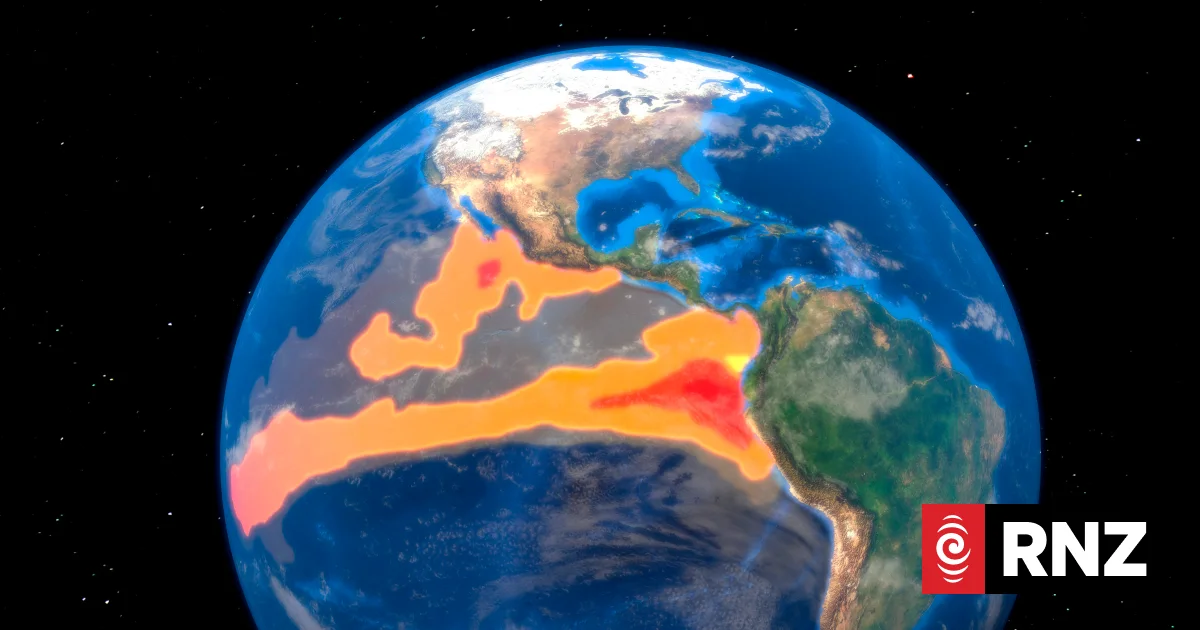
Schools in several areas of Papua New Guinea have been shortening class times due to El Niño.
El Niño is the warm phase of the El Nino/La Nina Southern Oscillation (ENSO) that occurs across the tropical Pacific Ocean.
NBC New Ireland reported revised operating schedules were announced last week across all education levels in the province.
Early childood education (ECE) were to finish at 10am daily, and primary school classes at 12pm.
Secondary school schedules were reduced from eight periods a day to six.
School officials were told to monitor available water supplies, suspend or modify sporting and outdoor activities during extreme heat, and monitor staff and students closely for signs of heat exhaustion, dehydration, and heatstroke.
They have also been instructed to clear dry grass and combustible materials surrounding school buildings.
The National reported Madang education director, Alphonse Igag, saying schools have been advised to introduce half-day classes where necessary, while outdoor activities such as sports, work parades and excursions should be reduced or suspended.
He confirmed that Raikos district implemented half-day classes following reports from the area’s primary school inspector.
Drought reaches parts of Papua New Guinea
The Post Courier reported most schools in Kundiawa Urban and Waiye LLGs were ending classes at 2pm and others in the hardest-hit grassland areas were closing as early as 12pm.
One school, Memaugl Primary, was closing at 12pm because there was no water to keep students until 3pm.
Meanwhile, the newspaper reported hundreds of fish – known locally as makau – were found dead in the Laviambo Lagoon in Kaviananga village.
Residents told the news outlet that the lagoon is unusually shallow and the water warm, starving fish of oxygen.
Local media is also reporting PNG government treasurer, Ian Ling-Stuckey, has met with the World Bank and discussed the El Niño issue.
The National reported the treasurer saying that, thinking ahead, Papua New Guinea attached a US$50 million (224.3 million kina) optional financing facility to help with disasters (the Catastrophe Deferred Drawdown Option) as part of its 2025 budget support loan.
“The meeting confirmed that PNG could use these funds in this emerging El Nino crisis,” Ling-Stuckey said.
“PNG is facing a new crisis, getting worse day by day.
“My visit to the new regional office was an opportunity to discuss how the World Bank could assist with PNG’s El Niño disaster.”
Meanwhile, in PNG’s Highlands, the Hela Provincial Government said it would provide a US$2.8 million (12 million kina) package of immediate relief supplies, including emergency food rations and clean drinking water, to affected communities across the province.
According to the NBC, drought conditions in Hela have dried up vital water sources and severely damaged subsistence crops, leaving thousands of people facing acute food and water shortages.
Over in West Papua, drought in Kuyawage District in Indonesia’s Highland Papua Province is leaving residents facing a food shortage.
Jubi reported an internally displaced resident saying the drought had devastated local farmland, resulting in widespread crop failure and worsening food insecurity.
Nuwinus Gwijangge said the food shortage is affecting not only internally displaced people from Nduga, but also local communities in Kuyawage.
Other areas on alert
Samoa’s meteorology division has issued a statement on Wednesday, saying El Niño conditions have been well-established across the tropical Pacific Ocean.
“Recent observations from the country’s national climate monitoring network indicate below-average rainfall in several locations over the past month,” the statement said.
It said current climate guidance indicates that El Niño is expected to persist through the remainder of 2026, with 60-70 per cent probability of below-normal rainfall across Samoa.
There’s also a 40-60 per cent probability of above-normal air temperatures, both during the day and at night, and an increased likelihood of prolonged dry periods and drought conditions.
It also warned that – despite El Niño generally bringing drier contditions to Samoa – the risk of tropical cyclones is elevated.
Last month, Vanuatu’s weather service declared a meteorological drought for some northern parts of the country, saying a meteorological drought is the first stage of drought, and happens when rainfall has been significantly below the long-term average for an extended period.
The Fiji Times reported their weather service’s latest outlook indicated a high chance of very dry conditions across several parts of the country between 15 and 28 August.
Areas facing a high chance of very dry conditions include the Northern Division, Yasawa Group, Viwa, the Nausori to Navua corridor, eastern interior of Viti Levu, northern Kadavu, Moala, Totoya, the Lau Group and Rotuma.
It comes as the EU’s climate monitoring service said non-polar oceans hit their hottest-ever recorded temperatures for July, partly fuelled by developing El Niño conditions in the Pacific.
The average sea surface temperature outside the world’s polar regions was 20.96 degrees Celsius last month.
That beats the previous July average high of 20.89 degrees, set in 2023.
