


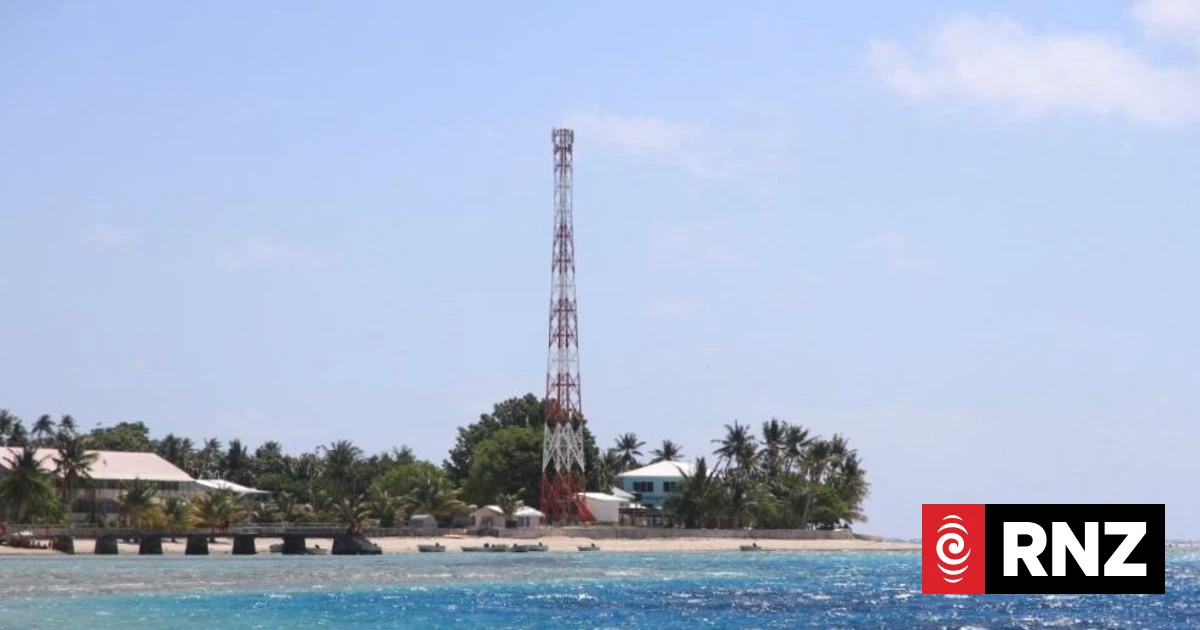
For two weeks in November the remote Tokelauan atoll of Fakaofo will become a global communications hub.
The remote Tokelau atoll of Fakaofo is 3,380 to 3,790 kilometres northeast of New Zealand – the number of people who live on Fakaofo is just over 470. However, this tiny dot in the Pacific is one of amateur radio’s most sought-after locations, and for two weeks in November will become a global communications hub.
In amateur radio, “DX” comes from telegraph shorthand: “D” for distance and “X” for the unknown or distant.
For about two weeks in November, DX enthusiasts from the Perseverance DX Group and the Western Washington DX Club will set up temporary stations on Fakaofo, giving radio operators around the world a rare chance to make contact with Tokelau.
Tokelau’s project coordinator, Aleki Silao, said the idea for the project came about following a request in 2024 from a group who were keen to travel to Tokelau, in particular Nukunonu, to link up with colleagues around the world through shortwave radio. However, Fakaofo was selected because of its greater remoteness and the challenge that connecting it to the world would pose.
“And that’s why this group expressed a special interest to bring their know-how and technology to Fakaofo for two weeks,” Sialo explained.
Knowledge sharing
The Fakaofo team plans to operate several stations from the 160-to-6-metre amateur bands using voice, Morse code and digital modes.
When asked how the atoll will benefit from this project, Silao said it would be on numerous fronts.
“They have agreed to a number of things, training to pass on their knowledge in terms of this technology, furthermore they have offered to give twenty laptops through which Fakaofo may set up some internet cafes or even how the locals can communicate with the outside world.”
For operators around the world, a confirmed contact with Tokelau is a prized achievement.
For Fakaofo, that global interest creates an unusual opportunity to exchange access and welcome for equipment, learning and enduring relationships.
Shortwave offers new possibilities
The group of 12 travelling to Fakaofo are mostly Americans and Europeans including retirees, doctors, pilots and computer experts.
This is not the first time a group of shortwave enthusiasts have visited Fakaofo – the last group visited in 2019.
“There are some reasons why the other two atolls (Nukunonu and Atafu) could not accommodate this visit, mainly because this year is the 100th year celebrating Tokelau under New Zealand, and of course the general fono, the parliamentary sessions, so Fakaofo was the most available island for them to go to,” Silao said.
RNZI
The great benefit of the project is during times of disaster on the atolls, silao said.
“For example, in a cyclone or tsunami, when Teletok (Telecommunication Tokelau Corporation) or Starlink is out, this is the way to communicate with the rest of the world.”
He said they hope to explore further opportunities in the future and share any knowledge with the other two atolls.
The strength of the arrangement lies in its honesty: the visitors gain access to a rare location, while Fakaofo gains equipment, knowledge, visibility and the chance to test new possibilities.
