

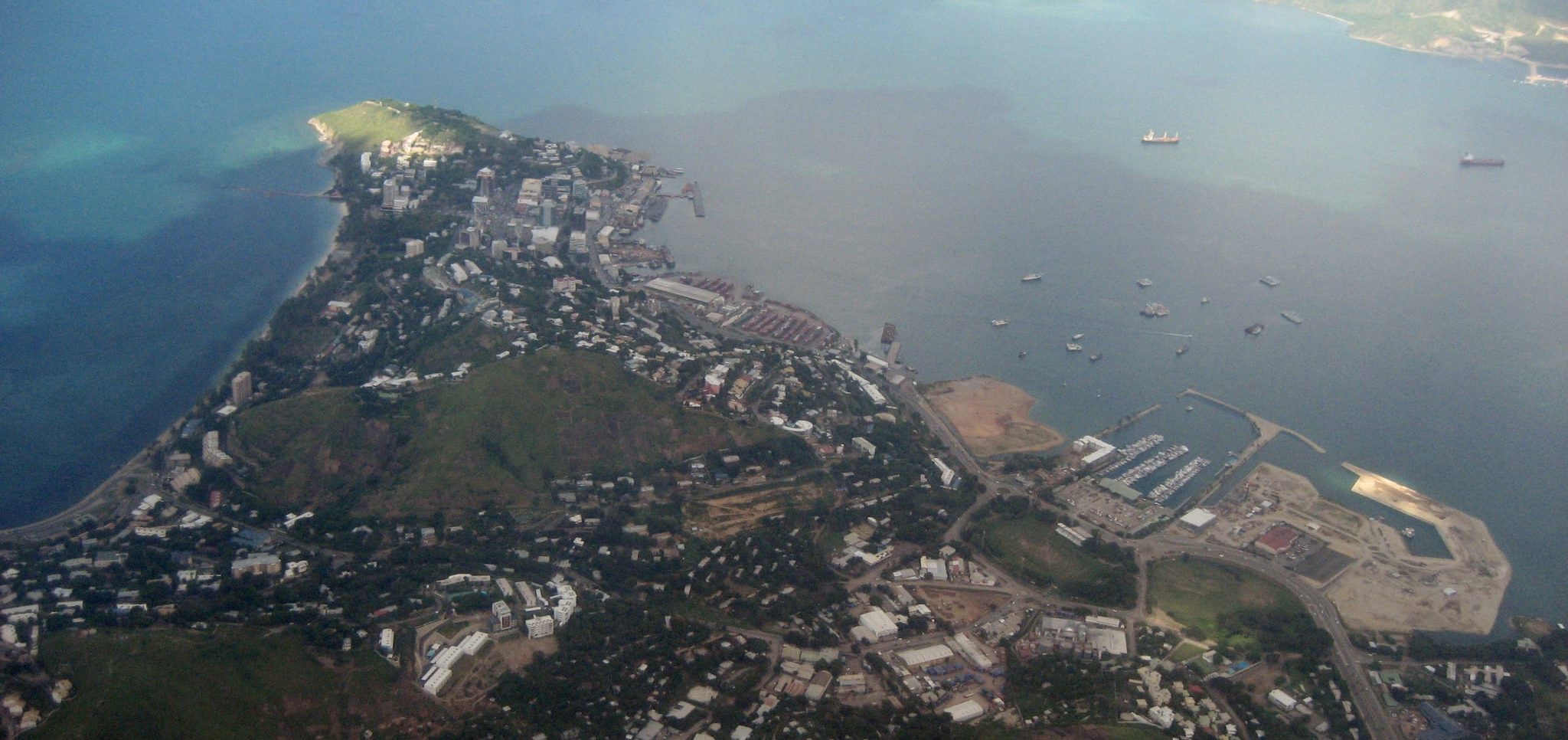
The National Capital District (NCD) is Papua New Guinea’s political, administrative and economic centre. As Port Moresby continues to expand, the effectiveness of its governance arrangements has become an increasingly important public policy issue. How communities are represented, how decisions are made and how services are delivered will shape the city’s future.
Unlike other provinces, NCD does not have elected Local-level Governments (LLGs). This unique arrangement raises an important governance question: does the current model provide sufficient opportunities for local representation, community participation and accountability at the grassroots level?
Across PNG, LLGs serve as the third tier of government. They provide a direct connection between citizens and the state by supporting local planning, identifying community priorities, coordinating development activities and ensuring that ward-level concerns are reflected in government decision-making.
In NCD, governance is administered through the National Capital District Commission (NCDC) alongside the three Open Electorates — Moresby North-East, Moresby North-West and Moresby South. However, unlike other provinces, NCD has no elected local government structure operating at the ward level. While NCDC continues to provide essential urban services and administration, the absence of elected LLGs limits structured opportunities for ward-level representation and community participation in local planning and decision-making.
This issue is becoming more significant as Port Moresby experiences rapid urban growth. The 2024 census recorded a resident population of about 757,000 in NCD, roughly double the 364,000 counted in 2011, and the NCDC’s own urban development plan assumes annual growth of 2.5% to 4%, which would take the city past one million residents within a decade. The city continues to face increasing pressures from informal settlement expansion, waste management, unemployment, law and order challenges, land administration issues, traffic congestion, youth unemployment and growing demand for housing and other essential public services. These challenges require governance arrangements that are responsive, coordinated and closely connected to local communities.
Capital cities often require governance arrangements that balance national responsibilities with the everyday needs of local communities. Around the world, different models have evolved to achieve this balance while recognising the unique role of national capitals.
Canberra and Washington DC illustrate how this can work in practice. Since self-government in 1989, the Australian Capital Territory has been governed by a 25-member Legislative Assembly that combines the functions of a territory parliament and a city council, with a Chief Minister and cabinet. The Commonwealth retains override powers and the National Capital Authority manages areas of national significance. Washington DC operates under the Home Rule Act 1973, with an elected mayor and a 13-member Council of the District of Columbia, supported by Advisory Neighborhood Commissions that provide representation at the ward and neighbourhood level. The United States Congress reviews DC legislation and controls its budget, and the district has only a non-voting delegate in Congress.
Closer to PNG, Southeast Asian capitals show a similar range of arrangements. Jakarta is a special capital region (Daerah Khusus Ibukota) with a directly elected governor and a provincial legislature, sitting above five administrative cities and a network of sub-district and neighbourhood structures that channel local input. Metro Manila is coordinated by the Metropolitan Manila Development Authority for cross-city functions such as transport and waste, but representation and service delivery run through 16 constituent cities and one municipality, each with its own elected council, and through more than 1,700 elected barangays at the neighbourhood level. Kuala Lumpur, by contrast, is a federal territory in which the mayor is appointed by the federal government and there is no elected city council — an arrangement that has itself been the subject of long-running debate about local representation.
These examples do not suggest a single model for PNG to replicate. Taken together, they show that capital cities can retain their national functions in very different ways, and that most — though not all — combine that role with some form of locally elected representation, whether at city, district or neighbourhood level. They also illustrate the value of periodically reviewing governance arrangements as cities grow and change.
The question is not whether NCD’s current governance model has failed. Rather, it is whether the existing arrangements remain appropriate for a rapidly growing and increasingly complex capital city.
A comprehensive review would provide an opportunity to assess whether current governance mechanisms adequately support community participation, local accountability and effective coordination between institutions. Such a review should be evidence-based and involve broad consultation with communities, government agencies, members of parliament (MPs), policy experts and other stakeholders.
Should reforms be considered, they would need to address legal responsibilities, administrative capacity, financial arrangements and the relationship between NCDC, national government agencies, MPs and any future local government structures. Any changes should strengthen governance while avoiding unnecessary duplication of responsibilities.
Decentralisation remains a fundamental principle of PNG’s governance system. As the nation’s capital continues to grow, it is appropriate to examine whether NCD’s governance arrangements should evolve to reflect changing social, economic and urban realities.
This should not be viewed as a matter for political debate but as an opportunity to strengthen public administration and improve NCD’s service delivery capability in a way that accommodates future growth. A structured review with clear terms of reference, informed by evidence, community consultation and relevant international experience, would be the logical first step and would provide a sound basis for determining whether reforms are needed.
Ultimately, good governance depends on institutions that evolve with the communities they serve. As Port Moresby continues to develop, reviewing the effectiveness of local representation is a constructive step towards strengthening accountability, improving coordination and ensuring that the voices of residents remain central to the future development of PNG’s capital.
