


In my career as a jobbing consultant, I thought I had become reasonably adroit at predicting what “sensitivities” a draft report could elicit and prepare myself accordingly for the salvo from the official managing the project in question.
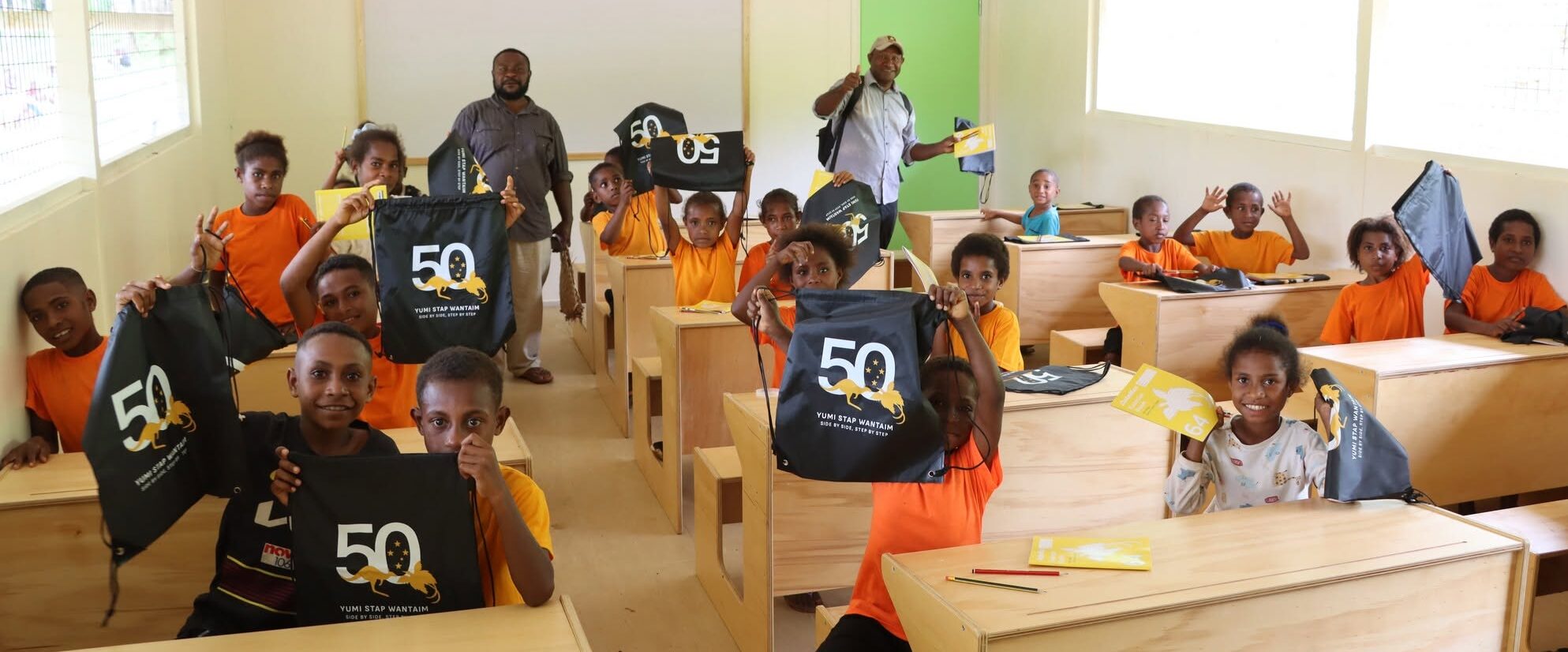
Yet nothing prepared me for the volcanic reaction to one draft report wherein I made what I thought a relatively innocuous observation about the importance of developing some parameters around what project merchandising was seeking to communicate. Pens, pins, notebooks, polo shirts, knitted bags, a tropical shirt of such nylon properties that it was best not to be downwind from a smoker when wearing it: these were just some of the products emblazoned with the name of the project which, naturally, was styled as Pacific-led. I did not realise what a raw nerve I had touched. The advice was not welcomed. I was given what in bureaucratese is called a frank conversation and what in plainer English is called getting berated.
I thought of this bruising encounter when I read a news story at the time of the 2026-27 budget that the Commonwealth was putting a relatively hard brake on merchandising across all its departments as a cost-saving measure. New policy guidance from the Department of Finance issued in June imposes strict restrictions: “Commonwealth entities subject to the Commonwealth Procurement Rules (CPRs), must not procure promotional merchandise which is intended to promote the Australian Government, or its programs and initiatives except in limited circumstances” is the top-line advice. The policy goes on to say that “where the procurement of promotional merchandise is critical to deliver the government’s policy objectives” it must be approved by a Senior Executive Service (SES) Band 3, in other words a very senior-level bureaucrat. In the Department of Foreign Affairs and Trade (DFAT) this means a Deputy Secretary; in the Australian Federal Police (AFP) it means a Deputy Commissioner.
There is presently no single aggregate figure to indicate how much is being spent on merchandise. The advice fills that information black hole. What money is spent on merchandise from here on needs to be included in annual reports, the sort of potential data mine statistically inclined colleagues would salivate over.
What are the implications of this change for Australia’s engagement in the Pacific?
At a purely visual level, one would think that they might be profound. Even a quick perusal of offerings on LinkedIn would indicate merchandise is an important component in public diplomacy and outreach. No meeting or summit seems complete without multiple changes of colourful tropical shirts, for instance.
Australian officials and contractors in the Pacific wear branded clobber nowadays. In Honiara recently, I felt out of place at a coffee shop as I was one of the few people not wearing some sort of workwear branded with the red kangaroo and blue kuru kuru bird “moving together in a shared journey” brand of the Solomon Islands Australia partnership. (An exhaustive 16-page guide provides direction on how the logo should be correctly used.)
Sometimes, this merch ends up in incongruous places. When I attended a Chinese-run policing training in Honiara, a few of the participants wore t-shirts with the logo of the Royal Solomon Islands Police Force and Australian Federal Police Policing Partnership Program, for instance. A man I met at the training told me most of his wardrobe consisted of hand-me-down t-shirts and observed that the quality of the Australian products was always superior to others. He complimented me on the baseball hat I was wearing and asked if he could have it. The cap has the logo of the Bougainville Chocolate Festival on the front, a festival funded by Australia, New Zealand and, via a sort of voodoo economic logic I didn’t comprehend, Papua New Guinea and the Autonomous Bougainville Government. I was happy to give the cap to him, not least because I had a few more at home.
The Bougainville Chocolate Festival cap is emblematic of another feature of the seemingly mushrooming merchandise marketplace. Rather than just promoting Australian aid writ large via the now familiar red kangaroo, each individual program or activity seems to have its own mini-bazaar of branded merch. One colleague has a pen branded with the logo of the Australian Infrastructure Financing Facility for the Pacific, which is presumably useful to help sign off on loan agreements or the giant novelty cheques which seem to be an increasingly prominent feature of public diplomacy. Other colleagues report branded bucket hats, drink bottles, notebooks and a first aid kit.
Branding that distinguishes one thing from another has always been a feature in modern marketing, whether it be the clothes we wear, the supermarkets we shop at or the sports teams we cheer for.
The difference, of course, is that we as private consumers are the ones forking over the money to buy the products with the brands we want to identify with. When it comes to the Pacific, it is governments handing out products with brands that they want Pacific elites to identify with. Merchandise appears to be a component of Australian “soft power”. I’ve heard public servants characterise such bric-a-brac as “assets”, a revealing word as it indicates that they must serve a valued role.
The wider question is whether handing out all this paraphernalia serves any effective purpose. At an intuitive level, one thinks it must or else there wouldn’t be so much investment in it. Yet, when I went to look for definitive answers about the effectiveness of this type of statecraft, I couldn’t find any. Vigorous debate ensues about branding but, to date, no study has settled the matter one way or another. Merchandise is a largely vibes-based theory of change.
With the change now set out, potentially relegating all the merch that ever was to the dustbin of diplomatic history, might such a study now be worth doing? Convincing that SES Band 3 to sign off on a proposed merchandise spend would now seem to require it.
Or will it? DFAT is a “non-corporate Commonwealth entity” and so covered by the Commonwealth Procurement Rules (CPRs) — meaning Division 1 obligations around value for money, ethics, non-discrimination and accountability apply to everything it buys, aid included. But the aid program has long enjoyed a partial carve-out: Appendix A of the CPRs exempts DFAT from the more prescriptive Division 2 rules for any “procurement of goods and services … outside Australian territory, for consumption outside Australian territory” and any “procurement for the direct purpose of providing foreign assistance”. Aid-funded merch procured under that foreign-assistance exemption could conceivably sit outside the remit of the new policy guidance. In which case, the manufacturers of all this stuff, an indeterminate number of whom are based in the Pacific, will be breathing a sigh of relief.
