


Last week was a big week in the Pacific, with the race between order and disorder, between cooperation and competition, brutally laid out.
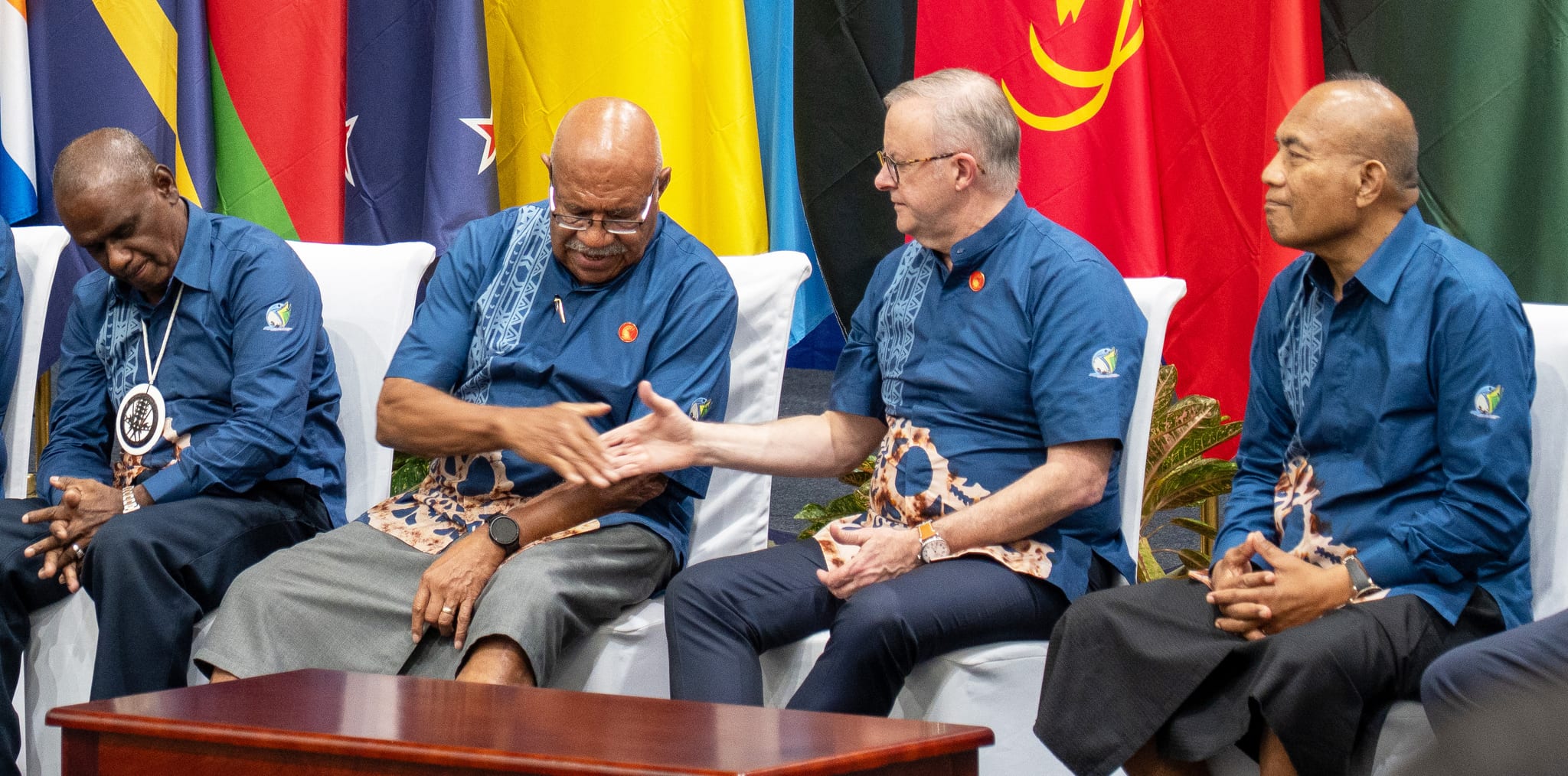
Fiji and Australia came together to set out their plan for promoting peace, security and greater economic cooperation and integration.
China decided to ignore all Pacific entreaties about creating an Ocean of Peace and test a ballistic missile capable of carrying a nuclear warhead. And we can be sure it won’t be the last such Chinese provocation.
The Chinese test is a symptom of the larger polycrisis before the Pacific, where several great challenges run together. The existential threat of climate change. The sharpening geopolitics and the fading post-World War II rules-based order: just when it’s needed most to deal with climate change. The impacts of transnational crime, particularly the drug trade, on communities, health systems and law enforcement. The need to promote greater human security, particularly through better education and health opportunities.
This polycrisis will run for several decades and will test the Pacific as never before.
Fiji and Australia’s efforts are an important step in building the regional system that can meet these challenges.
The two countries should be the closest of partners. But they have endured low points in recent decades, struggling to find an equilibrium as Fiji wrestled with its post-independence democracy. This week’s agreements set a new baseline.
The Vuvale Union speaks to all aspects of the Fiji-Australia relationship: security, focusing on climate change; economic integration; cultural and sporting ties. It improves visa arrangements for Fijian citizens, including Fiji workers participating in the Pacific Australia Labour Mobility Scheme — particularly in aged care. These changes will benefit both countries.
The Union only applies to Fiji and Australia, but provides a model of deeper integration that other countries could follow.
The Ocean of Peace Alliance — Australia’s fourth alliance (after those with the United States and New Zealand under ANZUS in 1951, and with Papua New Guinea in 2025) and Fiji’s first — is even more explicit about being a vehicle for wider security integration. It’s open to other Pacific states with militaries to join as well. It offers the possibility of Fiji, Tonga, Papua New Guinea, New Zealand and Australia sharing training and facilities, and working together on natural disaster responses.
The agreements reflect the difference one person can make in international diplomacy. Fiji’s Prime Minister Sitiveni Rabuka speaks often of his quest for peace. At the launch of the Ocean of Peace last year in Honiara, he reflected emotionally on his experience as a soldier, and the consequences of the absence of peace.
The week also signals that the decades of Australia’s episodic interest in the Pacific — sometimes magnificent, sometimes indifferent — are thankfully over. The new agreements with Fiji, as well as Papua New Guinea, Vanuatu, Nauru and Tuvalu — with Solomon Islands and Tonga to come — bear the mark of serious statecraft and savvy negotiation on both sides. These are mature, holistic agreements, and reflect an honest discussion between genuine partners.
It’s possible to wish Australia had gotten to them much earlier in the Pacific independence era. But here we are; and we now have the building blocks for better and deeper relationships. As Churchill would have said, we have at last arrived at the end of the beginning.
The next phase for Australia should be working with other members of the Pacific Islands Forum to strengthen and further build the regional system.
Australia’s web of bilateral agreements is part of the answer; but the Pacific’s full power and agency will be won through the 18 members of the Pacific Islands Forum working and speaking in unison. That unity gives the Pacific the ability to stand up to the rest of the world, including the great powers, as the Pacific was able to do during the first Cold War.
The Ocean of Pacific Alliance is an important step in this process. But it needs to be added to, or complemented by, arrangements which will bring Forum members without militaries into the security arrangements. Not all Forum members have militaries, but all will be facing the polycrisis. Solomon Islands Prime Minister Matthew Wale’s proposal for a regional security treaty could be the answer.
What will building a regional system mean for Australia?
The Pacific Islands Forum has worked well when Australia has supported Pacific priorities and proceeded in a spirit of partnership. All members of the Forum now have a great common cause: protecting the Ocean of Peace from the travails of climate change, geopolitics and transnational crime, and promoting human security.
Australian statecraft will succeed if it tackles all four priorities but will fail miserably if climate change drops off the list. Australia will need to reflect honestly, too, on what the drug market in Australia has meant for transnational crime across the Pacific. Either Forum members are all in it together fighting all aspects of the polycrisis, or not, and that applies just as much to Australia.
Australia will also need to address, and soon, more liberal immigration arrangements to support freer movement across the region. That will include access to education and health services.
The gap between how Australia treats New Zealanders and other members of the Pacific family isn’t sustainable. The need for Pacific citizens to travel to countries outside the region for advanced medical care isn’t sustainable. The next generation of agreements will need to promote deeper regional integration in these politically sensitive areas.
The Pacific polycrisis will only worsen and deepen in coming decades. The Pacific can rise to meet this moment and, indeed, show the rest of the world the way forward. But as the challenges grow, so too must the solutions. Last week was a good start.
